



















































Blockchain applications are moving beyond finance and money to radio waves, IoT, and a range of telecommunications.
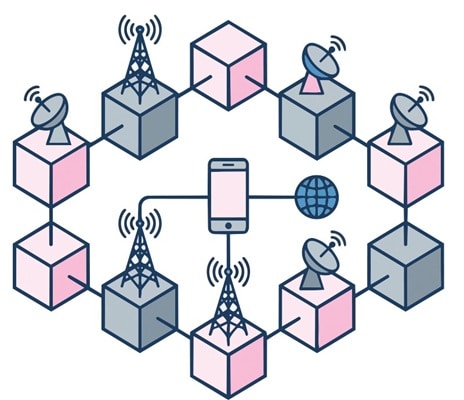
Blockchain technology is generally associated with banking, finance and monetary transactions. However, this technology can now be used for radio waves, Internet of Things (IoT), RFID tags, laser communications, light fidelity (LiFi), airwaves and many similar communication scenarios. Blockchain can be used for dynamic spectrum allocation and real-time analytics on radio waves and IoT signals for multiple industrial, government, corporate as well as social applications.
Table 1: Simulation tools for blockchain-based decentralised wireless (DeWi), shared airwaves, RFID, antenna design
| Tool | Feature dimension: RF and shared spectrum | Feature dimension: DeWi and blockchain | Feature dimension: System and physical layer |
| GNU Radio | Full SDR control; real-time spectrum monitoring | Python block integration for Web3.py (Oracle) | Signal processing library (FFT, filters, modulators) |
| Web3.py (Python) | Interacts with GNU Radio and SoapySDR data streams | Primary bridge: sends RF data (RSSI, ID) to smart contracts | Native support for Ethereum/EVM-compatible chains |
| Remix IDE | Simulation of timed access token NFTs for frequencies | Write/debug Solidity contracts for spectrum leasing | Browser-based; no-setup required for rapid testing |
| 4nec2 (antenna design) | Simulation of MIMO beamforming and phase steering (coherent EX) | Model geometry for decentralised distributed MIMO arrays | Far-field radiation patterns and impedance plots |
| NS-3 (network simulator) | Advanced simulation of LTE, 5G NR, and Wi-Fi coexistence | Contributed modules for basic blockchain framework simulation | Packet-level simulation for massive DeWi node counts |
| OpenEMS Finite-Difference Time-Domain (FDTD) | High performance toolkit; 3D full-wave electromagnetic solver (ECG Cartesian grids) | Simulates RFID antenna-tag interaction in complex environments | Matlab/Octave interface for scripting and processing |
| Helium Console/Explorer | View actual LoRaWAN and 5G hot spot coverage data | Real-time visualisation of proof-of-coverage (PoC) events | Monitor data packet transfers and token rewards |
| Tatum (API) | ‘Blockchain-as-a-Service’; easy to link SDR apps | Generous free tier for simplified blockchain API calls | Abstracted SDKs for 40+ different protocols (BTC, ETH, LTC) |
| Truffle/Hardhat | Local testnets (Ganache) to simulate instant spectrum transactions | Frameworks for deploying complex multi-contract DeWi protocols | Automated testing pipeline for smart contract security |
| CST Studio Suite | Simulate human body effects on wearable DeWi devices | Model CBRS/5G antennas with precise physical constraints | Coupled EM-thermal solver for high-power transmitters |
| Dune Analytics | Monitor active node counts and data usage (e.g., Helium dashboards) | SQL-based tool to visualise DeWi network token economics | Track DeWi market trends and growth |
| MATLAB (RF Toolbox) | Simulate full RF chains (budget analysis, mixers, power amps) | Link RF simulations to distributed ledger prototypes | Support for standards (5G, LTE, WLAN, satellite) |
| Wireshark | Decode raw RF protocol packets (Zigbee, Bluetooth, custom LoRa) | Analyze Web3.py JSON-RPC calls between SDR and chain | Troubleshoot data latency in decentralised networks |
| OpenRAN Gym | Simulate RAN Intelligent Controllers (RIC) with SDR loops | Evaluate decentralised O-RAN architecture components | Toolbox for applying AI/ML to spectrum sharing |
Key applications and use cases of blockchain in radio frequency (RF) and telecom are:
Dynamic spectrum management (DSM)
In classical industrial applications, the radio and telecom spectrum is allocated and distributed by government bodies in fixed blocks (FM radio/LTE/4G/5G bands). This may be inefficient because of the huge traffic and load involved. A blockchain-based solution provides a decentralised ledger without any centralised controller, which acts as a real-time database for dynamic spectrum evaluation, distribution and spectrum access systems (SAS).
Decentralised wireless networks (DeWi) and decentralised antenna design:
This is a high performance and real-world application with the integration of decentralised antenna design. Rather than using proof of work (as in Bitcoin), these networks can use radio frequency (RF) and IoT signals to analyse in a dynamic format that a particular hotspot is providing good coverage in a specific location or geographic area.
Secure identity and authentication with radio fingerprinting
Spoofing is a major risk in software defined radio (SDR), telecom units, military deployments and cognitive radio environments. Radio fingerprinting can be used to associate radio transmitters with a unique hardware fingerprint. This helps to avoid and push back unauthorised phantom stations in secured networks.
6G technology and automated resource trading
As the world moves towards 6G deployments, millions of edge devices and micro-cells will coexist leading to issues of congestion, clashing, crushing of signals, and so on. By using blockchain-based smart contracts, a drone or device can autonomously fetch a few minutes of high-bandwidth radio frequency (RF) spectrum (deployed on a ground station) using a blockchain integrated digital wallet, executing the payment with the instant frequency handoff.
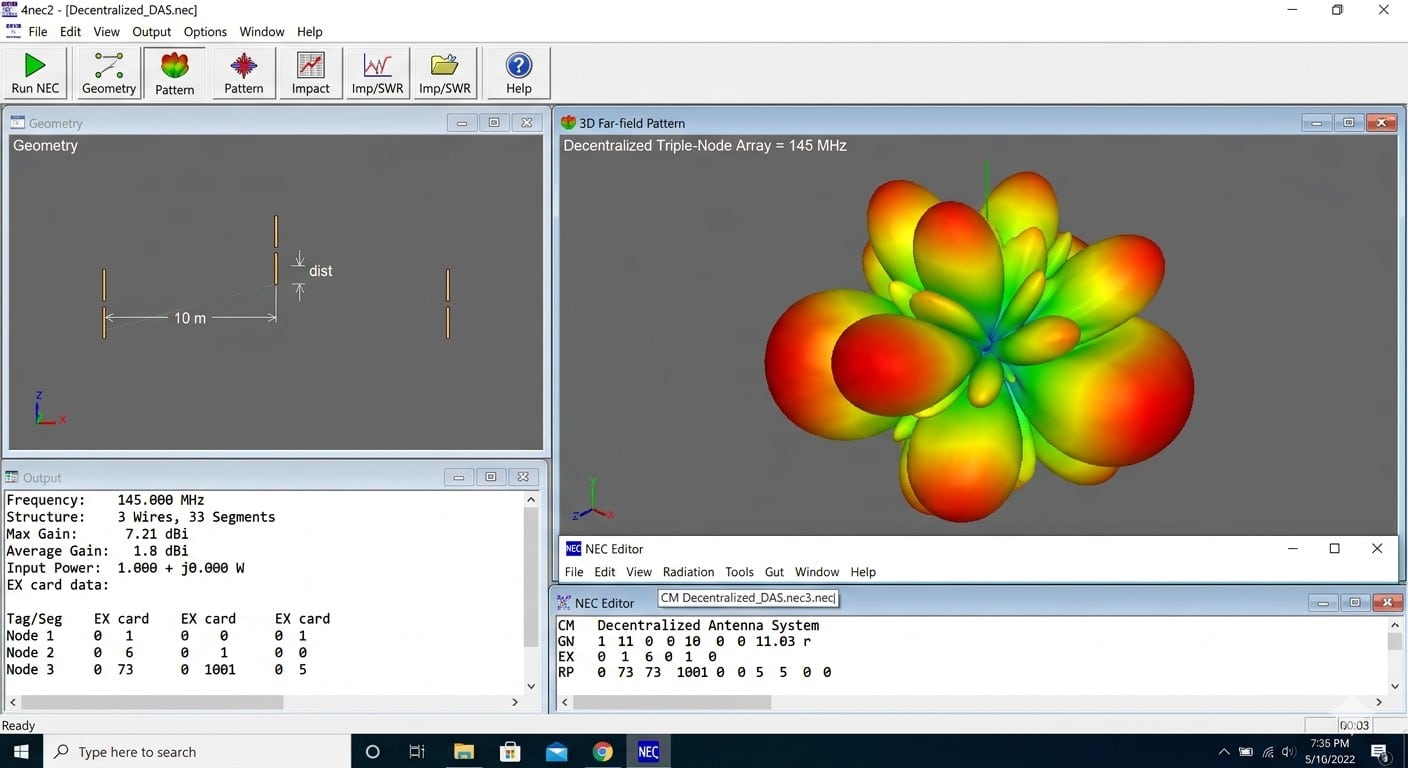
Table 2: Key features of 4nec2 simulator
| Smith chart | Time and frequency analysis | Time plot |
| Impedance matching | Linear far-field plot | Gain, F/B and F/R ratio |
| 3D near-field pattern | 3D viewer | Area coverage |
| Compare patterns | Current distribution | Current distribution |
| Distance plot | FF surface plot | Far-field pattern |
| Field analytics | Optimiser window | Geometry edit |
| Geometry builder | NEC editor | Helix model |
| SWR for freq-sweep | Search space | Ship model |
Implementation of DeWi and decentralised antenna design
Rather than millions of towers under one company, in blockchain-based decentralised solutions the dedicated small node is in each home with the option to share the resources and bandwidth on demand or dynamically.
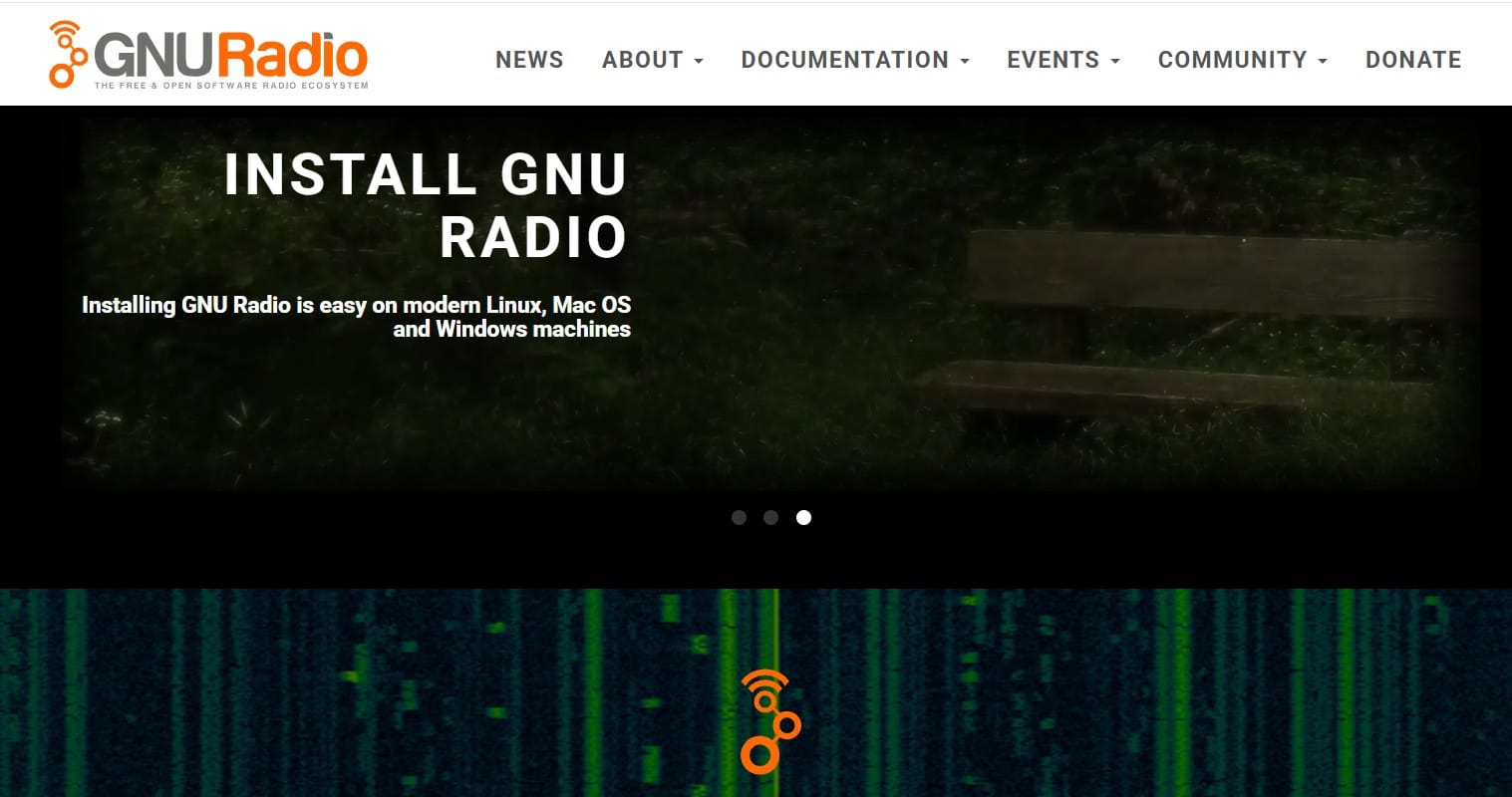
GNU Radio (Figure 2) can be used for simulating radio signal analytics when the blockchain is being integrated. It is available as a free and open source platform on https://www.gnuradio.org. Its implementations include 2G, 3G, 4G, LTE, RFID, and 5G.
Decentralised antenna design is a key research area in Cell Free Massive MIMO (CF-mMIMO). In general implementations, there is a specific antenna connected to the devices. In blockchain-based decentralised antennas, multiple nodes at multiple locations coordinate with each other to provide the signals.
A decentralised antenna can be simulated using the 4nec2 simulator that is available under free and open source distribution at https://www.qsl.net/4nec2/. The results of the simulation on 4nec2 help predict the outcomes of blockchain-based decentralised antenna design.
Free and open source simulators can be used by researchers for decentralised scenarios so that blockchain-based implementations can be analysed before deployment on site.