





















































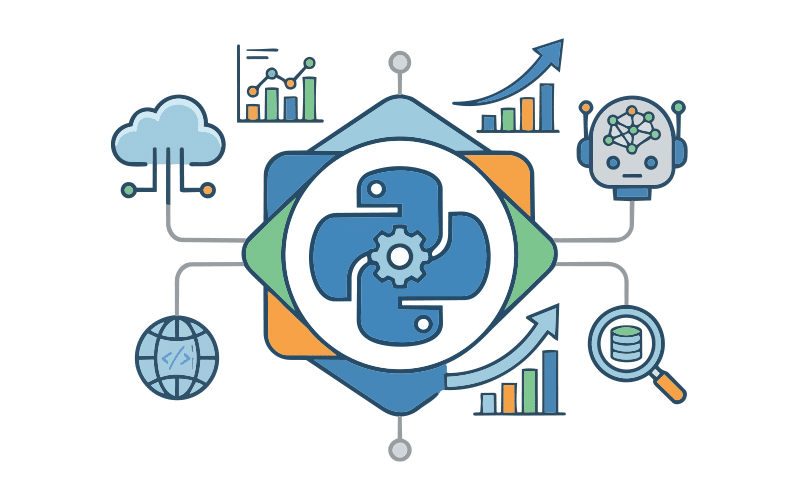

Python remains a popular programming language in the AI era. And there are reasons for that…
The language driving current applications and online platforms is Python — its hidden structural framework controls all modern systems. Python is more than a programming language — it functions as an all-purpose medium through which people exchange concepts. It serves as the fundamental instrument that scientists use to decode language that would appeal to UNIX/C hackers who knew the English alphabet. His efforts produced a programming language that resembled the English sentence structure. The underlying philosophy of Python is: ‘There should be one—and preferably only one—obvious way to do it’. Python provides programmers with a single logical method to implement the human genome, financiers use to create worldwide market models, and artists use to design generative artwork. The language has achieved market dominance through its deliberate design process, which focused on making readability its primary objective.
Guido van Rossum developed Python and released it to the public in 1991. He wanted to create a programming language that would appeal to UNIX/C hackers who knew the English alphabet. His efforts produced a programming language that resembled the English sentence structure.
The underlying philosophy of Python is: ‘There should be one—and preferably only one obvious way to do it’. Python provides programmers with a single logical method to loops — other languages present multiple syntax options for basic loop functions. Python code reading requires no mental translation of computer operations because programmers read direct instructions, which they recognise as valid.
Python requires mastery of its basic elements because they represent its fundamental operational components. The technical terms used in the language serve as actual tools, which enable users to create real-world simulations.
Variables and data types: Python allows users to create variables that serve as names for objects. The system automatically determines data types such as integers, floats, strings and Boolean values.
‘Lists’ serve as modern storage containers enabling users to keep their items. The user can store items, retrieve them, and reorganise their position within the container.
‘Dictionaries’ store information through ‘key-value’ pairs, enabling users to find a word (the key) and its definition (the value). Users can access data at extreme speeds, which becomes essential when enormous datasets must be managed.
Object-oriented programming (OOP): Python centres around objectoriented programming. It requires developers to create their programs using ‘objects’ instead of program functions. An object combines data attributes with code methods, creating a complete entity. An object exists because it represents a specific entity within the physical world. For example, a car exists as an object because it has distinctive characteristics, which include colour and speed. The development of software systems through ‘classes’ and ‘inheritance’ enables developers to create modular systems that developers can reuse for maintenance. Google uses this method to organise its extensive codebase, which consists of millions of lines.
Control flow and syntax: Python syntax achieves brilliance through its implementation of indentation patterns. Other programming languages require developers to use braces `{}` for creating their code blocks. Python uses whitespaces for defining code blocks. The requirement for indentation forces programmers to create code that can be easily understood. Code execution depends on correct indentation or it can result in program failure. The system uses `if-else` statements together with `for` and `while` loops as its decision making pathways.
The data science enabler
Python serves multiple programming needs, but its popularity surged because it became the primary tool for data science. Three essential and mutually dependent libraries enable its sustained dominance.
NumPy: The mathematical foundation: C and Fortran were the high-performance programming languages that existed before Python but they were not easy to understand. Python made programming simpler, but it required performance improvements. NumPy introduces the `ndarray`, which functions as a multidimensional array object. The NumPy package allows users to work with a spreadsheet that functions entirely from memory while executing mathematical computations instantly. Users can process data through the basic mathematical and linear algebra functions, as well as Fourier transform functions. NumPy serves as the primary base that supports all components of the data science ecosystem. Python needs NumPy for effective data processing.
Pandas: The data analyst’s best friend: Pandas serves as the operational control system, which NumPy uses as its primary computational engine. The actual data found in the world exists in an unstructured form, presenting various challenges because it contains multiple formats and missing components that need to undergo cleaning, reshaping, and merging. DataFrames are the solution to this problem.
The DataFrame is a digital table that users can control programmatically. They can import data from a CSV file and then use simple commands to create statistical reports, which include filtered data and grouped content.
Users can load data with the common functions. The `read_csv()` function enables them to use the `groupby()` function for data aggregation, `merge()` function for dataset joining, and `fillna()` function to handle missing information.
Pandas is built on top of NumPy and transforms raw numerical data into meaningful structured data. The system enables users to transform unprocessed information into an analytical format that can be understood easily.
Matplotlib and Seaborn: The art of visualisation: Data requires visualisation. Matplotlib stands as the oldest Python library that enables users to create different types of visual displays, which include line plots, bar charts, histograms, and scatter plots.
Seaborn extends Matplotlib with better statistical features and more visually appealing designs.
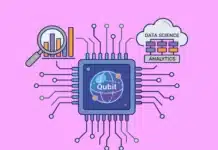
The connection between the three libraries: You pull data using Pandas, analyse it with NumPy, and visualise it with Matplotlib. This workflow stands as the fundamental process that modern analytics systems depend on. A business analyst can track sales trends, a scientist can plot experimental results, and an economist can visualise inflation rates— all in seconds.
Python and the machine learning revolution
Three libraries make Python a great language for the AI and machine learning era.
Scikit-learn: This is the industry standard for traditional machine learning. The software provides tools for three tasks: classifying emails as spam or otherwise, regression to forecast home values, and clustering to organisecustomers based on their purchasing patterns. Scikit-learn works perfectly with NumPy and Pandas becaus e users
can train models on DataFrams using only a few lines of code.
TensorFlow and PyTorch: These two platforms serve as the main frameworks for creating deep learning systems, which use neural networks to imitate human brain functions. Applications include image recognition, natural language processing, and self-driving vehicle technology.
Python serves as an ideal framework for developing advanced AI systems because it uses NumPy to manage the complex mathematical tasks that these large AI models require.
Web development: Django and Flask
Python can power all aspects of web development. Django provides a web framework that enables developers to create applications through its rapid development process and structured design approach. It provides complete functionality with its built-in security
features, database connection capabilities, and URL routing system. Django serves as the main framework that powers both Instagram and Pinterest.
Flask provides a micro framework solution for projects that require both compactness and adaptable design. It provides developers with the essential tools to create their own web services and APIs (application programming interfaces). The system establishes a connection between Python backend processes and HTML/ JS frontend display systems, enabling web applications to interact with Python code.
Automation and scripting: Python serves as the best automation solution for people who lack programming expertise. Users can extract web data and perform automated browser operations by using the BeautifulSoup and Selenium libraries. Imagine needing to download 1,000 PDF files from a government website. The process requires an entire day when performed manually but takes 30 seconds because of a 10-line Python script. The superpower of this system attracts accountants, lawyers, and HR professionals who need to
streamline their work.
Why Python has won the global race
Python has overtaken Java, C++, and other programming languages to become the most popular language in programming surveys for some valid reasons.
- Python provides a complete programming environment through its extensive standard library. You have tools for working with dates, email systems, file systems, and web servers without needing to install extra software. The software package delivers complete functionality to users after they complete the installation process.
- The community is Python’s moat. The solution to your problem exists because other people have already completed the work. The Python Package Index (PyPI) contains more than 400,000 external libraries. The collective knowledge of this group enables you to complete your work without starting from the beginning.
- Python operates on Windows, Mac and Linux systems. You can create software on your laptop and transfer it to a cloud platform without making any modifications to your code.
Career opportunities
The demand for Python skills is not local – it is global. The job roles include:
Data scientist: This is the #1 job role in tech, requiring mastery of Pandas, NumPy, and ML algorithms.
Backend developer: This involves designing application server-side components through Django and Flask.
AI engineer: In this role, artificial intelligence systems are developed through neural network design using TensorFlow and PyTorch.
DevOps engineer: This entails creating automated deployment processes and infrastructure systems for operational use.
Recruiters in international cities from London to Singapore use Python skills as their main criterion to evaluate the eligibility of candidates.
The future
As Python continues to evolve, it will remain the primary programming language for technological advancement.
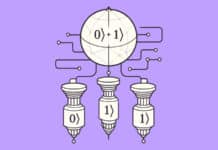
- Quantum computing: The Qiskit Python library enables users to develop software that controls quantum computers.
- Generative AI: Python is being used as the programming language for the deployment of large language models (LLMs) in AI-based software systems.
- Education: Schools worldwide are teaching Python as the ‘second language’ of the world, which students learn together with English.
Python helps to establish order from disorder. It connects mathematicians with machines and artists with algorithms. Students developing their first program as well as developers who work with AI models use Python. Its tools help us operate in a world that is becoming increasingly complicated. You just can’t work without Python today.