


























































A compact remote access platform allows users to control computers over a network using low-cost embedded hardware.
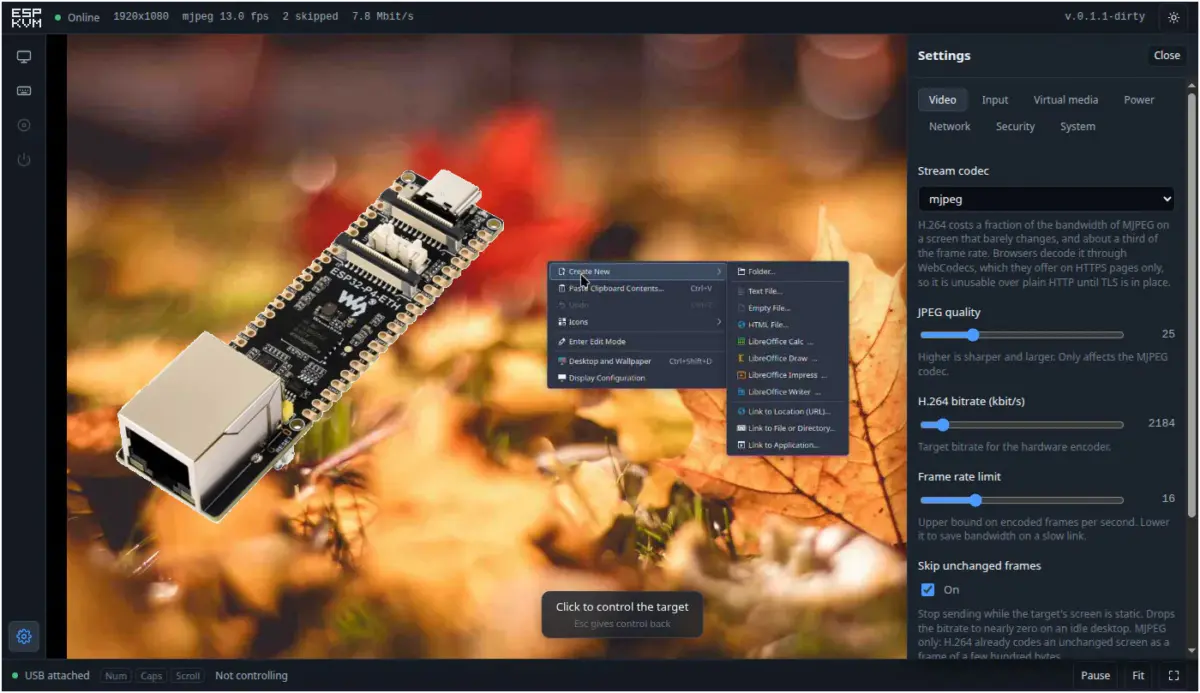
ESP-KVM is an open-source keyboard, video and mouse over internet protocol (IP-KVM) solution that uses the ESP32-P4 dual-core RISC-V microcontroller to provide remote access to computers over a network. Designed as a compact and affordable alternative to traditional IP-KVM hardware, the project allows users to control a system’s keyboard, video, and mouse remotely, making it suitable for server management, embedded development, and remote troubleshooting.
This project captures video from the high-definition multimedia interface (HDMI) source through an HDMI-to-MIPI CSI bridge connected to the ESP32-P4 board, which is then processed and streamed to the client computer remotely. The universal serial bus (USB) interface enables keyboard and mouse emulation, allowing users to target computers as if they are physically present. The image processing features and peripheral interfaces provided by the ESP32-P4 enable these functions to run on a microcontroller, not a single-board computer.
The ESP-KVM project is released under the Apache 2.0 license, which means that the source code and schematics can be reviewed, modified and extended freely by developers.
The present version of the solution is primarily focused on basic IP-KVM capabilities and is under active development. It should be noted that features such as audio streaming and wireless networking have not yet been implemented into the product, and the developer states that security features are currently being added to make the platform ready for widespread use.
With its combination of open-source firmware and the multimedia capabilities of ESP32-P4 microcontroller, ESP-KVM demonstrates a lightweight approach to remote system management. The project highlights the growing potential of modern RISC-V microcontrollers.