





















































The superconducting quantum processor provides researchers with free cloud access while supporting open-source quantum software frameworks.
QuTech, a joint venture of TU Delft and the Netherlands Organisation for Applied Scientific Research (TNO), has launched Tuna-17, a 17-qubit superconducting quantum computer which is now accessible via the Quantum Inspire cloud-based platform. The system provides researchers, engineers, and educators with free access to physical quantum hardware, supporting up to 100,000 shots per experiment.
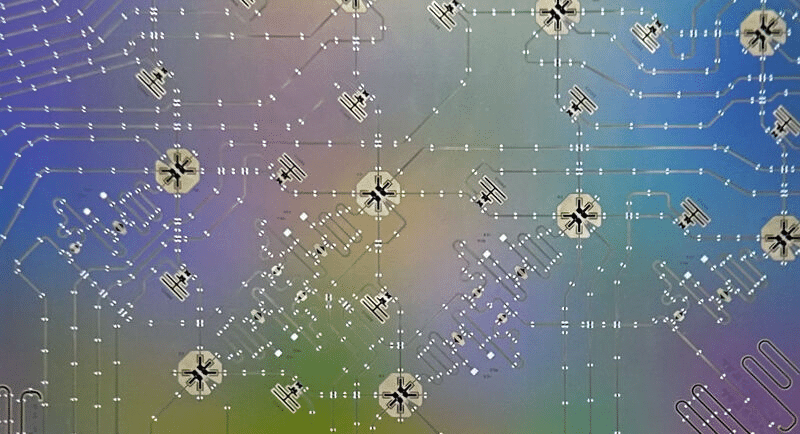
Developed by the DiCarlo Lab at QuTech, Tuna-17 has 17 superconducting qubits and 24 tunable couplers. The system is designed for quantum error correction and surface code experiments. Tunable couplers dynamically adjust interactions between qubits, reducing crosstalk and spectator effects during multi-qubit operations.
The processor features a universal gate set, automatic self-calibration, real-time performance monitoring, and mid-circuit measurements, enabling error mitigation, conditional execution, and noisy intermediate-scale quantum (NISQ) algorithms. It is compatible with the open-source Qiskit and PennyLane frameworks, allowing existing quantum applications to run without modifying their code.
Tuna-17 was developed through collaboration between QuTech, TU Delft, TNO, Orange Quantum Systems, Qblox, Delft Circuits, and QuantWare. The partners contribute to processor design, fabrication, microwave control electronics, cryogenic interconnects, calibration software, and system integration.
It is built on an open architecture and serves as a development platform for future large-scale quantum processors such as Tuna-28. Tuna-17 is also part of the HectoQubit programme under Quantum Delta NL and contributes to the European OpenSuperQPlus initiative.