
























































The framework combines reinforcement learning with value estimation to improve robot precision and stability, while its open-source release aims to accelerate research and industrial deployment.
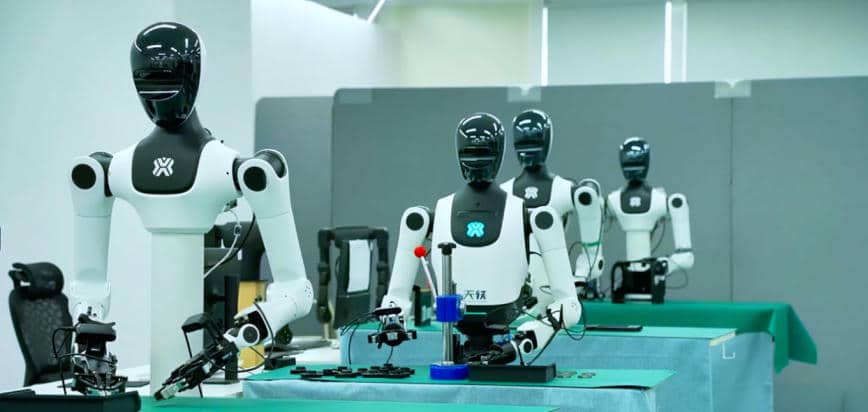
Researchers from the Beijing Innovation Center of Humanoid Robotics (X-Humanoid) and the Gaoling School of Artificial Intelligence at Renmin University of China have made their Robo-ValueRL framework for reinforcement learning open-source. Robo-ValueRL includes a value estimation procedure that allows robots to analyse past actions and outcomes to make more accurate decisions and execute more precise movements.
As opposed to standard Vision-Language-Action (VLA) systems, Robo-ValueRL integrates historical observations in the reinforcement learning pipeline. The system analyses previous actions and task completion results, removes low-quality training samples, and adjusts motion trajectories and gripping force. As a result, robots can complete tasks with higher precision and reliability.
The researchers claim that this framework can overcome three primary challenges associated with current VLA methods: inconsistent quality of training data, insufficient precision of delicate manipulations, and unstable online adaptation to changing environmental conditions. These limitations have restricted the use of humanoid robots in advanced manufacturing tasks requiring sub-millimetre precision.
Robo-ValueRL has been made available as an entirely open-source solution, comprising reinforcement learning algorithms, value assessment, industrial debugging examples, standardised operating code, tutorials, and testing data. Developers can customise the framework without building an entire reinforcement learning pipeline from scratch.
The solution is compatible with popular humanoid robot frameworks and can be applied in industries such as semiconductor assembly, precision electronics manufacturing, and medical devices manufacturing. With its help, robots will be able to evaluate and improve the quality of their actions, reducing calibration effort and accelerating industrial deployment.