






















































Analog Redial is an open-source ESP32-C6 telephone project, bringing rotary and touch-tone phones back with calling, answering and home automation features.
An open-source electronics project named Analog Redial enables the use of traditional rotary-dial and touch-tone telephones as a self-contained telephone system through an ESP32-C6 development board. The project is brought to life by Scott Dylewski, the project provides publicly available hardware designs, firmware and documentation, allowing developers to build, inspect and customise the system. It supports dial tone generation, mechanical telephone bell operation, and inter-handset calling capability. The project can also be utilised for connecting to Voice over IP systems as well as integrating into Home Assistant. Unlike other typical telephone adaptors, the project offers a dial plan configuration option which helps assign different activities to numbers dialed via a telephone.
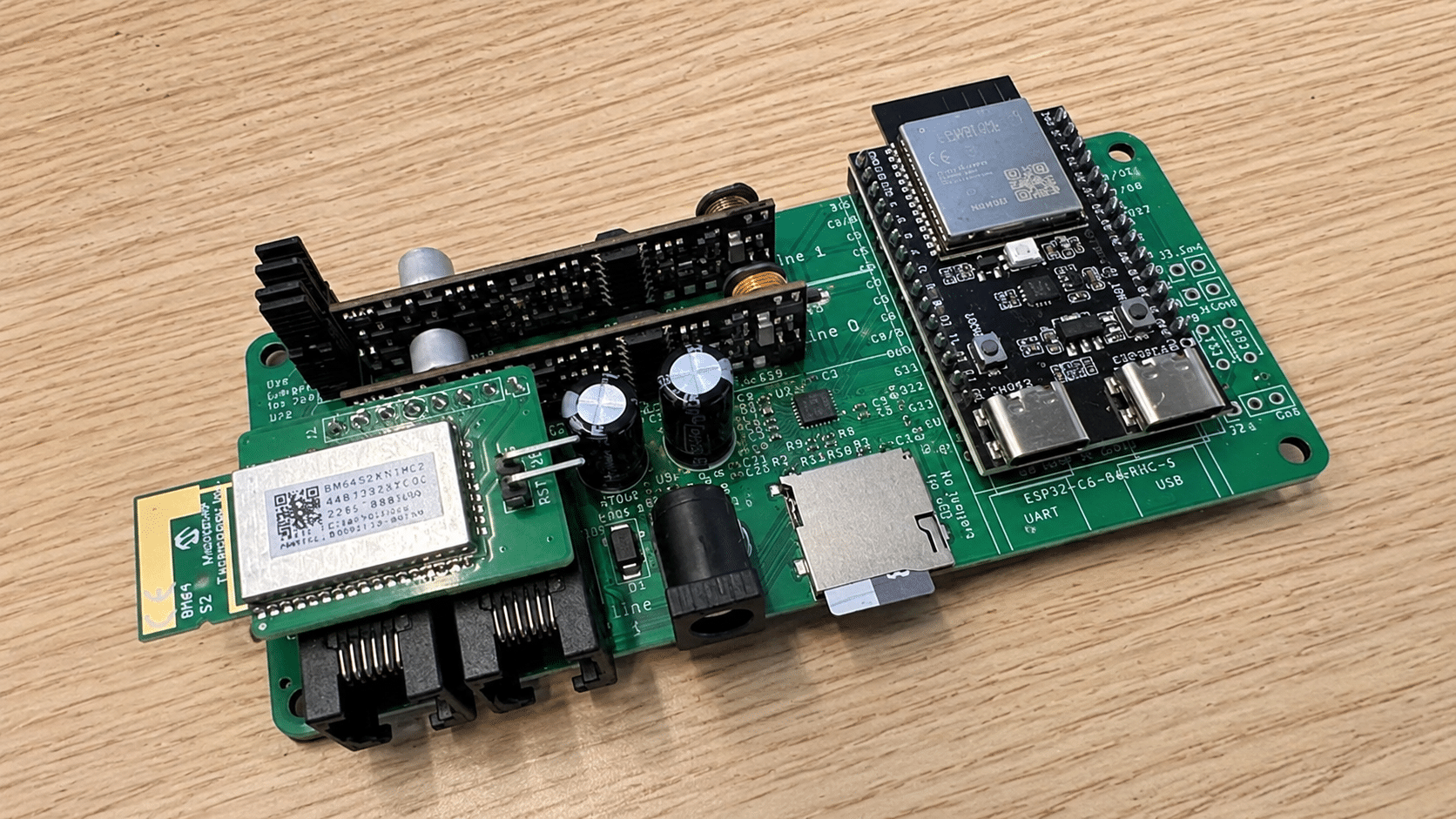
Hardware is made up of an ESP32-C6-DevKitC-1, audio codec ES8388, and one or two Silvertel AG1171 SLIC modules. The ESP32-C6 is responsible for dialing, Wi-Fi, web configuration, and VoIP, while the audio codec takes care of the phone audio signals. The SLIC modules are used for the physical connections needed by analog phones through the provision of loop current, ring signals, and handset detection. This board can connect two telephones, enabling users to make internal calls without being connected to the internet. An optional microSD card can be included to store recordings and other audio files.
The firmware is also compatible with servers like Asterisk and FreePBX, thereby connecting the phone and making calls through VoIP. It is also possible for more than one Analog Redial board to communicate on the Wi-Fi network locally. The dialing codes can be customised for taking some action, playing audio, setting up a timer or operating some connected devices. There is Home Assistant support via MQTT and webhooks that makes it possible to use a telephone for controlling a smart home, even if the feature is currently experimental in nature. There is also an optional Bluetooth board for connecting to a smartphone using BM64.
The project provides KiCad hardware design files, ESP-IDF firmware written in C and documentation through GitHub, with the firmware released under the MIT licence. Most surface-mount components can be assembled by a PCB manufacturer, while the remaining through-hole parts require manual soldering. For the single line build, the developer is estimated to cost about $37 per board for an order of five, while additional costs will accrue for any other secondary line or Bluetooth hardware components. The device is fitted with telephone line voltages of 48V DC and 60V AC when ringing, hence should not be connected to any other home or telephone company connections.
For more information, click here.