






















































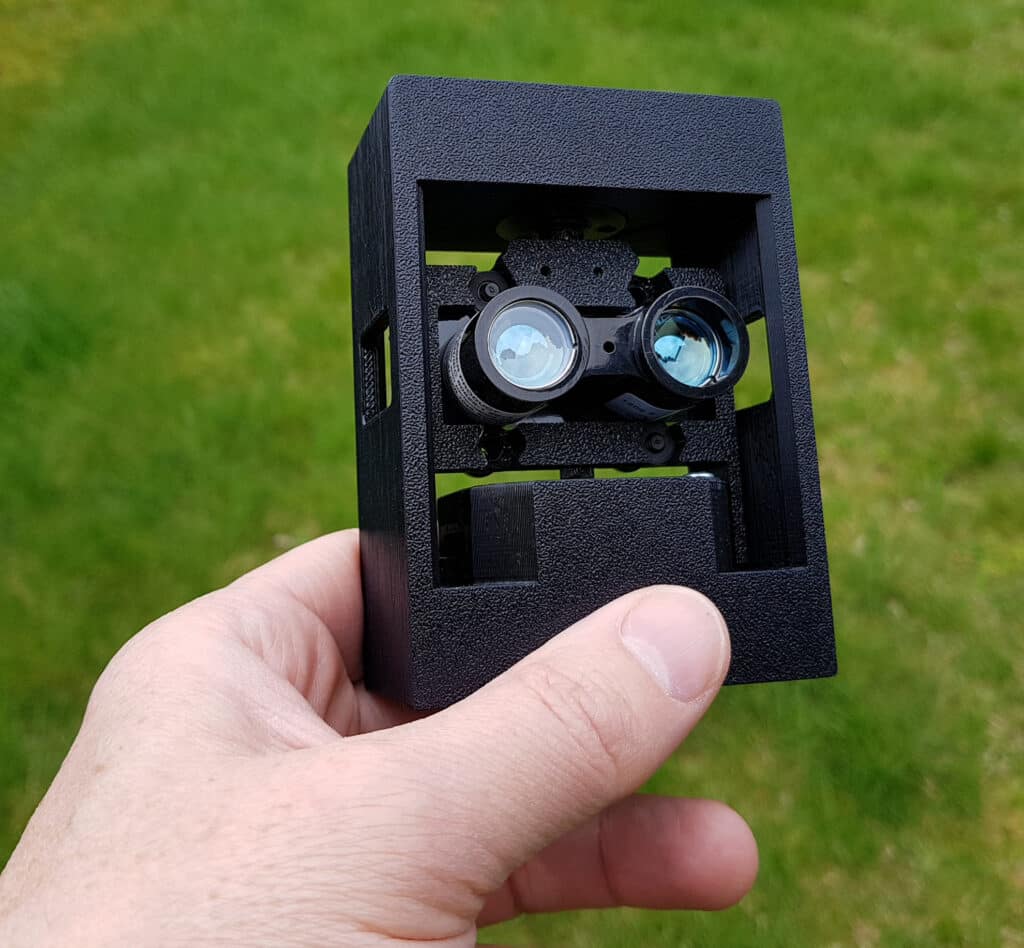

The Arduino-compatible OpenLIDAR sensor combines open hardware with ROS support to provide mapping, localisation, and autonomous navigation for mobile robots.
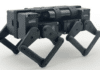
Xaxxon Technologies have announced the availability of OpenLIDAR, which is an open-source laser scanner designed for robotics engineers, educators, and enthusiasts. The technology was developed for the company’s Oculus Prime mobile robot but can also be used in autonomous robots for simultaneous-location-and-mapping (SLAM), path planning, and obstacle avoidance.
The device consists of a Garmin Lidar-Lite v3 rangefinder, a stepper motor, a rotational slip ring, an Arduino-compatible controller board, and 3D-printed mechanical components. The device weighs about 180g and offers a scanning range up to 40m, up to 750Hz sampling frequency, the original specification is approximately 1 to 2.5cm measurement resolution, and up to 250 rotations per minute.
In contrast with other commercial LIDARs, OpenLIDAR is an open-source hardware, giving engineers freedom to change not only the hardware but also the firmware depending on particular needs. As stated by the developers, this design is aimed at making the device affordable to use when compared to other commercial sensors that are often expensive, bulky, power-hungry, or difficult to source.
Fully integrated into the Robot Operating System (ROS), the device is able to transmit 360-degree LaserScan data in real-time through USB. The data could be utilised in ROS navigation packages for the purposes of localisation and path planning, and it could be also processed with mapping algorithms like Gmapping, Hector SLAM, and Cartographer. Despite the fact that scanning occurs in 2D, the output could be converted into a 3D point cloud with the help of available ROS packages or simply by using a motorised tilt mechanism.
Additionally, the Arduino-compatible controller allows users to modify the firmware, whereas the protocol for communication via serial interface makes it possible to integrate the device with software written in languages such as Python. Xaxxon is also planning to release a version designed specifically for the company’s Oculus Prime robot along with a depth camera.