



























































Google has quietly released official Chrome builds for Arm64 Linux, bringing native Widevine DRM and Chrome-exclusive features while eliminating years of community workarounds for Linux on Arm users.
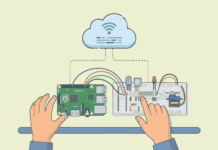
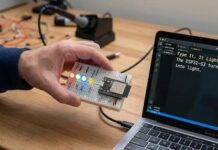
Google has quietly expanded support for the open-source Linux ecosystem by making official Google Chrome builds available for Arm64 Linux. Native Arm64 packages have appeared in Google’s Debian and RPM repositories, allowing users to install Chrome on devices such as Raspberry Pi, Snapdragon laptops, PineBook Pro, System76 Thelio and NVIDIA DGX Spark.
The release complements the existing open-source Chromium browser by bringing proprietary Chrome capabilities to Arm64 Linux. Installation also adds Google’s repository, enabling future updates through the standard package manager. The current release ships as Chrome 150 Stable for Arm64.
A major addition is native Widevine DRM support. Until now, Linux users typically depended on extracted ChromeOS binaries, third-party scripts or unofficial integration methods to enable DRM playback on Arm64 devices. Chrome now bundles what appears to be a native linux_arm64 Widevine module, removing the need for those community-maintained workarounds.
Chrome also introduces features unavailable in Chromium, including native Google Account synchronisation for bookmarks, extensions, passwords and settings, making it easier for users to move between devices.
Performance testing showed smooth playback of BBC iPlayer content and 1080p and 2K YouTube videos on a Raspberry Pi 5, although 4K playback remained constrained by the hardware rather than the browser.
Some limitations remain. Linux continues to use Software Secure DRM, restricting services such as Netflix to around 720p or 1080p without 4K or HDR because hardware-backed Trusted Execution Environment support is absent. Google has yet to formally announce Arm64 Linux support or update Chrome’s download page to automatically provide the native installer.