


























































An open source simulation framework combines GPU acceleration, physics modelling, and generative AI to help developers build, train, and validate healthcare robots in virtual environments.
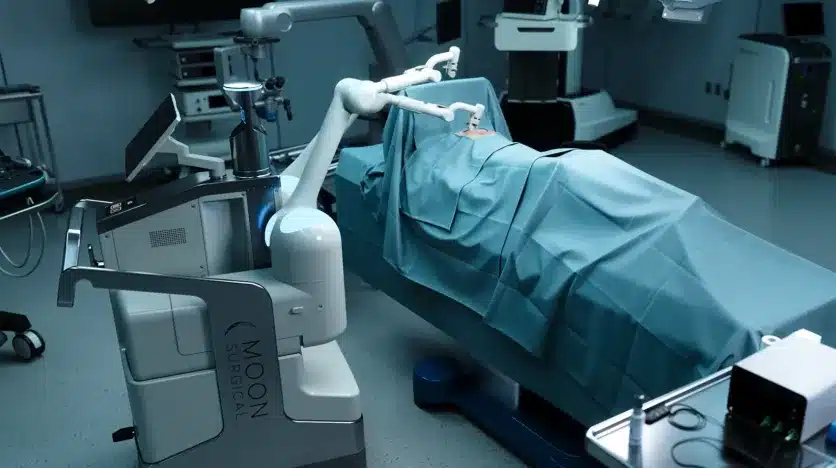
As part of NVIDIA Isaac for Healthcare, NVIDIA has developed Medical Physics Simulation, which is an open source framework for training and evaluating healthcare robots through graphics processing unit (GPU)-accelerated simulation environments. The framework simulates the interaction between anatomy and medical devices, creates difficult-to-model clinical cases and tests robot policies in virtual environments before moving to actual hardware.
The framework combines anatomy modelling, medical device behaviour, sensor simulation and robot learning to form reusable simulation environments in multiple applications. The developers have the possibility of inspecting the software and modifying the code to adapt it for their own devices and processes. The use of GPU acceleration makes it possible to run thousands of simulations at the same time.
This framework is intended for healthcare robotics applications and allows developers to evaluate robot performance in various scenarios by simulating human anatomy, device interaction, friction, motion, and sensor data. It is designed using NVIDIA compute unified device architecture (CUDA) along with other tools such as Warp, Newton, Cosmos, and Isaac for Healthcare. Thousands of simulations can be executed at once in parallel using this framework. According to NVIDIA, running 8192 training environments for robots at once reduces training time from more than five hours to less than two minutes.
Medical Physics Simulation combines both classical physics simulation and generative AI-based physics simulation. While classical simulation models known physical phenomena such as contact, motion, and friction, the NVIDIA Cosmos framework generates realistic physics for scenes using procedural data. This allows developers to test their robotic systems thoroughly even before creating any physical prototype.
This framework has already been applied by many organisations in the medical robotics industry. These organisations include CMR Surgical, Cambridge Consultants, Johnson & Johnson MedTech, XCath, Inner Logic, and Medtronic Structural Heart. The framework is used for purposes such as patient-specific simulation, digital twins, endovascular robotics, generating synthetic clinical data, and catheter navigation. This framework can operate as a standalone system but also be integrated into other systems within Isaac for Healthcare to support digital twins, medical sensor simulation, and robot learning workflows.