




















































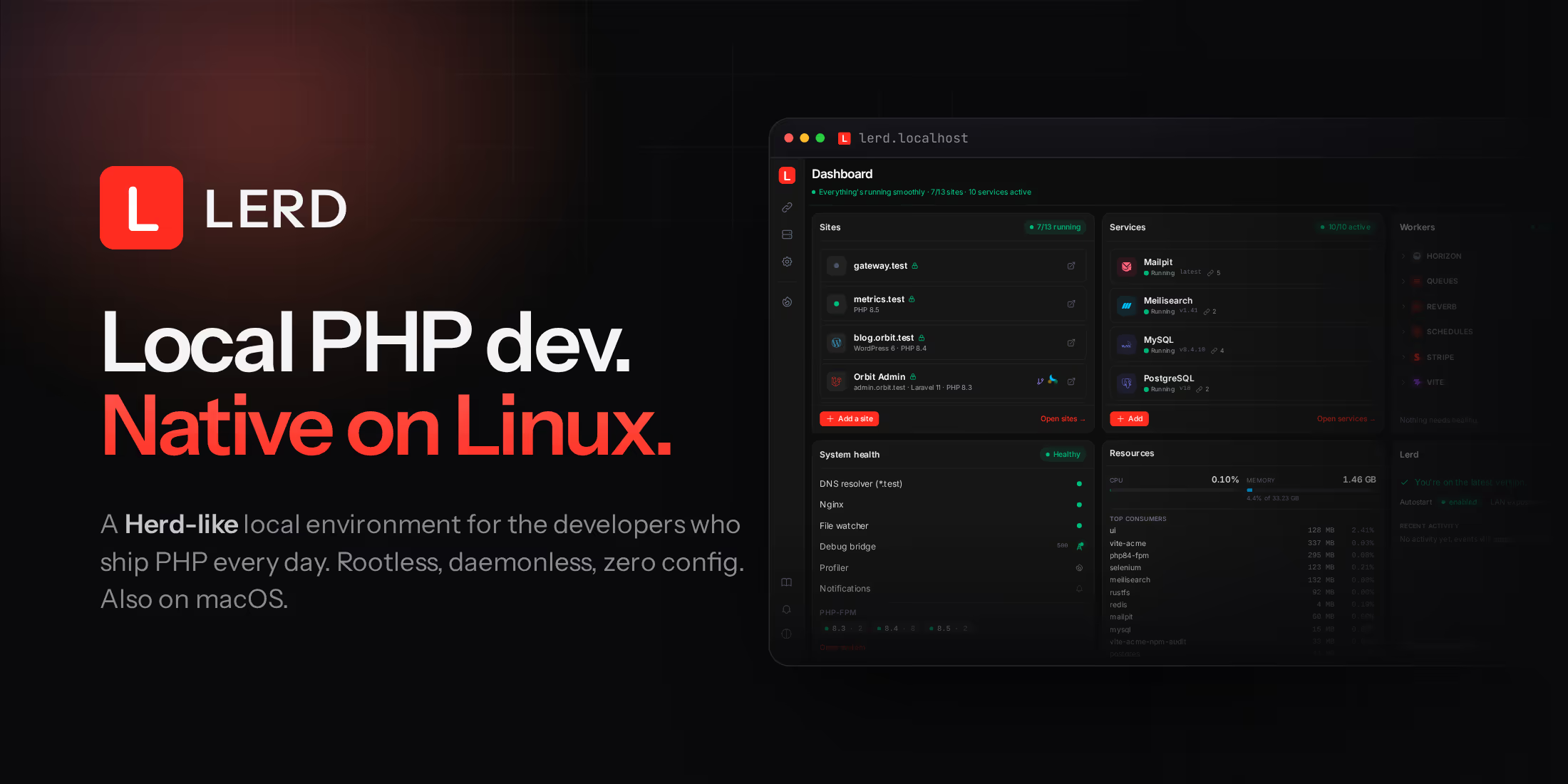

Lerd is an open-source development environment for Linux and macOS that provides project-specific PHP versions, services, debugging tools and isolated databases without requiring Docker Desktop.
Lerd is an open-source local development environment designed as an alternative to Laravel Herd for Linux and macOS. Projects can be assigned their own .test domains with trusted HTTPS, dedicated PHP versions and required services. The platform operates without Docker Desktop or root-level daemons, with the environment built using rootless Podman containers and system services.
Lerd supports project-specific PHP versions ranging from PHP 7.4 to PHP 8.5. It also supports different Node.js versions and Bun, while FrankenPHP can be used as an alternative to PHP-FPM. For framework support, Lerd includes Laravel, Symfony, WordPress and Magento, while Node.js, Python and Go applications can use .test domains.
Lerd provides a debugging dashboard that captures dump() and dd() output in Laravel and Symfony, SQL queries, outgoing mail, rendered views, events, queued jobs and outgoing HTTP activity without requiring an additional package. It also includes the SPX profiler, route timing based on recent traffic and an in-browser Tinker console for PHP development.
Lerd provides Git worktrees with separate subdomains and databases, allowing developers to work on different branches without affecting the main project’s database. Each worktree can also have its own PHP and Node.js versions. Lerd offers MySQL, PostgreSQL, Redis and Mailpit through its service store, while database creation, import, export and management can be performed through the dashboard.
The platform includes a web dashboard and command-line interface, automated environment checks and project analysis tools. Lerd also includes an MCP server that allows AI coding assistants to perform tasks such as project initialisation, migration management, PHP version management and log reading. Lerd is released under the MIT licence, with all features available without a paid tier.