














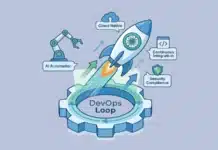





























Modern software engineering is getting a boost with the arrival of a range of AI-based open source tools that enhance the functioning of DevOps.
DevOps is about creating a collaborative environment that improves software delivery and increases business value. Its objective is to maximise the predictability, efficiency, security and maintainability of operational processes.
DevOps targets product delivery, quality testing, feature development and maintenance releases to improve software reliability, security, and faster development and deployment cycles.
The goals of DevOps include:
- Improved deployment frequency
- Faster time to market
- Lower failure rates of new releases
- Faster recovery time from crashes or failures
The latest AI-enabled DevOps strategies are:
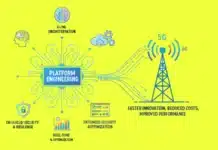
Using platform engineering
DevOps practices are increasingly being delivered through internal developer platforms, self-service workflows and reusable paved roads. The goal is to hide infrastructure complexity without hiding engineering accountability.
DevSecOps to secure the software supply chain
Security is moving into the delivery system through SAST/DAST, dependency scanning, SBOMs, artifact signing, provenance and Policy as Code.
Continuous delivery engineering
Organisations are optimising the entire value stream and not only CI. Deployment automation, environment provisioning, progressive delivery, observability and rollback are now first-class capabilities.
From containers to cloud native platforms
Kubernetes, Helm, GitOps and container-native ecosystems form a common operating model for distributed applications and increasingly for AI workloads.
Monitoring observability
Logs, metrics and traces are converging around open telemetry standards, with OpenTelemetry becoming a strategic interoperability layer.
AI augmented DevOps
AI assistants are expanding from code generation into test creation, code review, incident triage, root-cause analysis, remediation recommendations and operational forecasting.
From toolchain to engineering platform
Tool sprawl is being addressed through platform teams, standardised workflows, developer portals, golden paths, and common engineering metrics.
From DevOps metrics to outcome metrics
DORA delivery metrics are increasingly being combined with reliability, developer experience, security, cost and business outcome measures.
The need for open source AI-based DevOps tools
AI-based DevOps tools are required to:
- Avoid or reduce vendor lock-in through open standards, portable formats and interoperable APIs.
- Reduce total cost of ownership for commodity capabilities while preserving investment for differentiated engineering capabilities.
- Accelerate innovation by leveraging large communities, reusable components and rapid project evolution.
- Support hybrid and multi-cloud architectures with portable tooling and automation.
- Increase extensibility, and integrate tools into enterprise workflows, platforms, policy engines and AI agents.
- Improve transparency and auditability through inspectable code, public issue trackers and community practices.
- Enable developer choice while providing standardised enterprise paved roads.
- Reduce duplicated capabilities by rationalising the toolchain around common platforms and open interfaces.
Features of open source DevOps tools
Tools for release management, provisioning, configuration management, systems integration, monitoring, control, and orchestration are important for DevOps adoption. These tools should have the following features:
- Open standards and APIs: Strong interoperability and automation interfaces, avoiding closed integration patterns.
- Security and supply-chain posture: Signed releases, vulnerability response, SBOM/provenance support, and transparent security practices.
- Enterprise operability: High availability, backup/restore, role-based access control, audits, observability, upgrade paths and automation.
- Extensibility: Plugins, APIs, controllers, operators, webhooks and policy integration.
- Licence fit: Licences must be compatible with enterprise distribution, SaaS, modification and commercial use.
- Portability: Run consistently across cloud, on-premises and hybrid environments where required.
- Sustainability: Clear project governance, funding, maintainers and exit strategy.
Mapping open source tools to the different phases of the DevOps lifecycle
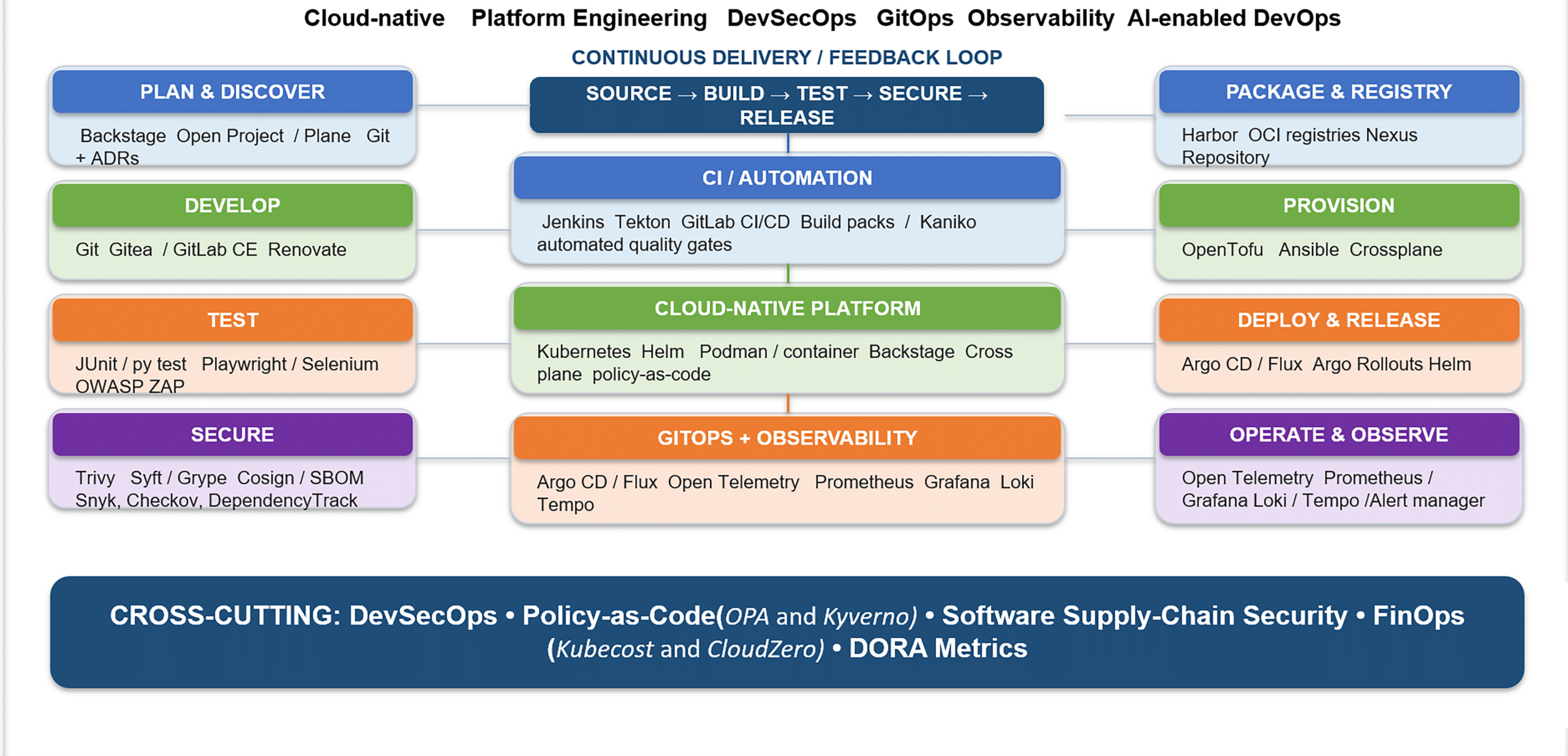
A DevOps toolchain is a combination of tools that help in the delivery, development, and management of applications throughout the system’s development lifecycle. Software teams need to automate the entire cycle of build, provisioning and deployment of test environments, including the tools, scripts and test data to ensure rapid delivery. These teams need to collaborate around application architecture and monitor event-based mechanisms for seamless data flow across the toolchains.
The different stages any software or application must pass through when developed via the DevOps lifecycle are:
- Planning
- Continuous development
- Testing
- Security
- Packaging and registry
- Provisioning
- Deploying and releasing
- Operating and observing
- CI automation and cloud-native platform (central core)
- Cross-cutting dimensions
Let’s now map open source tools to these phases of a DevOps lifecycle.
Plan and discover
This phase focuses on architectural decision-making, requirements gathering, issue tracking, and software catalogues. It bridges product management with platform visibility, ensuring teams can discover existing microservices, track dependencies, and manage agile workflows without fragmented visibility. Open source tools used in this phase include:
- Backstage: This developer portal framework unifies software catalogues, technical documentation, and developer templates into a centralised dashboard. It standardises service discovery and accelerates developer onboarding.
- Plane/Open Project: Plane offers AI-native tracking, while Open Project focuses on classic enterprise task management and Gantt chart planning. These tools are self-hostable for full data sovereignty and have a modern UI as well as lower resource overhead compared to legacy enterprise platforms.
Other tools that can be used are Git and Architecture Decision Records (ADRs).
Develop
This phase encompasses source code management, local environment setup, version control, and automated dependency maintenance. It focuses on reducing developer friction through automated dependency updates and standardised source code workflows. Open source tools used in this phase are:
- Git: This de facto distributed version control system is used to track changes, handle branching, and coordinate work among developers globally.
- Gitea/GitLab CE (Community Edition): These self-hosted Git service platforms provide repository hosting, code review interfaces, user management, and issue tracking. They have full control over IP and source code storage. Gitea is lightweight and can run on low-resource nodes, while GitLab has feature-rich integrated pipelines.
Renovate is another tool that is used in this DevOps phase.
Test
This phase guarantees software quality, functional correctness, and performance before deployment. Modern testing relies heavily on ephemeral infrastructure (like containerised test dependencies) and automated end-to-end user path verification. Open source tools used in this phase include:
- JUnit/pytest: These are foundational unit testing frameworks for Java (JUnit) and Python (pytest) to validate core execution logic. They offer simple assertion structures, extensive ecosystem plugins, and native integration with all CI engine tools.
- Playwright/Selenium: These are automated browser testing frameworks for end-to-end (E2E) web application and cross-browser testing. They support all major modern web engines and enable headless execution in CI. Playwright offers high reliability and speed.
- OWASP ZAP: This open source dynamic application security testing (DAST) scanner is used to find security vulnerabilities in web applications at runtime.
Secure
This phase embeds security controls directly into the developer workflow (shift-left security). It spans Static Application Security Testing (SAST), Software Composition Analysis (SCA), container image scanning, cryptographic signing, and software bill of materials (SBOM) generation. Open source tools that are used in this phase are:
- Trivy: A comprehensive security scanner for container images, file systems, Git repositories, and infrastructure as code (IaC) configurations, this tool integrates CLI and CI easily. It covers OS packages and language-specific dependencies.
- Syft/Grype: These tools generate detailed SBOMs from container images and file systems; Grype scans these SBOMs for vulnerability matches.
Other tools that can be used are Cosign, Snyk (Community), and Checkov.
Package and registry
This phase stores, indexes, and manages compiled software binaries, container images, Helm charts, and dependency packages in central and secure artifact repositories. Open source tools used are:
- Harbor: An enterprise-class open source OCI and container image registry that secures artifacts with policies and role-based access control.
- OCI Registries/Nexus Repository (OSS): These generic and container artifact repositories are designed to hold binaries, Maven/npm/PyPI packages, and container images.
Provision
This phase abstracts cloud and on-premises infrastructure lifecycle management into declarative code (IaC). It enforces consistent, auditable environment provisioning across public and private cloud providers. Open source tools used include:
- OpenTofu: This community-driven fork of Terraform (under the Linux Foundation) is used to declaratively provision cloud infrastructure.
- Ansible: An agentless configuration management and provisioning engine that utilises human-readable YAML automation playbooks.
- Crossplane: CNCF project that transforms Kubernetes clusters into universal control planes to manage cloud infrastructure declaratively.
Deploy and release
This phase automates application delivery to production and pre-production clusters using declarative deployment models, continuous delivery loops, and progressive release strategies (canary/blue-green). Open source tools used in this phase are:
- Argo CD/Flux: These GitOps-based continuous delivery tools for Kubernetes automatically reconcile a running cluster state with configurations stored in Git. They feature zero cluster incoming port exposures (pull-based model), eliminate configuration drift, and enable instant rollbacks via Git commits.
- Argo Rollouts: A progressive delivery controller for Kubernetes that supports advanced deployment techniques like canary, blue-green, and automated metric analysis.
- Helm: Package manager for Kubernetes that enables parameterization, packaging, versioning, and deployment of complex microservice manifests.
Operate and observe
This phase collects runtime telemetry (metrics, logs, traces) across distributed workloads. It transforms raw signals into actionable engineering insights, automated incident detection, and performance optimisation. Open source tools are:
- OpenTelemetry (OTel): Vendor-neutral telemetry framework that provides unified APIs, SDKs, and collector agents to generate and export metrics, traces, and logs. It standardises telemetry collection without vendor lock-in and has widespread client library language coverage.
- Prometheus/Grafana: Prometheus collects and stores time-series metrics; Grafana visualises those metrics through custom dashboarding and alerting.
- Loki/Tempo/Jaeger/Alertmanager: These tools handle log aggregation. Tempo and Jaeger handle distributed tracing, while Alertmanager handles alert routing and deduplication.
- Vector: This high-performance, lightweight log/metrics collector and forwarder is built in Rust for routing telemetry data.
CI automation and cloud-native platform
This central backbone governs automated continuous integration workflows and standardises runtime execution platforms across multi-cloud environments. Open source tools used here are:
- Jenkins/Tekton/GitLab CI/CD: These automation engines run CI tasks (compilation, testing, container creation, and security checks). They feature ubiquitous integration capabilities (Jenkins plugins), cloud-native execution (Tekton CRDs), and seamless code-to-pipeline integration (GitLab)
- Buildpacks/Kaniko: These tools construct OCI-compliant container images without requiring access to a root Docker daemon in CI environments. They enhance pipeline security (rootless image builds). Buildpacks enables standardisation of base layer security patches.
- Kubernetes/Podman: These core container runtime and orchestration engines schedule, manage, and scale microservice applications. They offer a complete industrial standard for cloud orchestration and feature resilient self-healing mechanisms along with a rich API ecosystem.
Cross-cutting dimensions
These comprise governance, cost management, metrics, and security policies that apply horizontally across every stage of the DevOps delivery pipeline. Open source tools that are used in this phase are:
- OPA (Open Policy Agent) and Kyverno for Policy as Code: These are policy engines that validate, mutate, and enforce security guardrails across Kubernetes resources and infrastructure pipelines.
- Kubecost and CloudZero (Open Integrations) for FinOps: These provide real-time cost visibility and resource allocation insights for Kubernetes workloads and cloud-native services.
- DORA metrics tracking tools: These track key DevOps performance indicators: deployment frequency (DF), lead time for changes (LTFC), change failure rate (CFR), and mean time to restore (MTTR).
The benefits of AI-enabled DevOps are:
- Faster engineering feedback through automated code, test and operational analysis.
- Lower cognitive load through summarization, recommendations and conversational interfaces.
- Earlier detection of defects, vulnerabilities, reliability risks and delivery bottlenecks.
- Improved incident response through correlation of telemetry, changes and historical incidents.
- Higher automation coverage for repetitive engineering and operations activities.
- Better developer experience when AI is embedded into standardised platform workflows.
- More proactive operations through anomaly detection and predictive signals.
- Potentially higher engineering throughput, but only when platform quality, testing, governance and workflow design are strong.
Modern DevOps shifts enterprise engineering from fragmented toolchain automation towards integrated, platform-driven, and AI-assisted delivery ecosystems. To maximise software delivery speed, security, and scalability, organisations should focus on four core imperatives.
Platform engineering
Build internal developer platforms (IDPs) with self-service environments, standardised ‘golden paths’, and reusable automation to minimise developer cognitive load.
Open standards and shift-left security
Standardise on Git, OCI, OpenTelemetry, Kubernetes APIs, and Policy as Code to ensure interoperability while embedding security and supply-chain controls natively within pipelines.
Open source governance
Leverage open source for community innovation and vendor neutrality, while actively managing licensing, security, community sustainability, and enterprise support risks.
AI and outcome driven engineering
Unify cloud-native paradigms, GitOps, DevSecOps, and AI-assisted workflows to elevate engineering focus—measuring success through DORA metrics, system reliability, and business value.
Ultimately, combining open source flexibility with structured platform engineering and AI capabilities enables enterprises to accelerate innovation without compromising governance.