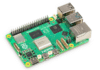























































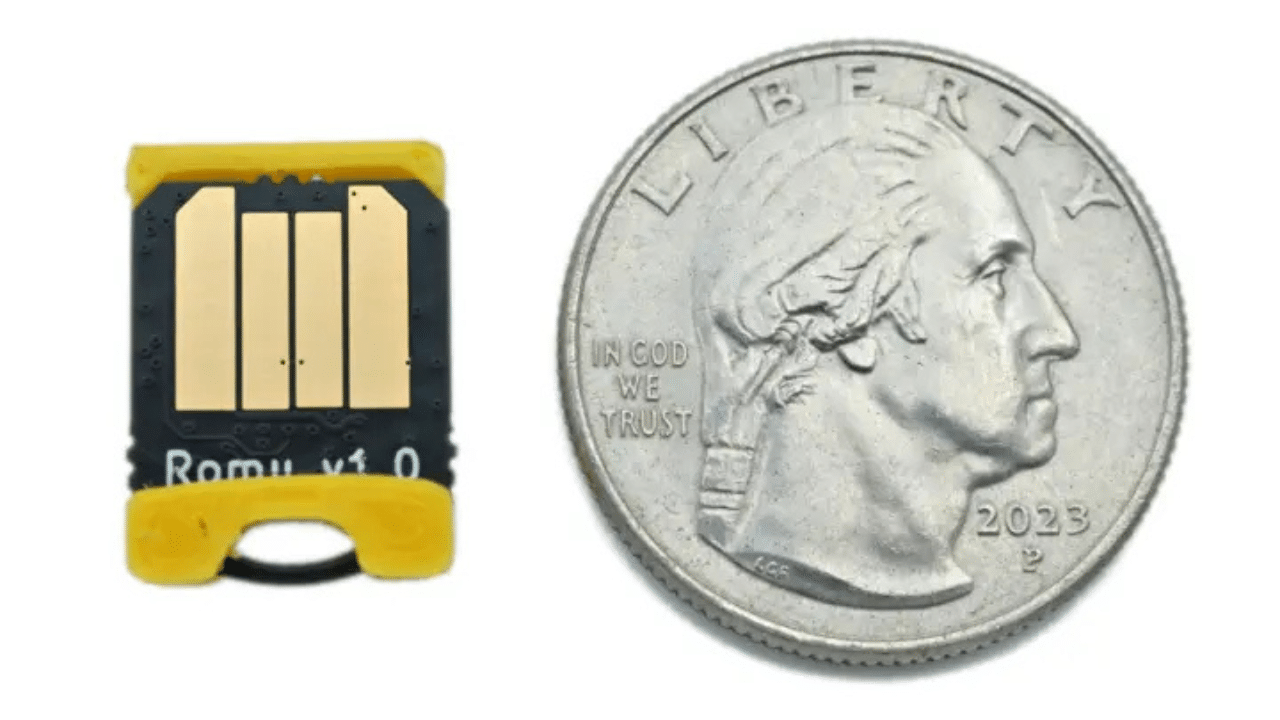

Romu is an open-source Raspberry Pi RP2354A board that lets developers build custom USB devices using MicroPython and accessible hardware design files.
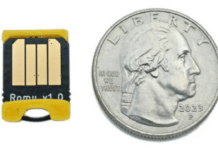
Romu, developed by Bitmerse, is an ultra-compact USB development board designed to simplify the creation of custom USB devices. Measuring just 15.5 × 12mm, the board plugs directly into a USB Type-A port and comes with MicroPython pre-installed. Bitmerse describes it as fully open-source hardware and plans to publish its schematics, PCB design files, bill of materials and 3D enclosure files, allowing developers to reproduce and modify the design. The project is being funded through a Crowd Supply campaign.
The board is built around the Raspberry Pi RP2354A, which provides dual Arm Cortex-M33 cores and dual RISC-V Hazard3 cores, with up to two cores operating simultaneously. It includes 520KB of SRAM and 2MB of onboard flash, along with a native USB 2.0 full-speed interface. The compact design omits general-purpose input/output (GPIO) headers to minimise its size, concentrating instead on USB applications that can operate directly through the host connection.
Romu’s open development approach is intended to support projects such as FIDO2 security keys, USB MIDI controllers, macro pads and custom human interface devices (HIDs). MicroPython allows developers to experiment with USB functionality using scripts rather than writing every application in low-level C or C++. The project repository already includes example scripts, including a simple game, a security-key implementation and a website launcher demonstration.
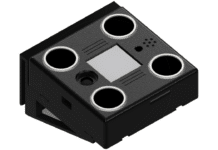
For more advanced development, the board provides USB device firmware update support and test points for serial communication and serial wire debug (SWD). Bitmerse also offers an optional programming and debugging jig that exposes USB-C, UART and a standard 20-pin connector for debugging. This separates the compact production board from the additional connections required during development, while allowing users to inspect firmware behaviour and troubleshoot applications.
By publishing its hardware design resources and software examples, Bitmerse aims to make a specialised USB development platform accessible to the maker community. Developers can use the design files to study the board’s implementation and build compatible applications, subject to the published licences. The board is listed from US$40, while the optional debugging jig costs extra; shipping is additional. The campaign page should be checked for the latest funding status, final file releases and delivery schedule before planning a build.
For more information, click here.