


























































Fine-tuning gives that all-important edge to AI models.
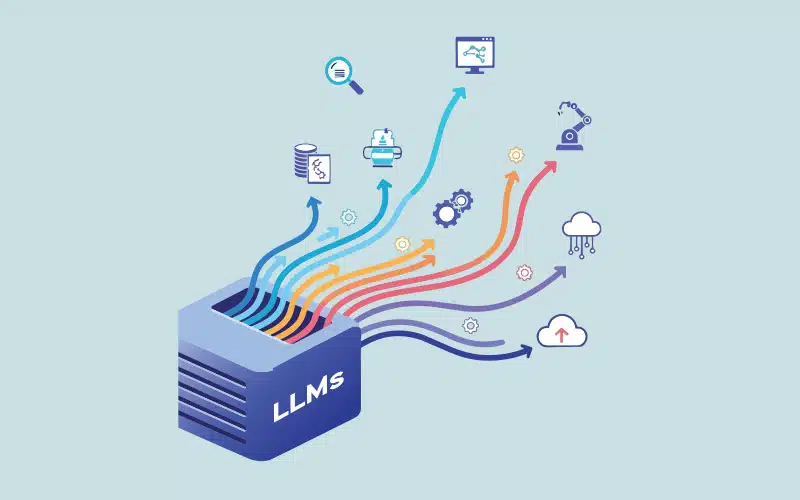
The practice of fine-tuning large language models (LLMs) has brought about a major change in artificial intelligence. Fine-tuning enables model customisation, helping models learn specific patterns different industries use. This shift helps AI systems move beyond generic responses and deliver actionable, contextually relevant insights.
Why fine-tuning matters now
Artificial intelligence currently gets evaluated through its capacity to generate text and answer questions. General-purpose models generate coherent answers, yet their output becomes unreliable when they operate outside their intended domain. Fine-tuning changes that.
The Transformer architecture serves as the foundation for modern AI systems, which use it to detect patterns in large datasets that may be inaccurate, obsolete and have redundant information. Fine-tuning establishes new domain-specific data, which modifies how the model functions to create outputs that match certain usage scenarios. For example, a financial institution creates regulatory-compliant insights through its model refinement process using internal reports and compliance documents. Academic researchers use fine-tuned models in computational biology to achieve better accuracy when analysing complex datasets.
This is a fundamental change, because AI has moved from being a general-purpose instrument to serving as an expert partner. Fine-tuning enables systems to comprehend both spoken language and its contextual usage, leading to more efficient, dependable and beneficial AI systems.
From pretraining to precision: Understanding the shift
Modern AI models depend on pretraining, which serves as their fundamental building block. They acquire language and reasoning skills through self-supervised learning to study large datasets. The system gains broad knowledge through this training but cannot perform specific tasks. Fine-tuning directs the system towards specific tasks by training on dedicated datasets instead of using general data. This process transforms a general-purpose model into a specialised system that produces targeted results. For example, doctors can use a clinical record-based model trained on ICD-10 data to enhance their diagnostic and documentation work. A general model generates suggestions that seem reasonable but these lack reliability.
Fine-tuning vs prompt engineering: Control vs convenience
AI systems can be modified using two different methods — prompt engineering and fine-tuning. Prompt engineering uses specific input designs to direct how the model will answer questions, generally employing few-shot learning (FSL) methods. However, this method gives different results based on word choices leading to unpredictable system behaviour.
Fine-tuning helps transfer knowledge to the model through direct system integration. Developers train the system to maintain uniform behaviour across different situations instead of teaching it through repeated instructions. This makes AI models highly reliable and trustworthy.
Organisations implement both methods. Fine-tuning creates a permanent base, which prompt engineering uses to change the system’s tone and contextual features. The two methods differ because prompt engineering controls user interactions while fine-tuning modifies internal system operations.
How fine-tuning works
Fine-tuning serves as a formal method, which modifies a pretrained model into a system that operates in a specific field. The process starts with collecting high-quality datasets that represent actual scenarios. The model’s performance depends on the quality of this data, which serves as training material.
The training phase requires optimisation techniques, which include using the Gradient Descent algorithm to modify model parameters. The goal is to minimise errors while preserving the model’s general capabilities. The evaluation process checks whether the model can generalise to new data while avoiding overfitting problems.
A simplified workflow is shown below:
from transformers import Trainer, TrainingArguments

training_args = TrainingArguments(

output_dir=”./results”,

learning_rate=2e-5,

per_device_train_batch_size=8,

num_train_epochs=3

)

trainer = Trainer(

model=model,

args=training_args,

train_dataset=dataset,

eval_dataset=eval_dataset

)

trainer.train()
Production environments require organisations to implement validation and bias detection together with monitoring processes. A legal AI system must fulfil jurisdictional requirements while delivering precise results.
Fine-tuning is a systematic method to help AI systems develop behaviour that meets the expectations of real-world applications.
From full fine-tuning to LoRA and beyond
Traditional fine-tuning involves updating all model parameters, which can be computationally expensive and resource intensive. As models grow larger, this approach becomes less practical.
One of the most significant innovations in this sphere is Low-Rank Adaptation (LoRA). Instead of modifying the entire model, LoRA updates a small subset of parameters, significantly reducing memory usage and training time. This makes fine-tuning accessible to organisations without extensive computational resources.
Other techniques, such as adapters and prefix tuning, follow a similar philosophy. They introduce small, trainable components that adapt the model to specific tasks without altering its core structure.
| Technique | Key idea | Benefit |
| Full fine-tuning | Update all parameters | Maximum accuracy |
| LoRA | Low-rank updates | Efficient and scalable |
| Adapters | Add modular layers | Flexible reuse |
These methods are democratising AI development, enabling startups, researchers, and enterprises to build customised models efficiently.
Real-world impact
Fine-tuning benefits various businesses. Enterprises utilise internal data to train their models, which they use to automate business processes, improve customer service and create business-specific insights.
Fine-tuned models that follow SNOMED CT standards provide clinicians with tools to create patient summary reports. Productivity is higher and results are precise.
The education system also benefits from fine-tuning. Learning platforms develop individual learning paths for students leading to better student engagement and academic success. Domain-specific research models speed up literature reviews.
Challenges, risks, and ethical considerations
Fine-tuning has a few operational challenges. The quality of data is critical because any biased or incomplete datasets can lead to inaccurate results.
Another danger is overfitting — models train very well but fail to deliver results in real-world tests. Regularisation is one of the techniques used to help organisations solve this problem.
There are multiple ethical problems too. Fine-tuning models contain private data; hence user privacy and model transparency must be maintained. Organisations must implement robust governance frameworks to ensure responsible use.
Fine-tuning enhances the best and worst features of AI. Organisations need to develop solutions that combine technological skills with ethics.
The road ahead
The future of AI development depends on its ability to create customised solutions for users. Organisations that invest in fine-tuning will gain a competitive edge. They will be able to deliver more relevant insights, automate complex workflows, and enhance user experiences. Fine-tuned models will provide academic researchers with the ability to conduct more precise and impactful studies. The focus will shift from building larger models to building better-aligned systems.