





























































Niantic Spatial has released SPZ 4, an open-source 3D Gaussian splat format that boosts compression, scalability, and interoperability for XR and spatial computing workflows.
Niantic Spatial has released SPZ 4, the latest version of its open-source file format for 3D Gaussian splats, positioning it as foundational infrastructure for scalable XR, robotics, web, and creative 3D workflows.
Designed to support significantly larger datasets while improving processing efficiency, SPZ 4 delivers approximately 3–5x faster compression and roughly 1.5–2x faster end-to-end loading, while maintaining files around 10x smaller than uncompressed PLY formats. The company described SPZ as a “JPG for 3D Gaussian splats,” highlighting its role as a compact and shareable open standard for emerging spatial computing pipelines.
A major architectural change replaces the earlier single-stream GZip system with six parallel ZSTD streams, enabling multiple CPU cores to process splat data simultaneously. SPZ 4 also removes the previous 10-million-point cap, allowing scenes with tens of millions of splat points.
The release introduces a vendor extension system that allows custom metadata additions without breaking compatibility across tools. The first extension comes from Adobe for orbit-style viewer camera bounds. According to Niantic Spatial, Adobe has made SPZ “central to its 3D toolchain,” with integration into Photoshop’s Rotate Object feature and extended support in Babylon.js.
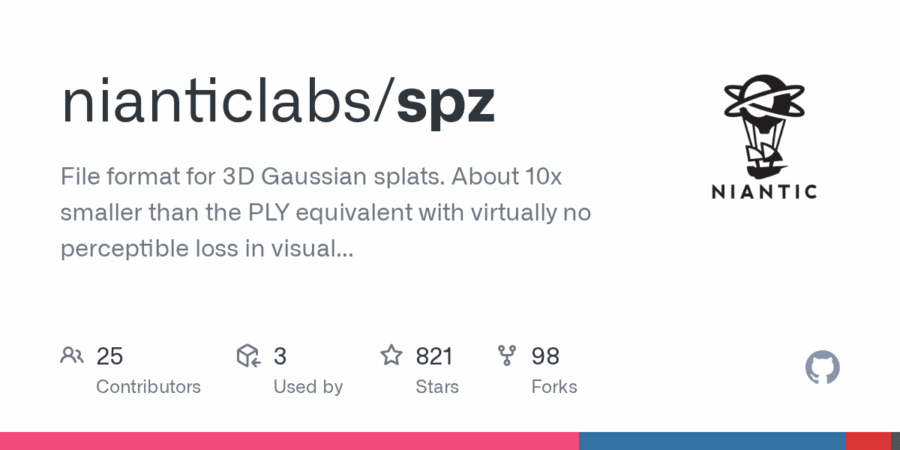
SPZ 4 is available through GitHub alongside a WebAssembly-based browser tool for local splat inspection and conversion without server uploads.