
























































From Hugging Face demos to NVIDIA’s robotics, open source AI is transforming how innovation happens—faster, cheaper, and with more collaboration. But what are the benefits, and how does one overcome the challenges?
The growing impact of artificial intelligence (AI) on our daily lives is being driven by an often overlooked force: open source AI frameworks. These frameworks not only accelerate software development but also democratise access to cutting-edge technology for startups, enterprises, and individual developers alike.
Whether it’s the personalised suggestions on Netflix or advanced machine learning algorithms powering industrial automation, the foundation of many of these innovations lies in open source frameworks. These platforms are community-driven efforts that allow developers around the world to collaborate, contribute, and co-create scalable AI tools.
Take Google’s TensorFlow as a classic example. Originally developed for internal use, it achieved widespread industry adoption only after being open sourced. Today, TensorFlow is a benchmark in AI development, supporting applications ranging from natural language processing (NLP) to image recognition.
What are open source AI frameworks?
Open source AI frameworks are libraries, tools, or models that developers can freely use, adapt, and build upon. These tools are vital for quick prototyping and development, especially for teams working under time or budget constraints. Pre-built models and libraries are becoming the backbone of modern AI development, offering developers a ready-to-use foundation for faster and more efficient innovation.
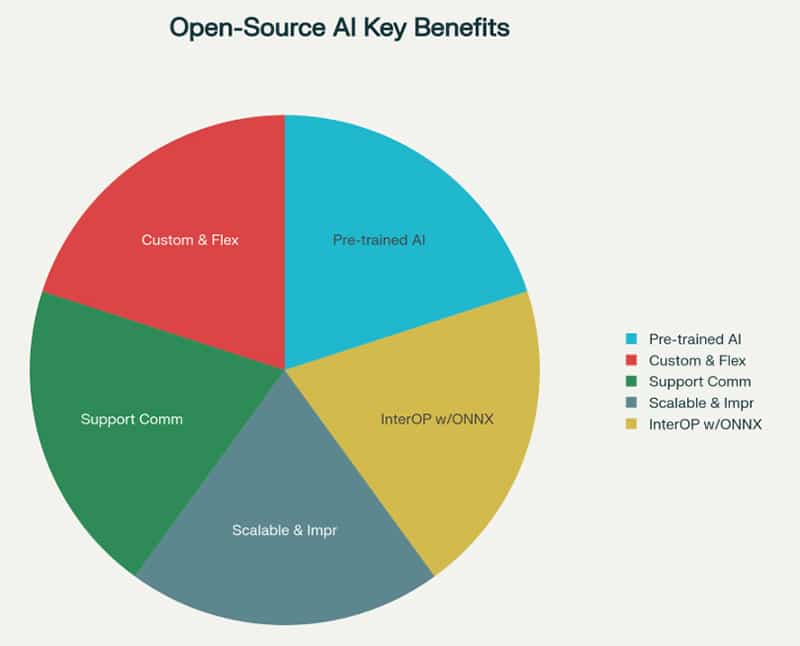
Key benefits of these frameworks include:
Pre-trained models for rapid development
Many frameworks now include pre-trained models that allow developers to quickly integrate AI capabilities into their systems. This speeds up experimentation and reduces development time significantly. Whether it’s image classification, natural language processing, or anomaly detection, these models offer a robust and efficient foundation for a wide range of applications.
Customisation and flexibility
Pre-trained models are highly adaptable, allowing developers to fine-tune them for specific data and use cases without retraining from scratch. This flexibility enables greater precision, supports custom features, and helps tailor performance to niche applications—key for product differentiation.
Community support
A major strength of open source AI tools lies in their vibrant, collaborative communities. Developers can tap into this ecosystem for support, knowledge sharing, and expert insights—whether they’re troubleshooting issues, exploring new features, or requesting enhancements. Platforms like GitHub, forums, and discussion boards offer free, real-time access to valuable resources and guidance. From resolving bugs to exploring best practices, developers have access to a global support system—free of charge. This collaborative culture not only fosters innovation but also ensures that tools remain robust, relevant, and ready for production.
Scalability and continuous improvement
Open source frameworks are continuously enhanced through global developer contributions, ensuring regular updates, improved performance, and support for emerging use cases. This ongoing evolution keeps models scalable, production-ready, and easier to maintain over the long term.
Pre-built AI models offer a streamlined, flexible, and scalable approach to development while leveraging the collective strength of the open source community. These advantages make them an essential component for both startups and enterprises aiming to build intelligent, production-grade applications efficiently.
In real-world applications, developers often need to combine models developed in different frameworks. ONNX (Open Neural Network Exchange) allows seamless integration and execution across diverse environments, ensuring flexibility and reducing duplication of effort.
As AI adoption continues to grow across industries, the flexibility, scalability, and community-driven development that open source AI frameworks enable make them ideal for businesses aiming to stay ahead in the AI race. Whether you’re a startup building your first ML product or an enterprise deploying large-scale AI systems, leveraging open source frameworks is not just an advantage—it’s becoming a necessity.
Open source frameworks have emerged as a game-changer—fuelling rapid innovation, reducing R&D costs, and enabling widespread collaboration. At the heart of this transformation lies a simple truth: building with open source tools lets developers and businesses stand on the shoulders of giants. Take Hugging Face Transformers as a practical example. With just four lines of Python code, a developer can input a query like “What is AI?” and instantly receive a coherent response. This simplicity underscores the real power of open source: enabling complex capabilities with minimal effort.
A comparative overview of widely-used open source frameworks shows how each serves specific needs:
| Framework | Best use cases |
| TensorFlow | Deep learning, ML model training |
| PyTorch | Research and prototyping, NLP, Vision |
| Hugging Face | NLP and Transformer models |
| LangChain | LLM-based workflow development, AI agents |
| ONNX | Model interoperability and porting |
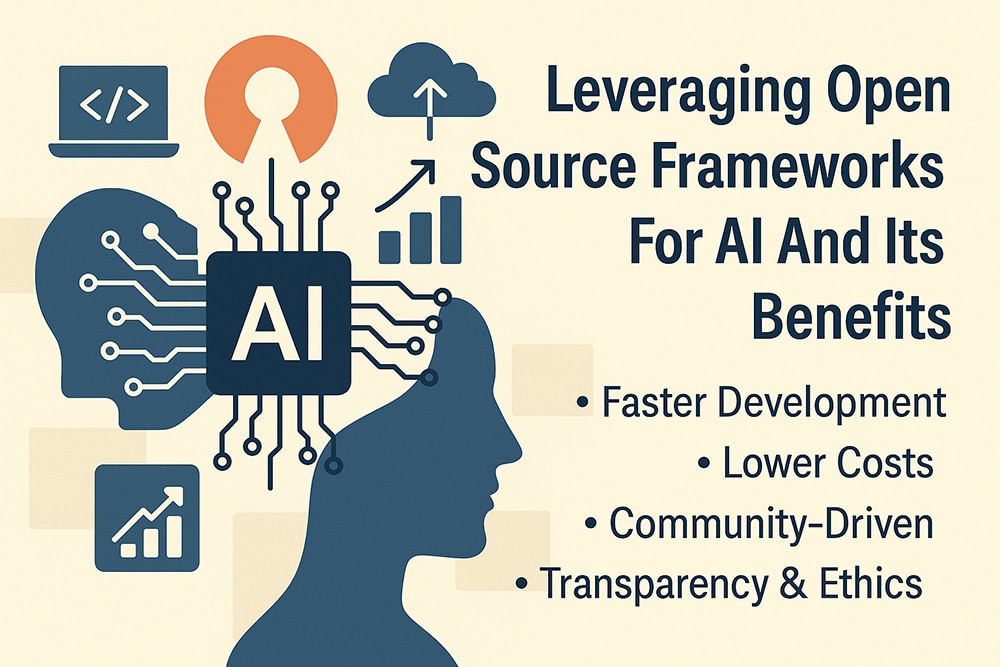
Why open source AI matters
One of the foremost advantages of using open source AI frameworks is faster software development. These frameworks come bundled with pre-trained models, allowing developers to bypass the time-consuming process of building algorithms from scratch. As a result, they can concentrate on integrating features, fine-tuning models, and refining their core product offerings—drastically reducing development cycles and accelerating time-to-market.
The benefits include:
- Faster development
- Lower costs (licence, R&D)
- Community-driven
- Innovation
- Transparency and ethics
Cost efficiency is a major benefit. Open source tools typically come with no licensing fees, which significantly reduces the overall cost of development. This is especially valuable for startups and small enterprises operating on tight budgets, as it minimises the need for heavy investments in infrastructure and skilled manpower, while still providing access to powerful, state-of-the-art technologies.
Furthermore, open source frameworks are driven by community-led innovation. These ecosystems thrive on contributions from a diverse, global pool of developers and researchers. This collaborative environment not only enhances the quality and performance of tools but also facilitates knowledge sharing. Developers can learn from others’ work, incorporate new best practices, and contribute their own enhancements, thereby pushing the boundaries of what these frameworks can achieve.
Lastly, open source software brings transparency and ethical accountability to the forefront. Since the source code is openly available, organisations can thoroughly audit the codebase to ensure it aligns with their ethical standards and data governance policies. This visibility helps identify any potential security or bias issues, and allows developers to confidently build and deploy AI solutions that are not only functional but also trustworthy.
Addressing the challenges
Despite the many advantages, open source AI frameworks do present certain hurdles. Here’s how developers can tackle them:
Steep learning curve
Thoroughly explore documentation, community blogs, and GitHub repositories. Consider MOOCs and online tutorials to get up to speed.
Computational requirements
AI models demand high-performance computing. Leverage cloud platforms or AI-as-a-Service models to scale compute power as needed.
Data privacy concerns
Sensitive data exposure is a major issue. Adopt federated learning approaches or use local AI models to train data privately before syncing with central servers.
Model bias
AI systems may reflect gender or racial biases. Using large, diverse datasets during training helps mitigate this issue.
For those inspired to contribute to open source AI, the journey begins with exploration. Projects like Mattermost, Llama models, and NVIDIA’s BRUT N1 are fully open source. The Hugging Face ecosystem, in particular, offers a transparent dataset and model repository, enabling experimentation and contribution.
To get involved in open source AI projects, start by thoroughly reading the project documentation and contributor guides to understand the framework’s structure, coding standards, and contribution workflow. Next, actively engage with the project maintainers by participating in discussions and raising relevant issues on GitHub. Once you have a clear idea or enhancement to propose, ensure it aligns with the project’s goals and doesn’t conflict with existing features. After discussing it with the maintainers and receiving their feedback or approval, you can implement the changes and submit a pull request for review and potential integration into the main codebase.
Open source AI isn’t just about free tools—it’s about democratising access to intelligence. Whether you’re an independent developer or a CTO scaling enterprise systems, leveraging these frameworks can lead to faster innovation, reduced costs, and deeper community engagement. As AI evolves, open source will remain the engine powering its most inclusive and ethical advancements.
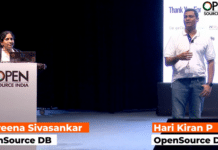
This article is based on a tech talk by Abhishek Mankuskar, creator & lead, Social Winter Of Code, at AI DevCon 2025 in Bengaluru.