




























































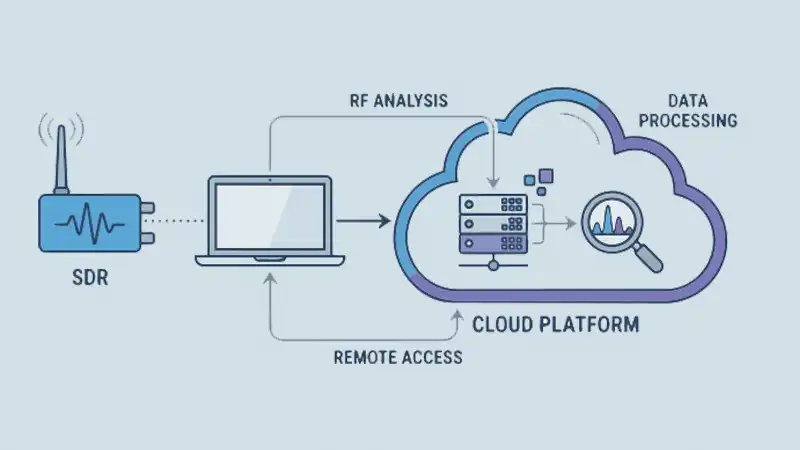

Software defined radio (SDR) and radio frequency analysis on cloud-based platforms are transforming wireless communication.
Software defined radio (SDR) and spectrum analysis are powerful technologies in the domains of wireless communication and signal intelligence. SDR is used by the military, defence services, aviation industry, intelligence services, in corporate communications, as well as in other domains that need privacy, security and integrity. Traditional radio systems were dependent on fixed hardware devices and components for filtering, modulation, demodulation and signal intelligence. SDR shifts most of these functions to software, enabling dynamic configuration and reprogramming. The increasing demand for wireless connectivity, satellite communications, IoT networks and spectrum monitoring has drastically accelerated the adoption of SDR.
SDR enables components that were traditionally implemented in hardware to be deployed and controlled using software on embedded systems, microcontroller-based systems, personal computers or cloud infrastructure. SDR devices receive and transmit radio signals over a wide spectrum and frequency range depending on their hardware capabilities.
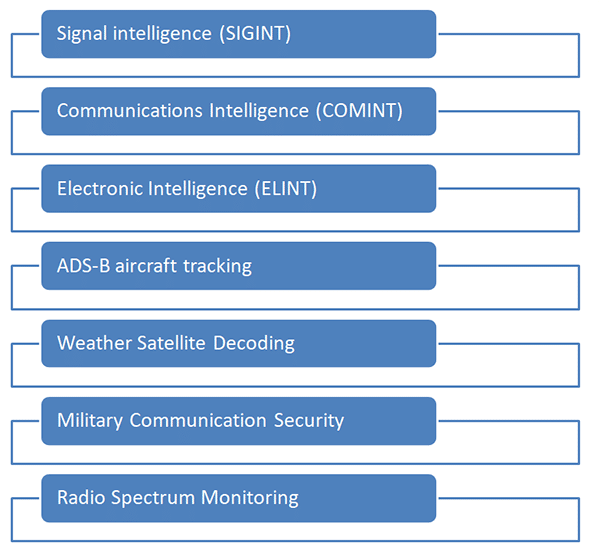
The key deployments of SDR include signal intelligence, spectrum monitoring, satellite signal reception, IoT protocol analysis, amateur radio experimentation, GSM and LTE research, 5G, 6G, weather satellite decoding, aircraft tracking (ADS-B) and academic teaching in digital signal processing. Government agencies and defence units can use SDR for surveillance, spectrum management and security applications. The telecom and corporate industries can use SDR for network testing, interference analysis and prototyping of wireless communication systems. In the education sector and academics, SDR platforms are widely used to demonstrate modulation techniques, filtering, Fourier transforms, and real-time signal visualisation.
| Key use cases and application domains of SDR |
|
Modules and programming platforms for SDR
A variety and number of SDR hardware modules are available including USB-based receivers such as RTL-SDR Blog V4. These are commonly used for AM/FM/shortwave reception mapping, ADS-B decoding, analytics and satellite monitoring. Advanced platforms for transceivers include USRP and HackRF, which are used for research and intelligence-based experiments including wireless security testing and protocol development.
Popular software platforms and tools like GNU Radio provide graphical user interface (GUI) and Python-based programming environments for building SDR applications. Tools like SDR#, SDR++ and GQRX enable real-time spectrum visualisation with signal decoding.
Programming platforms and languages such as C++, Python, Octave and MATLAB are widely used for implementing modulation, demodulation, signal intelligence schemes, FFT analysis, filtering algorithms, and machine learning integration. With the integration of AI and data analytics, SDR systems are now quite capable of working with automated signal classification, threat detection, illegal use of radio frequencies, anomaly detection and cognitive radio experimentation.
Table 1: Modules, devices, kits and programming platforms for SDR
| Module/Platform | Primary use | Type |
| KiwiSDR | Remote HF monitoring | Cloud-based SDR |
| RTL-SDR Blog V4 | Low-cost RF reception | Hardware (Receiver) |
| HackRF One | RF experimentation | Hardware (Transceiver) |
| USRP | Advanced wireless research | Hardware (Research SDR) |
| LimeSDR Mini | LTE/5G prototyping | Hardware (Transceiver) |
| BladeRF | FPGA-based development | Hardware (Transceiver) |
| GNU Radio | DSP flowgraph development | Software framework |
| SDR# | Real-time spectrum analysis | Software application |
| MATLAB | Signal processing research | Programming platform |
| SDR++ | Multi-platform SDR control | Software application |
| Airspy Mini | Wideband signal monitoring | Hardware (Receiver) |
| GQRX | Spectrum visualisation | Software application |
| CubicSDR | Cross-platform SDR interface | Software application |
| HDSDR | Advanced RF analysis | Software application |
| SoapySDR | Multi-device integration | SDR middleware |
| Python | SDR automation and AI | Programming language |
| LabVIEW | Instrument control | Programming platform |
| OpenWebRX | Browser-based reception | Web SDR platform |
| Pothos SDR | Modular DSP development | Software framework |
| SDR Console | Wideband spectrum monitoring | Software application |
Table 2: Key advantages and benefits of using cloud SDR
| Advantage | Practical impact | Technical benefit |
| Remote web access | No hardware required | Browser-based control |
| Global receiver network | Propagation studies | Geographic diversity |
| Wide HF coverage | Shortwave monitoring | 0–30 MHz support |
| Cross-platform access | Universal usability | OS independent |
| Secure remote login | Controlled usage | Access control options |
| No installation needed | Quick deployment | Cloud-hosted software |
| Multi-user capability | Collaborative research | Shared infrastructure |
| Centralised data logging | Long-term analysis | Cloud storage support |
| Low infrastructure cost | Budget-friendly access | Shared hardware model |
| TDoA geolocation | Signal source tracking | Distributed receivers |
| GPS synchronisation | Precise measurements | Accurate timing reference |
| Public accessibility | Learning opportunities | Open network nodes |
| Scalability | Wide-area monitoring | Add remote nodes |
| Reduced maintenance | Minimal user effort | Server-side updates |
| Real-time waterfall | Instant signal detection | Live spectrum view |
| AI integration potential | Automated classification | Cloud analytics engines |
| Disaster resilience | Service continuity | Distributed architecture |
| Virtual lab capability | Academic training support | Remote experimentation |
SDR on cloud for analysis of radio frequencies
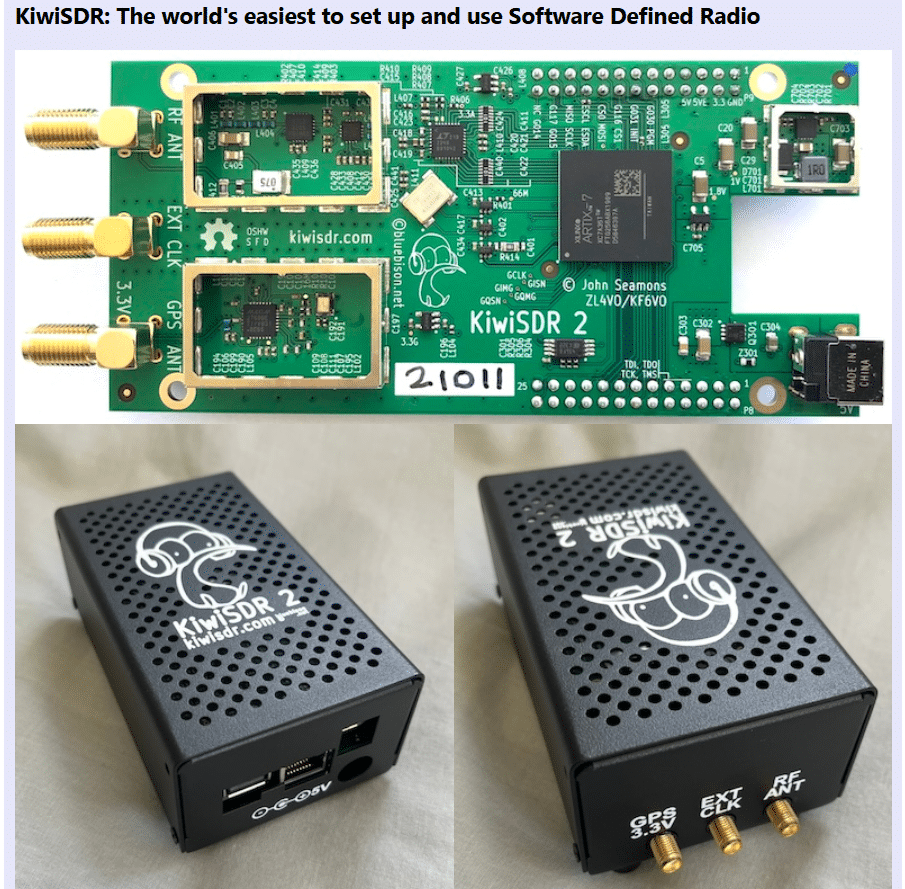
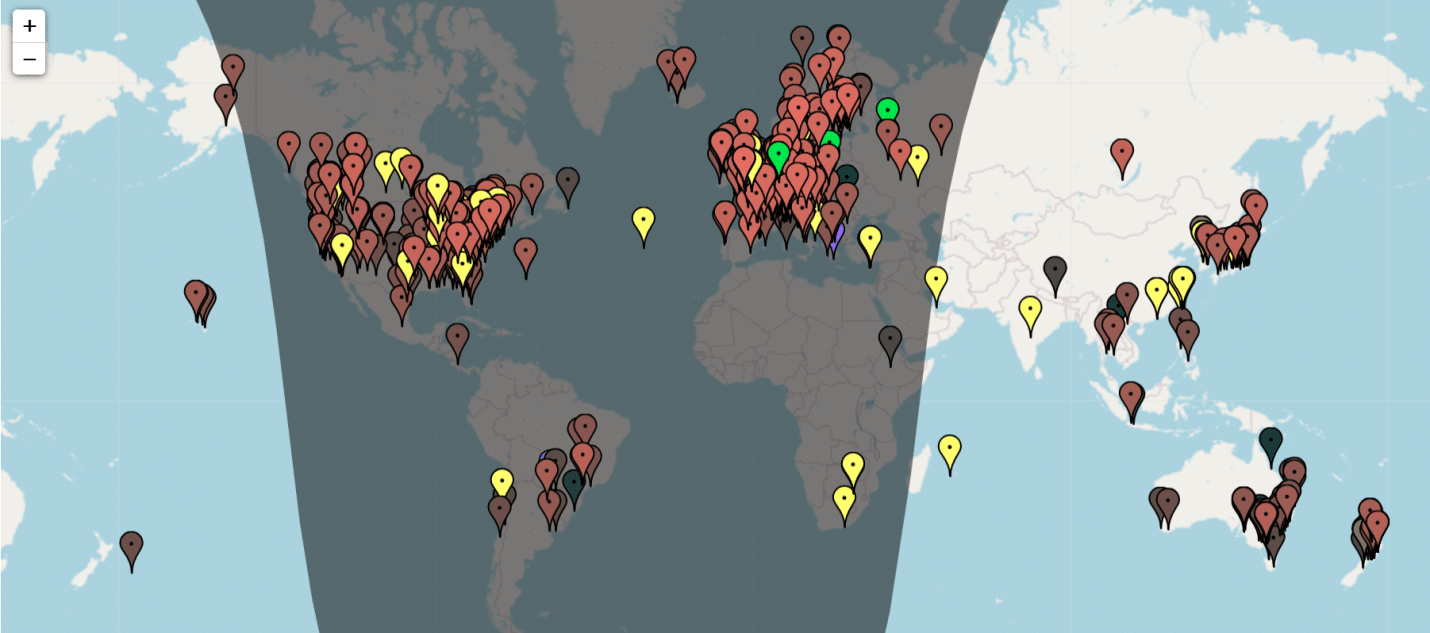
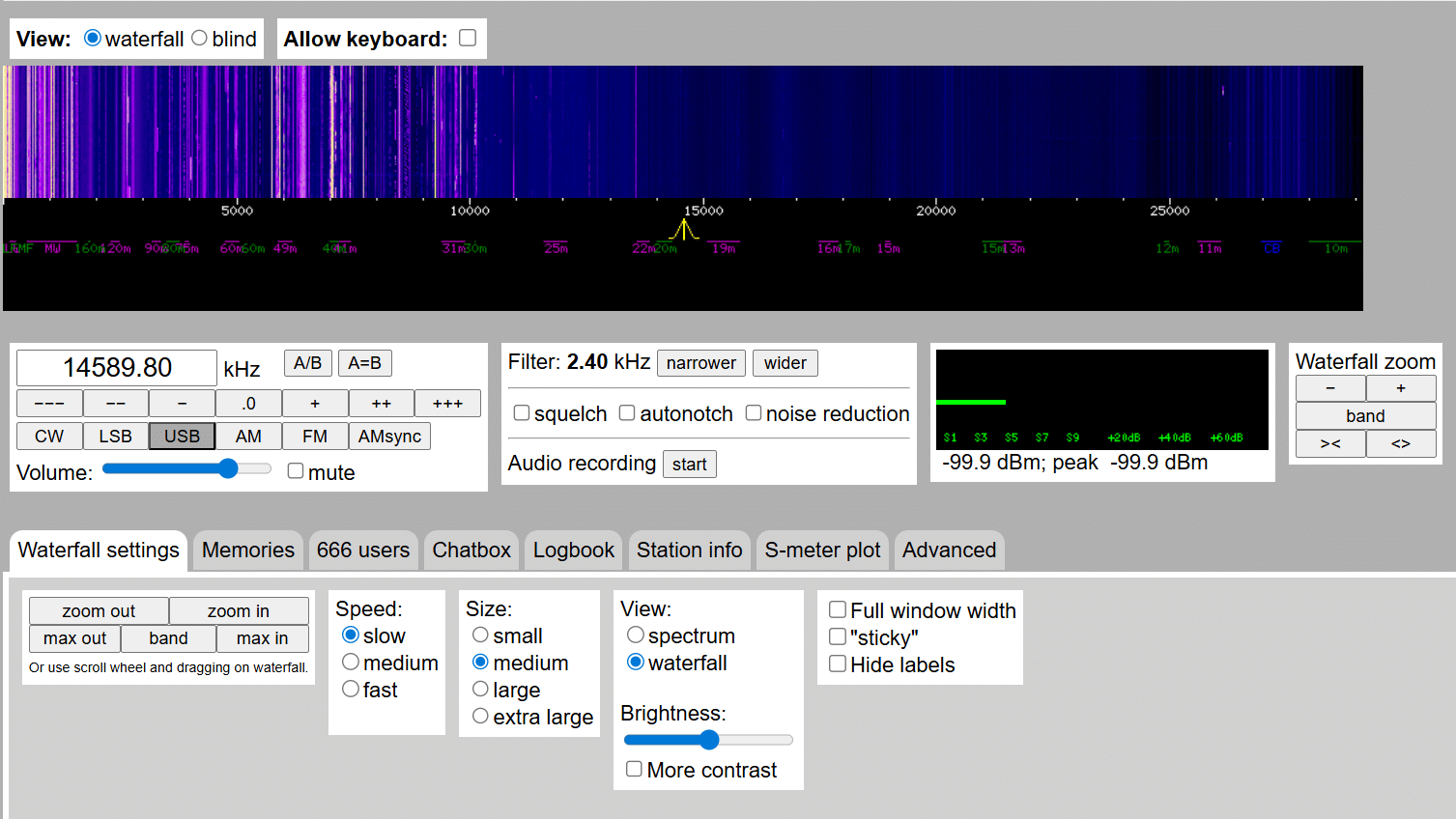
SDR’s capabilities are not limited to local deployment of connected hardware. Cloud-based SDR systems are now providing users the access to remote radio receivers deployed in different geographic locations. A popular and high-performance platform is KiwiSDR (http://kiwisdr.com/), which enables remote users to tune into shortwave and other frequencies through a web browser interface. It provides a cloud-based environment for linking with different radio frequencies and bands at different locations in the world.
The key benefits and features of KiwiSDR are:
- AM FM SSB modes in radio frequency analysis
- Live radio waterfall analysis
- Signal waterfall capturing and evaluations
- Audio recording option
- CW decoding support
- Cross-platform compatibility
- DRM decoding support
- Shortwave/medium wave signals intelligence
- Educational remote labs
- Wide frequency range
- GPS disciplined timing
- High frequency stability
- IQ data streaming
- Low latency streaming
- Multi-user support
- No local hardware
- Public global receivers
- Real-time waterfall display
- Remote HF monitoring
- Shared research access
- TDoA geolocation feature
- Web browser access
- Wideband spectrum view
Cloud-based SDR platforms integrate real-time frequency tuning, spectrum waterfalls, modulation selection and recording functionalities without requiring physical deployment of hardware. Researchers and radio signals enthusiasts can analyse HF, VHF, AM, FM, and many other bands remotely without physical devices or dongles. These platforms are useful for propagation studies, global signal monitoring, radio signals analysis and collaborative research for different domains. Cloud-based SDR deployments and solutions reduce infrastructure cost, offer the ease of shared access, and provide scalable data storage for long-term signal logging and analytics for varied applications.
Table 3: Local SDR vs cloud-based SDR
| Cloud SDR platform | Local SDR setup | Practical outcome |
| Remote browser access | Physical hardware required | Infrastructure difference |
| Shared cost model | Higher initial investment | Budget variation |
| Global receiver access | Single location access | Geographic flexibility |
| Streamed IQ data | Real-time direct sampling | Latency variation |
| Server-side upgrades | Hardware upgrades needed | Scalability approach |
| Limited hardware control | Full hardware control | Experiment scope difference |
| Fixed remote antennas | Custom antenna options | Signal diversity impact |
| Cloud-based storage | Local data storage | Data management model |
| Internet dependent | Low network dependency | Connectivity requirement |
| Remote troubleshooting | On-site troubleshooting | Support mechanism |
| Multi-country coverage | Limited coverage range | Propagation studies |
| Centralised security control | Security self-managed | Risk management |
| Remote power managed | Power supply dependency | Operational continuity |
| Provider-managed system | Manual maintenance | Maintenance effort |
| Shared user access | Private experimentation | Usage environment |
| Ideal for monitoring | Ideal for RF testing | Application focus |
| Observation-oriented analysis | Custom protocol development | Research orientation |
| Minimal hardware knowledge | Hardware skill required | User skill requirement |
Governments and defence services can deploy distributed SDR nodes connected to centralised cloud servers for wide-area spectrum surveillance and detection of illegal use of radio frequencies. Academic institutions can create virtual SDR laboratories where students can perform experiments remotely without physical SDR devices and antennas, similar to virtual labs in cloud computing environments.
There is huge scope for research and development in the SDR domain and cloud-based deployment of radio frequency analysis. Dynamic spectrum allocation, cognitive radio, interference mitigation, secure wireless communication, AI-driven signal classification, AI signal intelligence and spectrum sensing are becoming increasingly important in different sectors. The integration of SDR with IoT networks, radio evaluations, 5G, 6G, and satellite communications gives further research opportunities.
In fast-growing markets like India, there is huge and significant potential for indigenous development of SDR hardware, SDR research labs, spectrum analytics platforms and cloud-based RF monitoring systems. Collaboration between industry, academia and government can lead to innovations in radio frequency networks, wireless security, disaster communication systems, defence applications and smart city infrastructure.