



























































The blockchain has moved from cryptocurrencies to widespread applications in industries like healthcare and supply chain management. Find out why it owes its evolution to open source.
Blockchain technology creates secure, transparent and decentralised systems digitally. Though Bitcoin was its origina application, this technology is now employed by industries ranging from finance to healthcare and supply chain (inventory control automation).
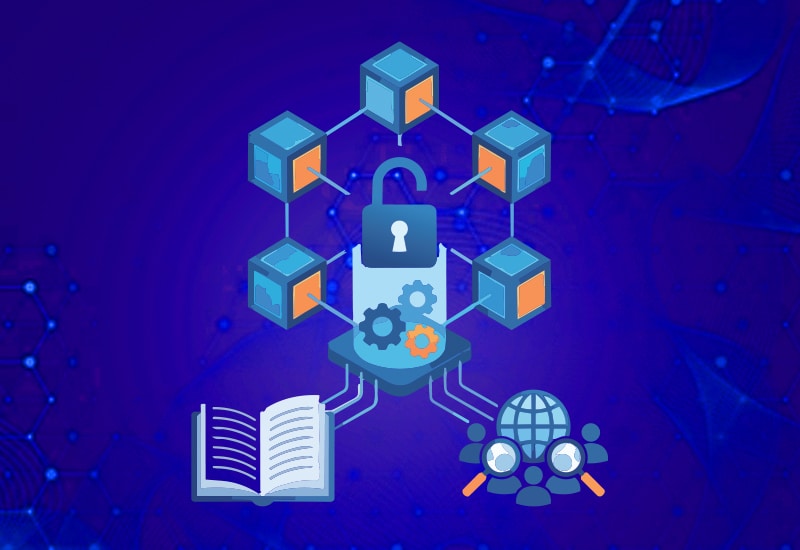
Open source development is an essential part of what drives innovation around blockchain technology. It helps developers collaborate, create new features at a faster speed, and improve existing ones. In addition to promoting rapid development, open sourcing also helps reduce development costs and increases the level of transparency in these systems. Good examples of an open source blockchain platform are Ethereum and Hyperledger — both are collaborative environments that provide numerous opportunities for rapid development of new technologies.
With trust, security and efficiency now essential components of today’s digital world, blockchain and open source development offer an incredibly strong platform for future systems to be built on. They promote innovation while making sure that technologies can be easily accessed, are flexible in nature and can respond quickly to changes in the way businesses operate. Therefore, open source development is critical to driving the growth of blockchain technology and its wider application across all sectors of society.
Understanding blockchain
A blockchain is a distributed and unchangeable record, which consists of blocks of data that are chained together by means of encryption. A block holds information regarding transactions and their corresponding time stamps, as well as a unique identifier known as the hash of the previous block. Collectively, these blocks create a permanent series of records classified as a chain of data in a secure and consistent manner.
Key features and characteristics of blockchain include:
Decentralisation: No government body or individual organisation controls the data.
Transparency: All parties in a transaction can see and confirm the transaction.
Immutable: Once data has been created and recorded, it is impossible to alter it.
Secured: Data is secured against being altered through a series of cryptographic processes.
Consensus mechanism: The process of authenticating and validating transactions requires approval from all members of the common network.
For example, blockchains are used by banks to provide secure, unchangeable records of transactions. Each record added to the blockchain is permanent, allowing parties to trust each other, thereby reducing the risk of fraud.
The system architecture of the blockchain consists of many blocks lined up chronologically, containing both transaction records and the digital signature of each member in the network. This forms an unbroken chain of linked blocks, where each block contains transaction and membership information pertaining to multiple users within the network. Hence, the blockchain has a strong inherent immunity to manipulation of its data and can be trusted by all parties involved.
Architecture: Blocks and cryptographic hashing
A blockchain consists of three major elements: transaction data, date/time stamp and a cryptographically created hash. The hash acts as a unique digital representation of the preceding blocks and is created by applying cryptographic algorithms to the information within each block. By linking each block to another via hashes, it is possible to determine
whether any individual piece of information in an individual block has changed. This breaks the connection between any given block and all its successors, making it obvious that someone has tampered with a given block.
The mechanism of chain formation
Each new block added in the blockchain builds up the chain incrementally and in succession. Transactions go through verification via nodes on the network before they are bundled together in a single block once validated by the network. That block is then incorporated into the previously existing chain of blocks, thus creating an everlasting chronological record of all transactions ever made and continually making that updated and verified information accessible to all parties involved.
As an example, in a supply chain system, steps like manufacturing, delivery, shipping, and delivery can be recorded in blocks. These blocks are then linked together to create a record
that is both secure and transparent for all the stakeholders who need to trace the path of a product.
How the operational framework works
Blockchain uses an organised approach to facilitate reliable, verified transaction processing throughout a decentralised system. Multiple computers work as a group to confirm all transactions and to maintain consistency and trust. There is no central managing authority involved.
Transaction flow: A transaction is initiated by a user and broadcasted to the blockchain network. This transaction contains relevant data such as sender, receiver, and amount or information being transferred.
Validation process: Network nodes verify the transaction using predefined rules and consensus mechanisms. Only valid transactions are approved and prepared for addition to the blockchain.
Block creation: Verified transactions are grouped into a block. This block is then assigned a cryptographic hash and linked to the previous block, ensuring continuity and security.
Network nodes: Nodes are responsible for validating, maintaining, and updating the blockchain. Each node holds a copy of the ledger, ensuring decentralisation and reducing the risk of data manipulation.
Consensus mechanism: Blockchain utilises consensus approaches like Proof of Work (PoW) or Proof of Stake (PoS) to maintain agreement among the participants on the entire network.
Classifications of blockchain
Blockchain networks can be classified according to their access rights and how you are allowed to use them. There are different types of blockchain networks depending on your need for the security, transparency, and scalability of the network.
Public blockchain: This is an open network where anyone can participate, view transactions, and validate data. It is fully decentralised and transparent but may be slower. Examples are Bitcoin and Ethereum.
Private blockchain: In this blockchain, only a specific enterprise controls who has access to the private network and can validate transactions. This decreases access time and increases security for the enterprise’s internal business operations. Such a blockchain is used to manage internal data in an enterprise.
Consortium blockchain: Here, a group of organisations manages a semi-decentralised network instead of an individual authority. The semidecentralised network provides the advantages of both decentralisation and controlled access, making it the perfect fit for industries where secure data needs to be accessed or shared, such as banking and supply chain. For example, multiple banks can share their banking networks with one another.
Hybrid blockchain: This combines public and private blockchains. Enterprises can store sensitive data privately while taking advantage of public transparency for certain information when necessary. This blockchain is useful for a system that contains some public data and some data that cannot be viewed by anyone externally.
Blockchain technology is being used in various sectors today including supply chain management and BFSI, where fast and secure transactions are needed, as well as in healthcare, where blockchain can protect a patient’s private health information and enable secure data sharing between authorised users.
Blockchain technology continues to evolve traditional systems into advanced, reliable, digital-based solutions.
The pros and cons
The blockchain is highly secure due to the use of cryptographic techniques and has greater transparency than other systems because data is stored in an open way. As it operates without intermediaries, overall costs are reduced. It also creates a greater level of trust between all parties involved and allows for automation using smart contracts.
On the flip side, there are challenges involving its scalability, high implementation costs, and technical complexity. The lack of public awareness and regulatory issues are hindering its adoption in certain markets.
Blockchain is revolutionising the way digital systems operate today. Open source software development underwrites the rapid development of blockchains by allowing global collaboration among developers, while providing cost-efficient options for various solutions. This creates a platform that allows use by any organisation irrespective of size, in a flexible and scalable manner.
However, the challenges associated with its implementation, including scalability, complexity and regulatory issues, must be addressed to enable its widespread use.