























































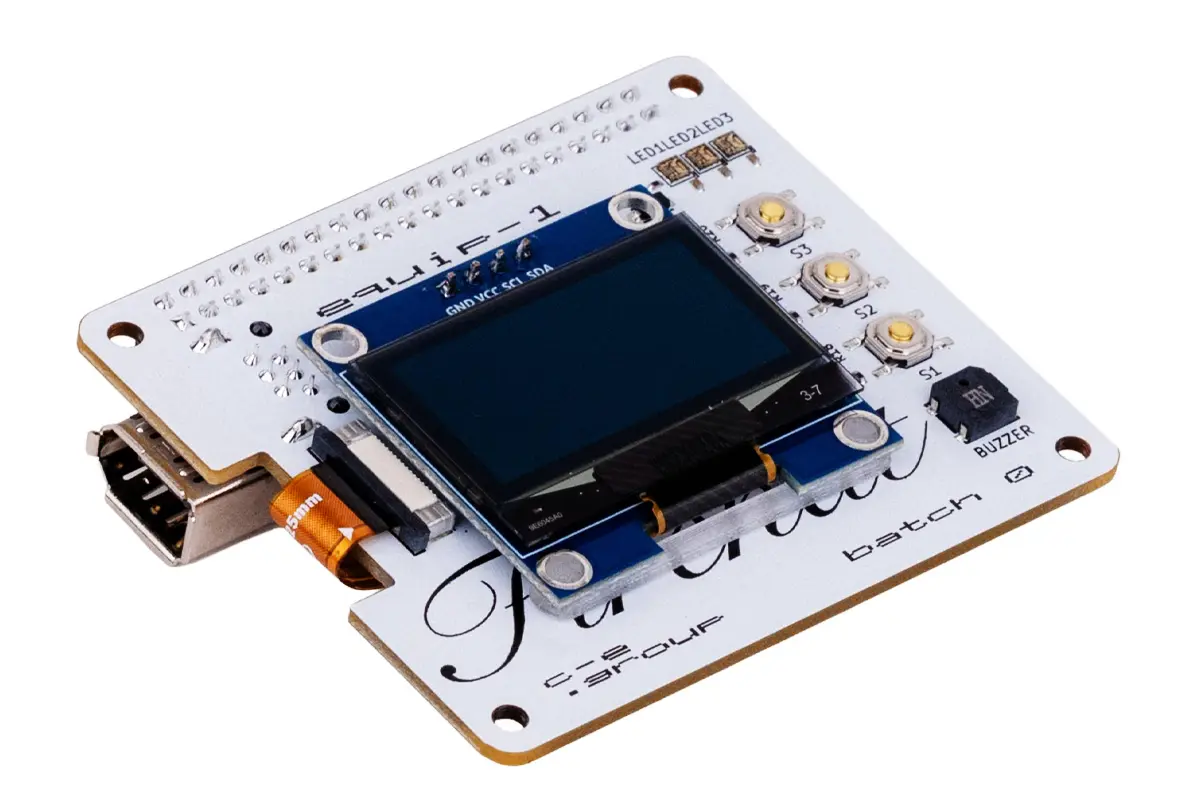

Firehat is an open-source FireWire capture HAT that adds an IEEE 1394 interface to single-board computers with a Raspberry Pi-compatible PCIe FFC connector.
Computer Equipment Group has developed Firehat, an open-source FireWire HAT designed for single-board computers such as the Raspberry Pi 5 and Radxa ROCK 2F. The board uses a VIA VT6315N FireWire controller to provide an IEEE 1394, i.LINK or DV connection for capturing digital video from MiniDV, Digital8, DVCAM, DVCPRO and HDV cameras and decks.
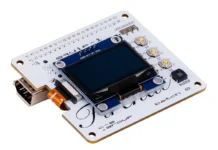
The hardware connects to a compatible SBC through a PCIe 2.0 FFC connector for FireWire data and a 40-pin Raspberry Pi GPIO header for power and control functions. It includes a six-pin FireWire/i.LINK/DV camera port, a 1.3-inch monochrome OLED display, three tactile buttons, three SK6812 RGB LEDs and a PWM-controlled buzzer. The board measures 56 × 70 × 12 mm and weighs 25 grams.
On Linux, Firehat operates as a standard PCIe FireWire controller using the Linux FireWire stack. Open-source software such as dvgrab and dvcont, the command-line utility included with libavc1394, can be used for DV capture and device control. The Equip-1 software stack provides a more complete standalone recording interface. Firehat also allows compatible cameras and tape decks to be controlled through software for operations such as playback, stopping, rewinding and triggering captures.
The project follows an open-source hardware approach, with its KiCad schematics, PCB layouts, 3D models and other hardware files released under the CERN OHL-S licence. The software is licensed under the GPL, while the design files and documentation are available through the project’s GitHub repository. This gives developers and hardware enthusiasts access to the underlying design for further development and experimentation.
Firehat is currently being offered through crowdfunding, with a $7,500 funding goal. A $79 pledge includes the main board, 1.3-inch OLED display, 25-mm coaxial shielded FPC cable and a 30-cm IEEE 1394 six-pin-to-four-pin FireWire cable. The project is designed to provide a modern SBC-based method for capturing original digital DV streams from older cameras and decks, without requiring legacy computers or discontinued FireWire capture cards.