




















































PwrBlock 323 is an open-hardware USB-C power supply that provides software-controlled voltage and current for automated testing, hardware-in-the-loop setups and lab applications.
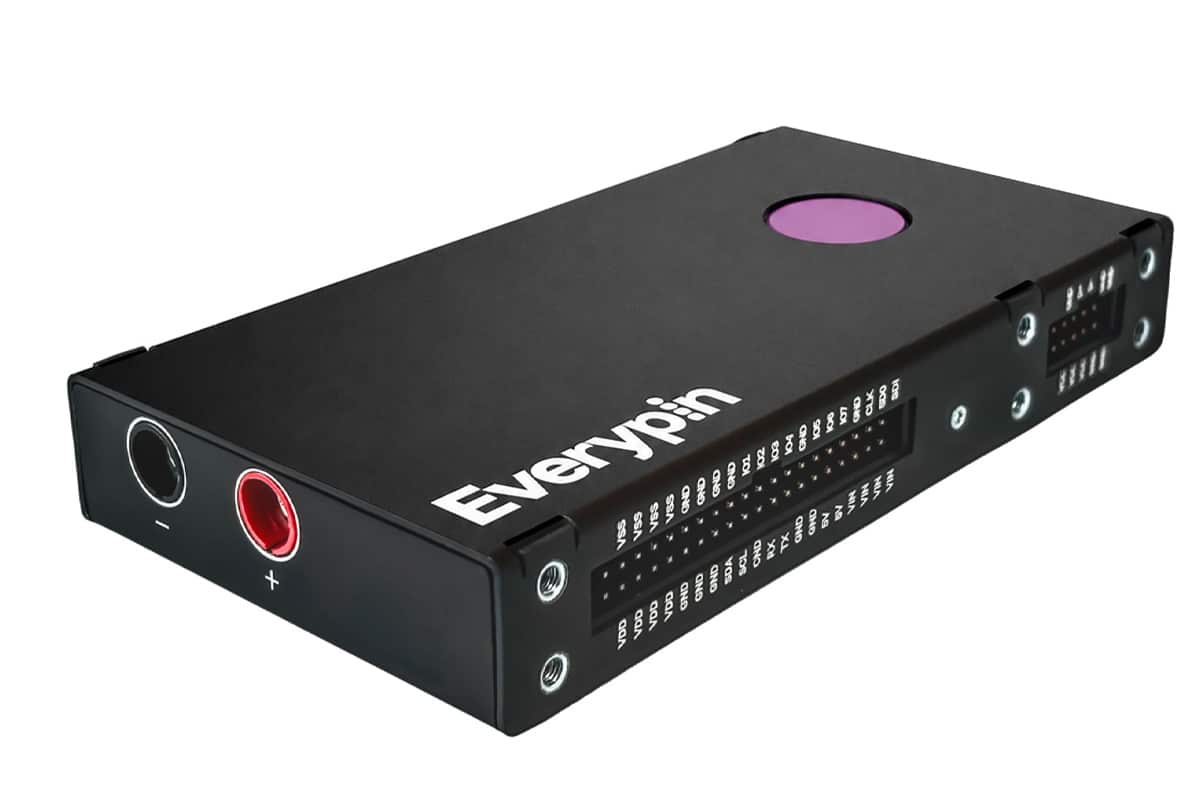
Finnish company Everypin has introduced PwrBlock 323, a programmable power supply designed to be integrated directly into automated test fixtures. The device provides a single non-isolated output from 1 to 32 V at up to 3 A, with a maximum output power of about 92 W when supplied by a 100-W USB-C Power Delivery source. It can control and measure power supplied to a device under test (DUT) and perform automated power cycling.
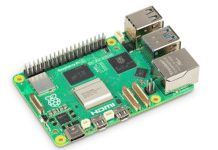
The board is built around an STMicroelectronics STM32G0C1CEU Arm Cortex-M0+ microcontroller and includes an LM51772 buck-boost controller, INA229 voltage and current measurement IC, and TPS259830 input protection. It provides 10-mV voltage resolution from 1 to 24 V and 20-mV resolution above 24 V, while current can be set with 1-mA resolution. Protection features include over-current, over-voltage, over-power and over-temperature protection.
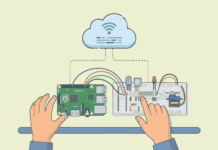
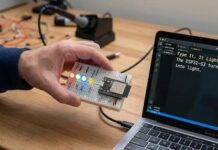
PwrBlock 323 is designed for software-controlled testing through SCPI commands over USB. Test scripts can set voltage and current limits, switch the output on or off, read voltage and current measurements, and power-cycle the DUT without manual intervention. The device can be controlled using Python, VISA-compatible tools or custom test software, while a graphical interface is available for manual testing and debugging.
The module provides two USB Type-C ports, a 10-pin IDC USB control connector and a 40-pin power and I/O interface with UART, SPI, I2C and seven digital I/O connections. Its enclosed 130 × 70 × 20-mm design includes multiple mounting points, allowing it to be installed inside production jigs, hardware-in-the-loop setups or other automated test equipment.
PwrBlock 323 is being developed as an open-hardware and open-software project, with Everypin planning to publish schematics, PCB files, manufacturing outputs, firmware, host software, mechanical files and documentation. The hardware and mechanical designs are planned under the CERN-OHL-W-2.0 licence, while firmware and host software are planned under Apache-2.0. The project is currently crowdfunding, with the production design and documentation still to be finalised.