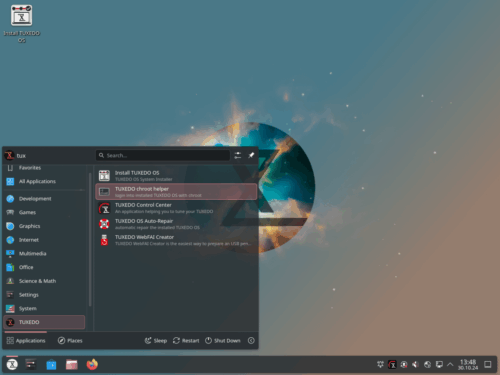
TUXEDO OS launches an open beta for its Debian rebase, introducing rolling kernel updates and custom hardware patches.
At FrOSCon 2026 on 16 August 2026, TUXEDO Computers officially presented its new kernel strategy alongside the open beta release of the Debian-based OS, following technical documentation published on 14–17 August 2026.
In July 2026, TUXEDO Computers announced its plan to rebase TUXEDO OS from Ubuntu onto Debian Testing under a “Continuous Debian” model, which tracks Debian Testing rolling releases rather than relying on fixed-point distributions.
The primary kernel, linux-tuxedo, directly tracks Debian Testing kernel releases, replacing Ubuntu Hardware Enablement (HWE) kernels to eliminate six-month update delays in favour of continuous rolling updates.
TUXEDO applies custom patches and configuration tweaks to optimise hardware support. These adjustments currently feature five performance-focused kernel configuration changes alongside three bug fixes that address notebook display backlight controls, prevent rare hard resets on Intel-based InfinityBook Pro Gen8 laptops, and fix negative V-Blank values in the Intel i915 driver. Hardware drivers remain separated in a DKMS package (tuxedo-drivers), with plans for gradual upstreaming into mainline Linux.
TUXEDO OS’s kernel developer Werner Sembach explained: “As with the previous Ubuntu base, TUXEDO aims to use a kernel that is as current as possible in order to optimise hardware support and performance. With Debian Testing, we now have a foundation that is continuously supplied with current kernel versions, rather than receiving kernel updates through HWE kernels at six-month intervals as before.”
Additionally, TUXEDO OS offers a secondary linux-tuxedo-lts kernel option for users seeking a more conservative update path based on upstream Long-Term Support releases.