


















































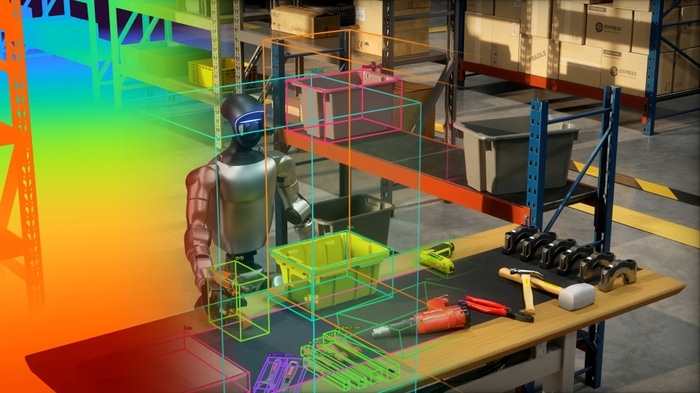

NVIDIA has expanded its open-source AI toolkit with Omniverse libraries that automate simulation-ready 3D world creation, enabling developers to build robotics, digital twin and autonomous system applications faster.
NVIDIA has expanded its open-source AI ecosystem by adding Omniverse libraries to the NVIDIA Agent Toolkit, enabling developers to build AI agents capable of creating, validating and preparing simulation-ready 3D environments. The newly released libraries, available on GitHub, are designed to simplify physical AI development for robotics, autonomous machines, industrial digital twins and smart factory applications.
Unlike conventional AI coding assistants, the new toolkit equips AI agents with domain-specific capabilities for simulation engineering. Developers can use these libraries to automate repetitive tasks such as inspecting 3D scenes, validating digital assets, identifying missing simulation properties and assembling end-to-end workflows. This reduces the manual effort required before robots or autonomous systems can be trained and tested in virtual environments.
A major highlight is the open availability of Omniverse libraries for RTX sensor simulation, GPU-accelerated physics simulation and SimReady asset validation. RTX sensor simulation enables realistic emulation of cameras, LiDAR and other perception sensors, while GPU-based physics models object interactions, collisions and environmental dynamics. SimReady validation checks whether 3D assets include the geometry, materials, metadata and physical properties needed for accurate simulation, helping developers detect issues early in the design cycle.
The toolkit also leverages OpenUSD, the open framework for interoperable 3D scene description, allowing AI agents to work across multiple design applications without forcing developers to adopt proprietary workflows. By exposing these capabilities as reusable software libraries, developers can integrate simulation intelligence into existing CAD, content creation and engineering tools instead of building custom pipelines from scratch.
For the open-source community, the release provides reusable building blocks for creating physical AI workflows rather than complete end-user applications. Robotics developers, simulation researchers and digital twin engineers can extend or integrate the libraries into their own projects to automate scene preparation, asset verification and simulation orchestration. NVIDIA says this approach aims to accelerate open development of physical AI by making advanced simulation capabilities accessible through modular, GitHub-hosted components instead of closed software stacks.