
























































Layer-2 solutions are changing how scalable decentralised apps are made by fixing the problems with Layer-1 networks like Ethereum.
Decentralised, trustless systems that don’t need middlemen have been made possible by Web3 applications (dApps) built on blockchain platforms like Ethereum. But as more people use these networks, they will face a big problem: scalability. Scalability is the ability of a blockchain to handle a lot of transactions quickly and cheaply without losing speed or quality.
Every transaction on Layer-1 blockchains like Ethereum must be checked and processed by all the nodes that are part of the network. This makes the system very secure and decentralised, but it also makes it very slow. Ethereum can only handle about 15 to 30 transactions per second (TPS), which is much lower than traditional systems like Visa, which can handle thousands of TPS. Because of this, users have to pay high gas fees and wait a long time for transactions to be confirmed when demand on the network goes up.
What does Layer-2 mean (without the buzzwords)?
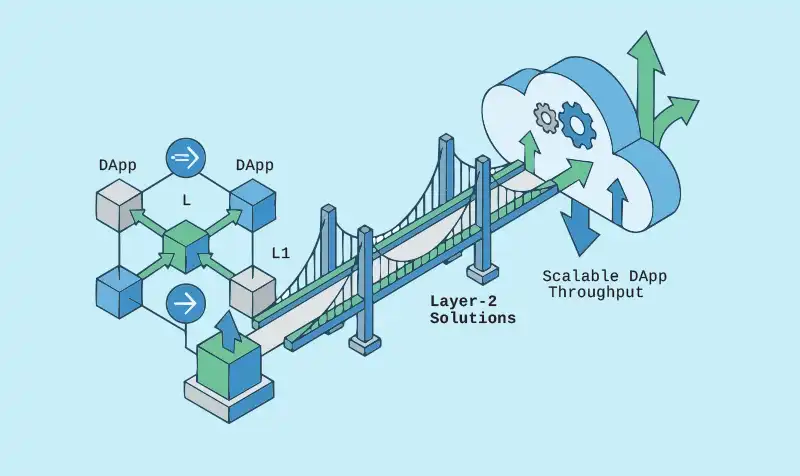
Layer-2 is like a helper system that sits on top of a blockchain like Ethereum. It speeds things up and makes them cheaper without changing the core network itself. In a dApp, every transaction, like sending tokens or interacting with a smart contract, must be done directly on Ethereum (Layer-1). This method is safe, but it takes a long time and costs a lot of money because thousands of nodes have to check each transaction. Layer-2 takes care of most of the work outside of the main blockchain and only sends the final result back to it.
A simple way to think about it is to picture a busy highway (Layer-1) where all the cars have to go down the same road, which causes traffic jams. Layer-2 is like a service road or flyover, where most cars go their own way and only connect to the main highway when they need to.
Types of Layer-2 solutions
There are different types of Layer-2 solutions, and each one is made to make Layer-1 blockchains like Ethereum more scalable while keeping them safe. Optimistic rollups, ZK rollups, and state channels and sidechains are the most common types.
Optimistic rollups: Optimistic rollups assume that transactions are valid by default (‘optimistically’) and only check them if someone questions the outcome. Instead of processing each transaction on its own, they group several transactions together and send them to Ethereum as one batch.
ZK rollups: Zero-Knowledge (ZK) rollups use cryptographic proofs to check transactions in a different way. They don’t just assume that transactions are valid; they make a mathematical proof (called a validity proof) that guarantees correctness before sending it to Layer-1. ZK rollups are used by solutions like zkSync and StarkNet.
Sidechains and state channels: State channels let people do a lot of transactions off-chain and only write down the final result on the blockchain. This is helpful for things like gaming or micropayments that need a lot of interaction. Sidechains like Polygon are their own blockchains that are linked to Ethereum.
Architecture of a scalable dApp on Layer-2
When you build a scalable decentralised application (dApp) using Layer-2, you need to put together different parts that work together to give users a fast, cheap, and smooth experience. The architecture doesn’t just use Layer-1 networks like Ethereum; it also spreads out tasks among frontend, wallet, Layer-2 infrastructure, and backend services. The frontend interface is at the top layer. It is usually built with frameworks like React or just HTML, CSS, and JavaScript. This is where people use the dApp to send transactions, check their balances, or use smart contract features. Next is the integration of the wallet, which is usually done with tools like MetaMask. The wallet links users to the blockchain, securely signs transactions, and lets users switch between Layer-1 and Layer-2 networks.
Choosing the right L2 for your dApp
Choosing the right Layer-2 solution is very important when making a dApp that can grow. You should choose a Layer-2 network based on what your app needs, like speed, cost, security, and user experience. Each one has its own strengths. Polygon chains are a great option if your dApp needs low fees and quick transactions. They are easy to add to and are used by a lot of people, which makes them great for things like gaming, NFTs, and social media. Optimistic rollups like Arbitrum and Optimism are good for apps that need to be very secure and work with Ethereum. They work with current Ethereum smart contracts with only a few changes, which makes it easier for developers to move to the new platform. ZK Rollups like zkSync offer strong cryptographic guarantees and faster withdrawals if you want advanced security and instant finality. However, they may be harder to work with.
Smart contract design considerations on L2
When developers make smart contracts on Layer-2, they need to change how they design them so that they can use all of the scalability features while still being able to work with Layer-1 networks like Ethereum. One important thing to think about is how to save gas. Layer-2 solutions like Polygon and Arbitrum have lower fees, but bad contract code can still cause extra costs. Developers should write code that works as well as possible, use as little storage as possible, and group operations whenever they can.
Cross-layer compatibility is another important thing to think about. Smart contracts should be able to handle deposits, withdrawals, and synchronisation between layers because many dApps work with both Layer-1 and Layer-2. This often means putting bridge contracts together and making sure that data is the same across networks. Even on Layer-2, security is still very important. L2 solutions get some security from Ethereum, but smart contracts can still be hacked. To stop attacks, developers need to follow best practices like checking inputs, controlling access, and doing regular audits.
Data availability and storage strategies
In Layer-2 systems, data availability means how transaction data is stored and accessed so that users can trust and verify the system. Even though execution happens off-chain, the data still needs to be available to make sure networks like Ethereum are safe and open. One common way to make data available on-chain is to post transaction data directly to Layer-1. Arbitrum and other solutions like it follow this model, which makes them very secure because anyone can rebuild and check the state. But it can still be expensive to store data on-chain. Data availability layers are another new strategy.
Bridging and interoperability
Bridging and interoperability are two important parts of scalable dApps that use Layer-2 solutions. Layer-2 networks work with Layer-1 blockchains like Ethereum, so there needs to be a safe way to move data and assets between them. Blockchain bridges make this possible. A bridge lets people move tokens from Layer-1 to Layer-2 to make transactions faster and cheaper. When they need them again, they can bring them back. For instance, a person can send ETH from Ethereum to a Layer-2 network like Polygon to use a dApp for less money. They can later use the same bridge system to get their assets back to Ethereum.
Bridges work by locking up assets on one chain and making the same amount of tokens on the other. When users move back, the tokens are burned on Layer-2 and opened on Layer-1. This makes sure that the total supply stays the same across all networks. Interoperability is more than just moving things around. It lets smart contracts and apps on different Layer-2 networks, like Arbitrum and Optimism, talk to each other and share data. This makes the Web3 ecosystem more connected and adaptable. But bridges need to be built carefully because they can be dangerous if they aren’t checked properly. Common problems include delays in withdrawals and possible security holes.
Security considerations
When making scalable dApps with Layer-2 solutions, security is very important. Layer-2 networks get some security guarantees from Layer-1 blockchains like Ethereum, but developers still need to be careful when making apps to avoid security holes at both the smart contract and system levels.
Security of smart contracts is a big worry. Even on Layer-2 networks like Arbitrum and Optimism, bugs in contract logic can cause money to be lost or changed. To lower risks, developers should follow best practices like checking inputs, limiting access, and using libraries that have been tested. Another important thing is the safety of the bridge. Because assets often move between Layer-1 and Layer-2, blockchain bridges are very appealing to hackers. Bridge contracts that have any weaknesses can be used for big attacks. So, bridges need to go through strict audits and use cryptographic methods that have been shown to work. In ZK-based systems like zkSync, security depends on validity proofs, which make sure that only correct state changes are accepted.
Performance optimisation techniques
When making scalable dApps on Layer-2 networks, performance optimisation is very important because it makes sure that response times are quick, costs are low, and the user experience is smooth. Layer-2 solutions like Polygon and Arbitrum already make throughput better than Layer-1 systems like Ethereum. However, developers still need to make sure that their applications are as efficient as possible. One important method is transaction batching, which means putting several operations into one transaction. This lowers the cost of gas and the amount of work the network has to do. In the same way, state minimisation helps by keeping only important data on-chain and keeping large or unimportant data off-chain.
UX design for Layer-2 dApps
User experience (UX) is very important for the success of scalable dApps that are built on Layer-2 solutions. Even if the underlying technology is quick and effective, a bad user experience can make it hard for people to understand and use apps. The goal is to make using blockchain as easy as using a regular web app. Switching networks is a big problem for UX.
Layer-2 solutions like Arbitrum and zkSync make transactions faster. UX should show these speed improvements, like confirmations that happen almost instantly or lower gas fees. It’s also important to know how to handle errors. dApps shouldn’t show raw blockchain errors. Instead, they should show simple, easy-to-understand messages that tell users what went wrong and how to fix it. Lastly, onboarding should go smoothly. New users can learn how Layer-2 works without having to know anything about technology by using tutorials, tooltips, and pre-configured wallets.
Case studies
Layer-2 solutions in the real world show how scalable dApps can greatly improve performance, lower costs, and make the user experience better. A few of the most important projects built on Layer-2 networks show how these benefits work. Arbitrum is one of the most well-known examples. It is now widely used for decentralised finance (DeFi) apps. Uniswap and other platforms have moved to Arbitrum to lower gas fees and speed up transactions. Users can swap tokens almost right away, unlike Layer-1 transactions on Ethereum, which can take longer and cost more because of congestion. This makes it easier for regular people to trade in DeFi.
Common pitfalls
When developers make scalable dApps with Layer-2 solutions, they often make a few common mistakes that can hurt performance, security, and the user experience. One big mistake is making bad assumptions about how to design a bridge. Assets move between Layer-1 and Layer-2 networks, such as Ethereum and Polygon. This means that weak or unverified bridge implementations can cause delays, failed transfers, or security holes.
Future of the Layer-2 ecosystem
As networks like Ethereum become more popular, the Layer-2 ecosystem is likely to become the backbone of decentralised applications that can grow. Layer-2 solutions will be very important for easing congestion, lowering fees, and speeding up transactions as demand grows.
Because they offer strong security guarantees and instant finality, technologies like zkSync and other ZK rollup-based systems are likely to become more popular in the future. Optimistic rollups like Arbitrum and Optimism will keep getting better, with better interoperability and faster ways to withdraw money.
With Layer-2, developers can get faster processing, lower fees, and a better user experience without giving up security by sending transactions to solutions like Polygon, Arbitrum, and zkSync. Layer-2 is very important for making blockchain usable in the real world, from designing the architecture to improving user experience and performance. It will continue to be an important part of the evolving blockchain ecosystem, helping developers make dApps that are efficient, scalable, easy to use, and can handle demand from around the world.