


















































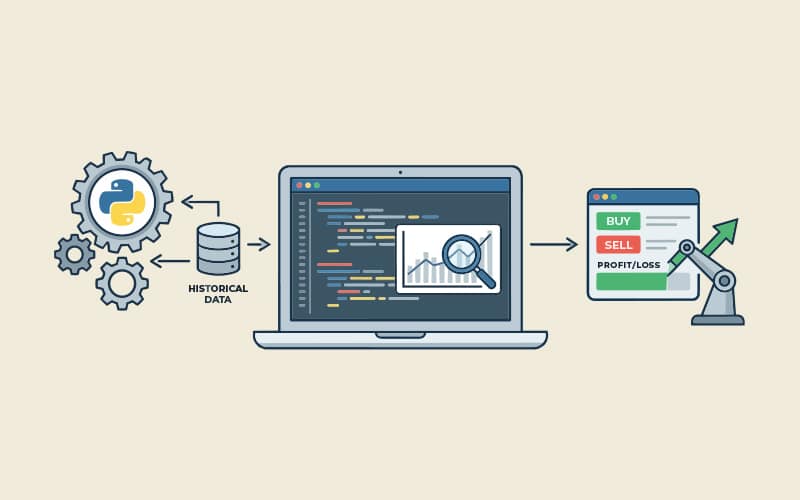

Backtesting acts as an important link between strategy development for trading and live trading, ensuring that algorithmic systems perform well in genuine market conditions. Python is a great enabler for this.
Backtesting is an important process in the development of algorithmic trading methods. It entails analysing a trading strategy against historical market data to see how it performed in the past. Traders and quantitative analysts can evaluate the potential profitability, hazards, and resilience of their trading models by simulating transactions on historical data before deploying them in live markets.
Python has emerged as one of the most popular programming languages for algorithmic trading due to its rich ecosystem of libraries for data analysis, statistical modelling, machine learning, and financial calculation. Python also has various specific backtesting frameworks that make it easier to test strategies, evaluate performance, and simulate trades.
Backtesting frameworks enable traders to focus on strategy formulation and evaluation rather than on developing complex infrastructure for data management, trade execution simulation, and performance analysis.
What is backtesting?
Backtesting is the process of using previous data to estimate how a trading strategy would perform in real market conditions.
A trading strategy can be mathematically stated as:
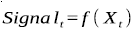
…where:
- Signalt represents the trading signal at time t.
- Xt represents market variables such as price, volume, or indicators.
The simulated portfolio return can be expressed as:

Backtesting allows us to check the trading mode and answer various trading-related questions such as:
- Are the trading strategies profitable?
- How risky is the strategy?
- Does the approach consistently perform under diverse market conditions?
- Is the strategy resilient or overfitted for past data?
Components of a backtesting system
A backtesting framework is often made up of multiple components that simulate the complete trading process.
Historical data: The backtesting process requires reliable historical market data such as:
- Open price
- High price
- Low price
- Closing price
- Volume
This dataset is commonly referred to as OHLCV data.
Reliable historical data is essential because inaccurate or incomplete data can produce misleading results.
Strategy logic: The strategy logic specifies the rules utilised to produce trading signals. For instance, a moving average crossover method produces a buy signal when:

…and a sell signal when:

The backtesting model applies these rules successively to historical data.
Execution simulation: Execution simulation demonstrates how deals would have been completed in the market. Important factors considered are:
- Transaction expenses
- Slippage
- Bid-ask spread
- Market impact
Ignoring these factors may produce unrealistic performance results.
Portfolio management: Backtesting frameworks monitor portfolio values over time by managing:
- Cash balance
- Position sizes
- Asset holdings
- Profit and loss
Portfolio value at time t can be expressed as

Performance evaluation: After executing a backtest, the framework computes numerous performance metrics, such as:
- Total return
- Sharpe ratio
- Maximum drawdown
- Win-loss ratio
- Volatility
The Sharpe ratio is defined as:
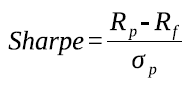
…where:
- Rp is portfolio return
- Rt is risk-free return
- Óp is portfolio return volatility
Why Python is suitable for backtesting?
Strong data handling capabilities: Python is widely regarded as the industry standard for time series data processing due to its specialised ecosystem of tools that automate everything from data ingestion to advanced forecasting. Pandas, Statsmodels, Darts, and NumPy are libraries that allow for efficient manipulation of financial time series data. Panda is the most useful of these, as it includes classes like Timestamp and DatetimeIndex for efficient temporal alignment and slicing. It has features for ingesting and processing, indexing, resampling, lagging-shifting, and window operations.
Visualisation tools: Traders can use visualisation libraries like Matplotlib and Plotly to analyse market movements, strategy performance, and drawdowns.
Integration with machine learning: Python frameworks like scikit-learn, TensorFlow, and PyTorch enable traders to incorporate machine learning models into their trading methods.
Large open source ecosystem: Many open source Python modules are specifically designed for quantitative finance and algorithmic trading.
Popular Python backtesting frameworks
Several Python frameworks have been created to backtest algorithmic trading techniques.
Backtrader: Backtrader is a popular Python-based framework for strategy backtesting and algorithmic trading.
Its comprehensive documentation and vibrant community support, which facilitate the efficient development of trading systems for both novice and experienced users, are among its main advantages. Complex trading methods, such as multi-data, multi-timeframe, and indicator-based approaches, can also be implemented on the platform. Furthermore, Backtrader facilitates a seamless transition from backtesting to real-time trading settings by offering integration possibilities with many brokers and live trading platforms.
Zipline: Zipline is an open source library for backtesting that was first created for quantitative studies. Eventdriven backtesting, realistic trading simulation, integration with financial datasets, and the Pipeline API for factorbased models are some of its key features. Zipline is being extensively utilised in quantitative trading platforms and research settings. However, maintaining the framework is a limitation.
VectorBT: VectorBT is a backtesting library for high-performance vectorized backtesting. In contrast to conventional event-driven frameworks, VectorBT efficiently simulates techniques using NumPy and Pandas vectorization. It is incredibly fast, efficient for large datasets, allows interactive graphics, and most importantly, assists in optimising trading parameters. Because of these considerations, the vectorize method is effective for strategy research and optimisation.
PyAlgoTrade: PyAlgoTrade is another event-driven Python library for backtesting trading strategies. It supports technical indicators, eventdriven architecture, performance measurements, and tools for strategy optimisation. Albeit less popular nowadays, this library is an effective pedagogical framework for understanding trading systems.
Lean Engine: QuantConnect has developed an advanced algorithmic trading framework called Lean Engine. Its features include cloud-based backtesting, support for trading across multiple assets, integration with live trading brokers, and support for multiple programming languages. Lean Engine is appropriate for institutional-grade algorithmic trading research.
Vectorized vs event-driven backtesting
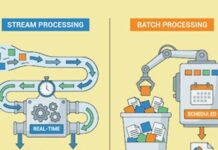
Backtesting frameworks are typically divided into two major architectures: event-driven backtesting and vectorized backtesting. Event-driven systems process market data in a sequential manner, comparable to real trading settings. They deliver realistic simulation and are appropriate for sophisticated strategies but are computationally expensive. Backtrader and Zipline are two tools available for this. Vectorized backtesting, on the other hand, is really fast since it uses matrix operations to evaluate strategies on huge datasets at the same time. Vectorize models are frequently used to optimise trade parameters for real-time trading. VectorBT uses vectorization framework.
The challenges and best practices
Although backtesting is necessary, it has several drawbacks. It frequently suffers from ‘look-ahead bias’ due to the leakage of future information into the historical simulation, which results in inaccurate performance. Overfitting to historical data causes techniques to perform well on past information but fail in real-world scenarios. ‘Data snooping’ bias may result in an overly profitable situation solely by accident. Backtesting sometimes ignores trading costs in hypothetical trading, which can greatly overstate plan profitability and act as a bottleneck in strategy implementation.
To attain consistent results, traders should ensure that their techniques are resilient and general. So they must employ high-quality historical data, include actual transaction costs, eliminate look-ahead bias, execute out-of- sample testing, and conduct walk forward validation.
Backtesting is evolving due to advances in computing and data science. Cloud-based backtesting environments, GPU-accelerated simulations, machine learning-driven strategies, and reinforcement learning trading agents are currently available for trading. These technologies have made it possible to evaluate complex models and large financial datasets more precisely and rapidly.