




















































LLM applications can often lead to erratic outputs. Hence the need for observability…
Observability for AI and large language model (LLM) applications is the specialised practice of capturing, tracking, and analysing telemetry data to understand the behavioural, economic, and performance characteristics of non-deterministic AI systems. Unlike traditional software architectures governed by hardcoded logic, LLM applications are probabilistic, meaning identical inputs can yield wildly erratic or drifting outputs. Observability shifts production engineering from binary health checks (up/down) to active evaluations of contextual accuracy, safety, and operational efficiency.
Concept of LLMs
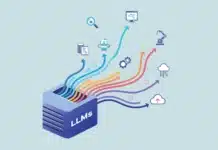
Large language models (LLMs) are a category of deep learning models trained on immense amounts of data, making them capable of understanding and generating natural language and other types of content to perform a wide range of tasks.
- LLMs are built on a type of neural network architecture called a transformer, which excels at handling sequences of words and capturing patterns in text.
- These models work as giant statistical prediction machines that repeatedly predict the next word in a sequence. They learn patterns in their text and generate language that follows those patterns.
- LLMs represent a major leap in how humans interact with technology because they are the first AI system that can handle unstructured human language at scale, allowing for natural communication with machines.
Where traditional search engines and other programmed systems used algorithms to match keywords,
- LLMs capture deeper context, nuance and reasoning.
- Once trained, LLMs can adapt to many applications that involve interpreting text, like summarizing an article, debugging code or drafting a legal clause.
- When given agentic capabilities, LLMs can perform, with varying degrees of autonomy, various tasks that would otherwise be performed by humans.
LLMs are the culmination of decades of progress in natural language processing (NLP) and machine learning research, and their development is largely responsible for the explosion of artificial intelligence advancements across the late 2010s and 2020s. Popular LLMs have become household names, bringing generative AI to the forefront of the public interest. LLMs are also used widely in enterprises, with organisations investing heavily across numerous business functions and use cases.
LLMs are easily accessible to the public through interfaces like:
- Anthropic’s Claude, Open AI’s ChatGPT, Microsoft’s Copilot, Meta’s Llama models, and Google’s Gemini assistant, along with its BERT and PaLM models.
- IBM maintains a Granite model series on watsonx.ai, which has become the generative AI backbone for other IBM products like watsonx Assistant and watsonx Orchestrate.
Table 1: Key metrics used to monitor AI and LLM observability
| Metric category | Specific signals | Failure/Success indicators |
| Output quality | Hallucination, Groundedness, Toxicity, PII leakage | High hallucination triggers auto-fallback or guardrail blocks. |
| RAG and context | Context relevance, Faithfulness, Chunking drift | Irrelevant chunk retrievals directly cause model hallucinations. |
| Performance | Time-To-First-Token (TTFT), End-to-end latency | Spikes indicate pipeline blockages or model degradation. |
| Economics | Prompt/completion token split, Cost-per-user | Outliers detect infinite agent loops or bad prompt structures. |
The four pillars of AI and LLM observability
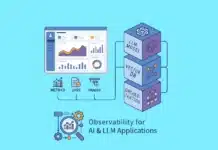
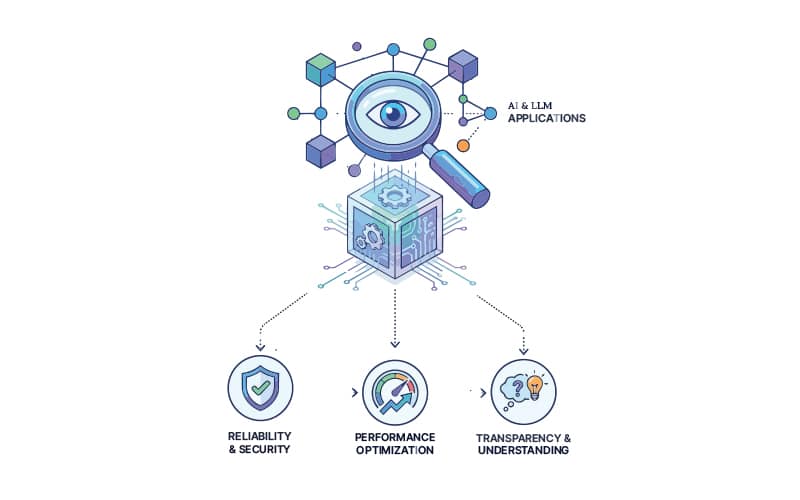
AI and LLM observability is the continuous practice of capturing, analysing, and evaluation of telemetry data across LLM pipelines and autonomous agents to maintain application performance, accuracy, and safety (Figure 1). Unlike deterministic conventional code, LLM systems are probabilistic and non-deterministic, generating highly unpredictable outputs that make classic logging infrastructure completely insufficient.
Comprehensive observability allows teams to move away from unreliable ‘vibe checks’ towards production-ready software systems with robust metrics.
While traditional software tracking relies on metrics, logs, and traces (MELT), AI architectures necessitate specialised abstractions.
Traces and spans
Map the exact sequential journey of a request across multi-turn sessions, parallel tool executions, and internal model decision logic.
Real-time evaluations (Evals)
Employ ‘LLM-as-a-judge’ algorithms alongside human feedback chains to mathematically score production traffic.
Data surface tracking
Validates data parity across retrieval context (RAG pipelines), prompt engineering templates, and vector database embeddings.
Cost and infrastructure profiling
Calculates hardware strain (GPU/CPU usage) against specific API token counts to precisely optimise financial overhead.
An effective AI observability strategy categorises telemetry into four key operational layers: performance, quality and semantics, cost economics, and security and safety.
Tools selection criteria for AI engineering stack
Tool selection depends heavily on the scale of deployment, data residency constraints, and the framework ecosystem.
Best for complex debugging and real-world agent evaluation loops. It provides native integration with LangChain/LangGraph, deep tree tracing, and features annotation queues for subject matter experts to manually grade outputs.
Langfuse
Best all-in-one open source choice. This platform offers MIT-licensed, incrementally adoptable tools tracking prompt history, SDK hooks, and user-behaviour analytics side-by-side.
Arize Phoenix
Best for local debugging and strict OpenTelemetry (OTel) compliance. It features visual data graphs to map agent reasoning chains and specialised RAG triad evaluations.
Datadog LLM Observability
Best for unified enterprise APM tracking. It correlates low-level infrastructure bottlenecks (like cloud server drops) with real-time prompt latency and application errors on a single dashboard.
Helicone
Best lightweight gateway proxy solution. It sits directly between your system and LLM providers via a quick URL swap to deliver edge-caching and instant pricing telemetry.
Key production challenges solved by AI observability
Mitigating silent failures
Traditional apps crash with explicit HTTP error codes or stack traces. LLM applications fail ‘silently’ by return-completing highly confident, grammatically perfect misinformation (hallucinations).
Debugging non-deterministic paths
Because testing models in local environments cannot replicate the dynamic variance of public production traffic, tracing forms a continuous runtime data flywheel to diagnose edge-case user inputs.
Preventing tool loop overruns
Poor prompt boundaries can cause autonomous agents to continuously query APIs, resulting in massive provider token bills before a human detects the runaway execution.
Operationalising generative AI requires a fundamental paradigm shift in how we monitor software. Because the core concept of LLMs introduces probabilistic, non-deterministic behaviours into production systems, traditional binary health checks are no longer sufficient to guarantee application success. Software no longer simply crashes; it fails silently through hallucinations, contextual drift, and data leakage. To tame this unpredictability, engineering teams must establish a comprehensive telemetry framework built on the four pillars of AI and LLM observability. By extending traditional APM logging and distributed tracing into the realms of semantic evaluation and safety guardrails, organisations can illuminate the internal reasoning loops of complex chains and agents.