


























































VolAnti provides open hardware designs, firmware and testing tools for building a low-cost acoustic drone detector using an ESP32-S3.
VolAnti is an open-source drone detection project by Agam Rossen that uses sound analysis to identify drones without relying on their radio transmissions. Its publicly available resources include firmware, printed circuit board (PCB) manufacturing files, a bill of materials, enclosure designs, test audio and a browser-based simulator. This approach also makes the project relevant to detecting fibre-optic FPV drones, which can evade conventional radio-frequency detection because their control signals travel through a physical fibre-optic link. The device only detects and reports potential drones; it does not jam signals or attempt to intercept them.
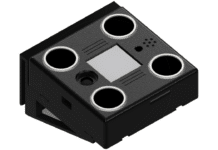
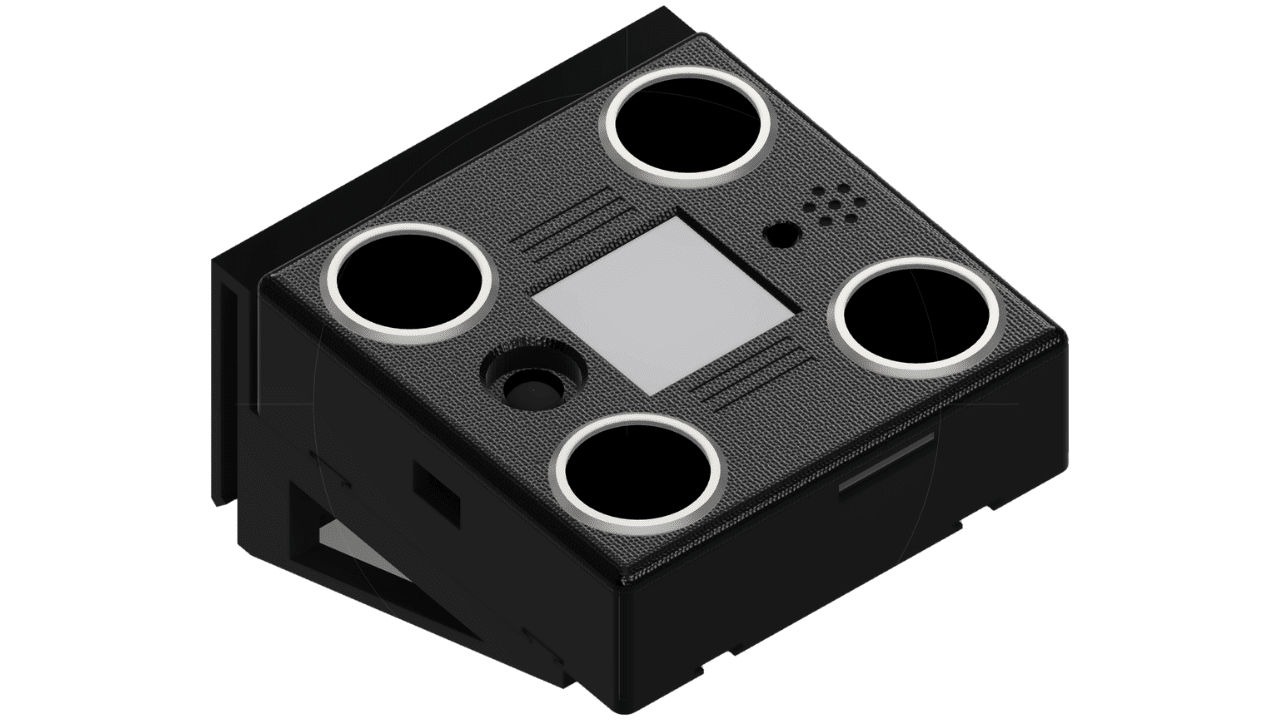
The project’s hardware is built around an ESP32-S3 microcontroller and four ICS-43434 digital MEMS microphones arranged in a cross. Their audio streams are synchronised and combined to improve the signal-to-noise ratio before analysis. The repository provides the hardware and assembly resources needed to reproduce the design, including PCB Gerber files, a component list and 3D-printable enclosure files. These resources allow makers to inspect the circuit, source components independently and build their own units.
VolAnti’s firmware processes audio at 16kHz and uses a 2,048-point fast Fourier transform (FFT) to examine the frequency spectrum. Its detection algorithms look for the regularly spaced harmonic peaks associated with rotating propellers, comparing them against a continuously updated background-noise profile. Four detectors operate in parallel, using different approaches to identify potential rotor sounds. A candidate frequency must remain consistent across six consecutive analysis windows before the system raises an alert, helping reduce responses to isolated noises.
The project also includes a LoRa radio module for sharing alerts between nearby units, an e-paper display, a buzzer and vibration alerts. Power comes from a rechargeable 2,500mAh lithium-polymer battery, with the developer reporting approximately 18–22 hours of operation. Field tests described by the developer include a detection at 104.2 metres under one set of conditions, while results vary with wind, background noise and the test environment. The repository’s audio samples and simulator provide additional resources for examining the detection method without immediately assembling the hardware.
By publishing its firmware, design files, test resources and assembly instructions, VolAnti gives developers a foundation for reproducing the detector, investigating acoustic signal processing and adapting the implementation to different environments. The source repository also includes guidance for flashing the device and running multiple units. This makes the project useful for learning about embedded audio analysis and community-developed sensing systems, although its reported detection distances should be treated as test results rather than guaranteed performance in every environment.
For more information, click here.