




















































Wireless-Tag provides firmware, board-support software and hardware design resources for a dual-chip ESP32 development board, giving developers a starting point for custom touchscreen interfaces and connected devices.
The Wireless-Tag WT32P4C5-43S is a development board that brings together an ESP32-P4 processor, an ESP32-C5 wireless controller and a 4.3-inch touchscreen. Its open-development resources include firmware repositories, board-support package (BSP) drivers, schematics and mechanical design files, allowing developers to inspect the implementation and build customised embedded applications. The availability of these resources makes the board relevant to makers and engineers developing industrial control panels, connected displays and camera-enabled interfaces.
The manufacturer’s GitHub repositories provide software for both processors. The ZX4D30CE40S_V13 repository contains the main ESP32-P4 firmware and BSP drivers, while ZX4D30CE40S_V13_slave provides firmware for the ESP32-C5/C61 wireless coprocessor. Wireless-Tag also publishes PDF schematics, two-dimensional DWG drawings and three-dimensional STEP files through its documentation. These resources help developers understand the circuit design, examine component connections and plan mechanical integration. However, the specific licence terms for the individual repositories and hardware files should be checked before redistributing or commercially adapting them.
The board’s software can be developed using Espressif’s ESP-IDF framework, Arduino IDE and LVGL graphics library. Its main processor uses dual high-performance RISC-V cores running at up to 400MHz, alongside a low-power core, graphics acceleration and hardware video codecs. The accompanying ESP32-C5 supports dual-band Wi-Fi 6, Bluetooth Low Energy and IEEE 802.15.4 connectivity, including Zigbee and Thread. Separating application processing from wireless communication gives developers flexibility when designing connected embedded systems.
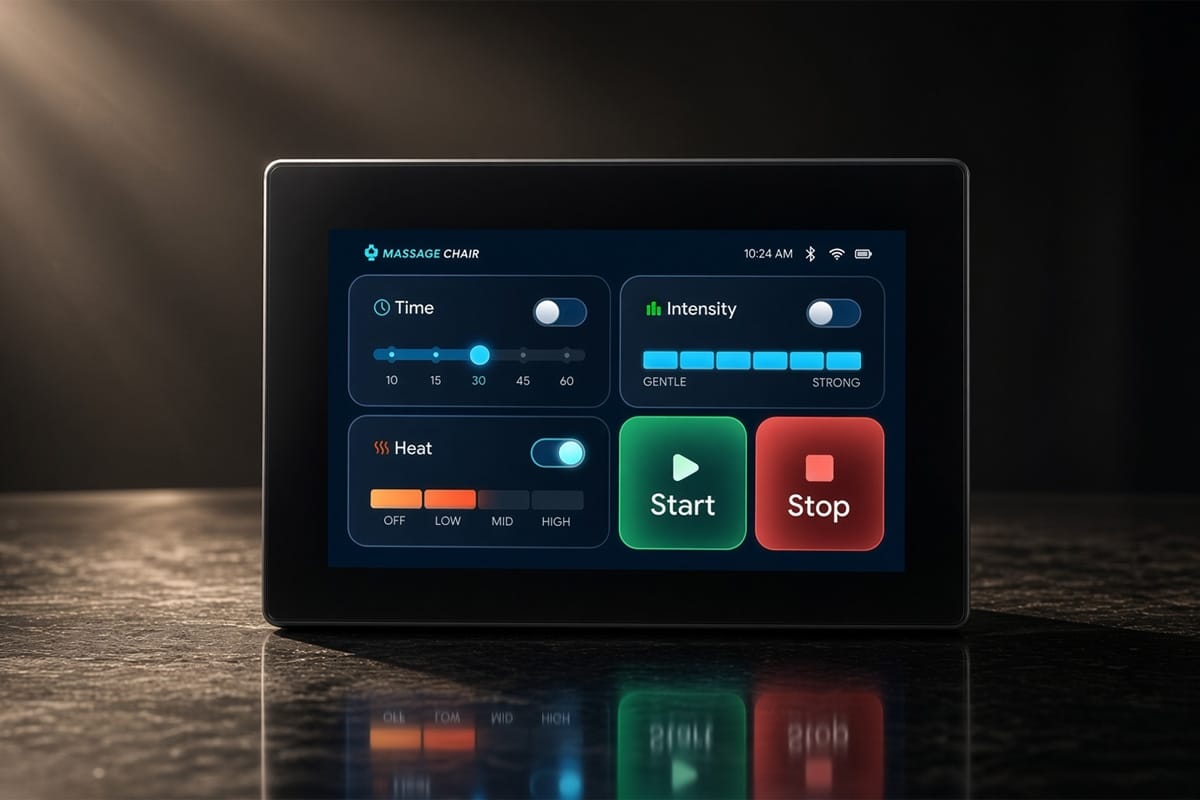
The integrated display has an 800 × 480-pixel resolution and capacitive touch input, eliminating the need for a separate screen during prototyping. Additional hardware resources include a MIPI CSI-2 camera connector compatible with Raspberry Pi camera modules, a microSD card slot, two USB Type-C ports and a 14-pin expansion header exposing GPIO and power connections. Developers can use these interfaces to create camera-based monitoring systems, touch-operated controllers, data loggers and custom human-machine interfaces.
By providing source repositories alongside schematic and mechanical documentation, Wireless-Tag gives developers a foundation for adapting the WT32P4C5-43S to their own applications rather than starting with a closed firmware implementation. The board is listed by the manufacturer for approximately US$32, with a second US$37 option whose additional contents are not clearly explained on the product page. Although its hardware design resources are available, the board should not automatically be considered fully open hardware until the applicable licences and completeness of the published design files are confirmed.
For more information, click here.