
















































Lesotho has launched a national farmer registry built on Joget’s open source platform and GovStack’s Registration Building Block, replacing fragmented records with a central digital system across all 10 districts.
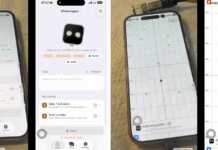
The Lesotho Farmers Portal, built by FiscalAdmin Ltd, enables field officers to register farmers against national identity numbers and record household details, farming activities, livestock, assets, support services and land parcels with GPS boundaries. It replaces paper files, spreadsheets and disconnected district records with a central, verified source of data for the Ministry of Agriculture, Food Security and Nutrition.
Joget describes its platform as an open-source enterprise Agentic AI application platform, with an open source core and plugin architecture. The project also provides a live implementation of GovStack’s reusable Registration Building Block.
“We wanted to build a service that could work at a national scale and still be practical for the people using it every day. The Farmers Portal brings together a number of processes that would otherwise remain separate, while giving the Ministry greater control over its own data. We built this as a live implementation of the GovStack Registration Building Block, so it needed to hold up under real conditions in the field, not just on paper. Joget’s enterprise application platform enabled a very small team to turn a working prototype into a national service the Ministry can run and maintain on its own, and that is what made the two-year timeline possible.” said Aare Lapõnin, founder and CEO, FiscalAdmin Ltd, Technical Delivery Partner.
The platform lets Ministry staff configure forms, workflows, access controls and reference data without requiring developers for every change. Future services include programme applications, targeted subsidies and input distribution.
The development also used large language model (LLM)-assisted, specification-driven development, with outputs tested through the platform’s application programming interface (API) before release.