

















































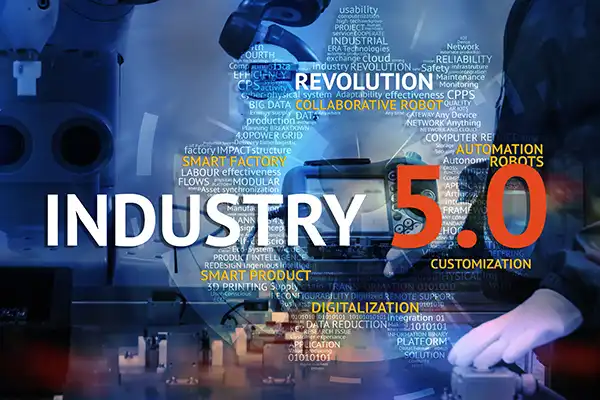

Unlike Industry 4.0, Industry 5.0 integrates human expertise with AI. There are quite a few open source libraries that can be used for this new global system.
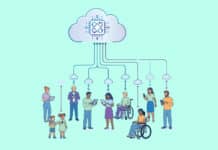
Industry 5.0 focuses on human-centric machine collaboration with artificial intelligence (AI) to enable real-time upgrades in a system. It does not replace human expertise but includes it so that better and effective AI robotic environments can be developed and deployed as per local needs.
Table 1: Industry 5.0 vs Industry 4.0 in the context of robotic surgery
| Aspect and integration feature | Industry 5.0 | Industry 4.0 |
| Role | Human guidance | Automation |
| Control | Surgeon driven | Machine driven |
| AI | Decision support | Task execution |
| Ethics | Central | Secondary |
| Outcome | Patient well-being | Efficiency |
Industry 4.0 involves complete automation and lacks human interaction. As a result, smart automation and robotic operations sometimes do not fit well in a particular environment. Industry 5.0 fills this gap because human experts and specialists take care of each phase in the robotic AI environment.
Key components of Industry 5.0 are:
- Adaptive networks
- Agentic AI
- Circular economy
- Cognitive automation
- Cyber-physical systems
- Data sovereignty
- Digital twins
- Ethical AI
- Green technologies
- Human-AI collaboration
- Human-centricity
- Industrial IoT
- Mass customisation
- Personalised production
- Resilient systems
- Secure connectivity
- Smart factories
- Sustainable manufacturing
- Trustworthy AI with human expertise
- Workforce augmentation
Major applications of Industry 5.0 include 5G-enabled factories, AR-VR assisted operations, Industry 5.0 education labs, adaptive supply chains, aerospace production optimisation, climate-adaptive farming, demand forecasting, digital twins, digital workforce training, edge AI systems, energy optimisation, ethical AI deployment, explainable AI, food traceability, green factories, healthcare manufacturing, human well-being analytics, industrial cybersecurity, intelligent inventory management, last-mile optimisation, low-latency industrial networks, mass customisation, medical device personalisation, and mission-critical systems.
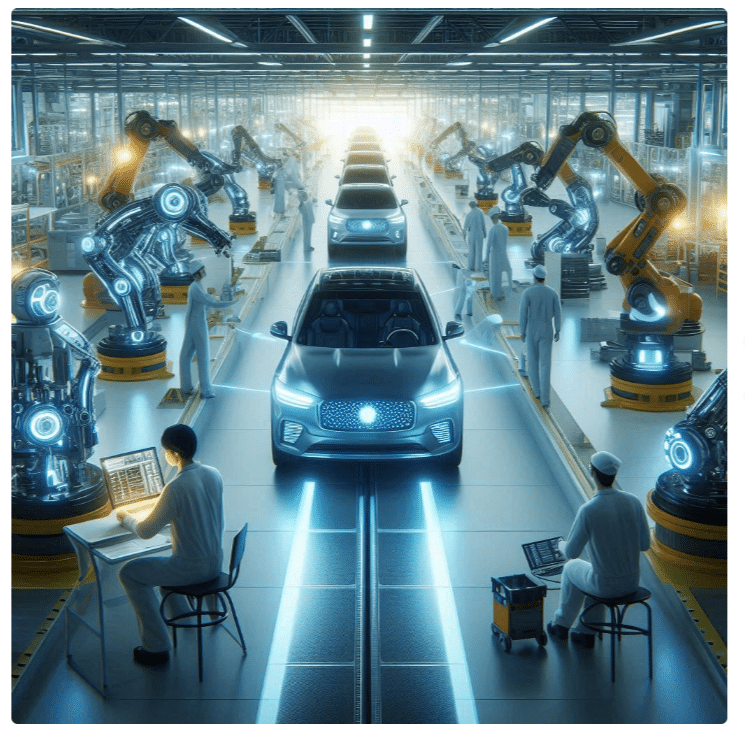
Table 2: A comparison of Industry 4.0 and Industry 5.0
| Aspect | Core focus | Industry 4.0 | Industry 5.0 |
| Vision | Human value | Smart automation | Human-centric |
| Role | Collaboration | Machine-driven | Human-guided |
| Technology | Intelligence | Cyber-physical
systems |
Cognitive systems |
| AI usage | Explainability | Decision automation | Decision support |
| Workforce | Empowerment | Skill replacement | Skill augmentation |
| Production | Personalisation | Mass production | Mass customisation |
| Systems | Control balance | Autonomous systems | Human-in-loop |
| Sustainability | Responsibility | Efficiency driven | Sustainability driven |
| Resilience | Continuity | Optimised flows | Adaptive systems |
| Ethics | Trustworthiness | Optional ethics | Embedded ethics |
| Data | Privacy | Centralised data | Sovereign data |
| Networks | Safety | Connected machines | Secure networks |
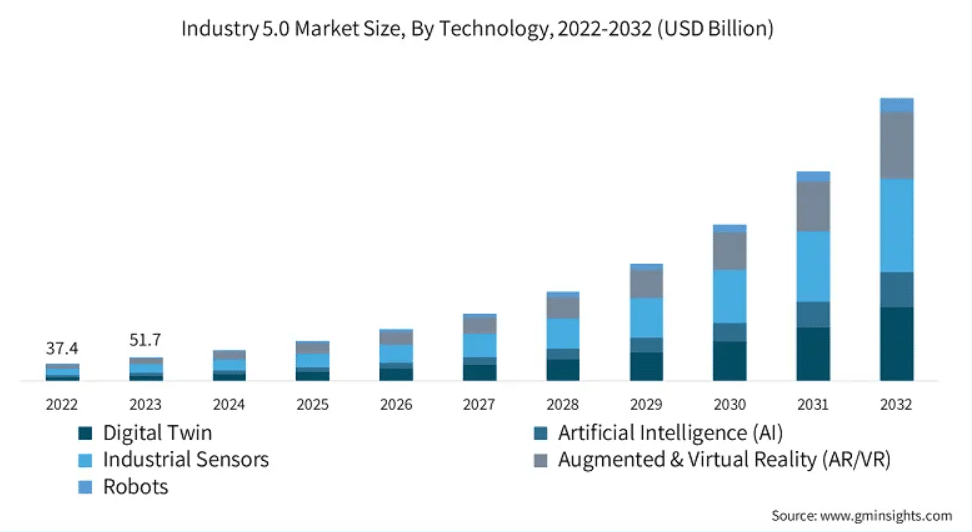
The market associated with Industry 5.0, which includes AI, augmented and virtual reality, digital twins, and smart robots, is predicted to grow over 34% between 2024 and 2032.
Table 3: Popular tools for Industry 5.0 and AI integration
| Tool | Domain | Purpose | URL |
| Webots | Robotics | Simulation | cyberbotics.com |
| ROS | Robotics | Control | ros.org |
| Gazebo | Robotics | Testing | gazebosim.org |
| SUMO | Simulation | Mobility | eclipse.org/sumo |
| OpenRemote | IoT | Integration | openremote.io |
| Eclipse Ditto | Twins | Modelling | eclipse.org/ditto |
| TensorFlow | AI | Learning | tensorflow.org |
| PyTorch | AI | Training | pytorch.org |
| Hugging Face | LLMs | NLP | huggingface.co |
| KNIME | Analytics | Pipelines | knime.com |
| Apache Kafka | Streaming | Messaging | kafka.apache.org |
| Eclipse Mosquitto | IoT | Messaging | mosquitto.org |
Industry 5.0 and AI integration
Industry 5.0 integrates AI with a preference for human inputs. Industry 4.0 involves complete automation for mass production, but since it does not focus on human feedback the outcomes are not reliable and are unacceptable in many cases. In Industry 5.0, AI is engaged to assist human experts rather than replace them. These experts take care of each phase of the Industry 5.0 process for a better and reliable final product.
Here’s a brief description of two popular open source tools used for Industry 5.0.
OpenRemote
https://openremote.io/
OpenRemote is a powerful platform for smart automation and the Internet of Things (IoT). Its features include rule behaviour analytics, drag and drop interfaces, smart automation, data visualisation, integration with various services, and workflows.
Webots
https://cyberbotics.com/
Webots is a powerful and multi-featured robot simulator under free and open source distribution. This multi-platform software application can be used for robot simulation for Industry 5.0 applications in domains like pharmaceutical quality control, precision farming, predictive maintenance, real-time supply visibility, remote monitoring, resilient production systems, secure Industrial IoT (IIoT), skill augmentation platforms, smart agriculture, smart construction, smart logistics, smart and sustainable manufacturing, trust-centric systems, virtual factories, warehouse automation, waste minimisation, worker safety monitoring, and zero-defect manufacturing.
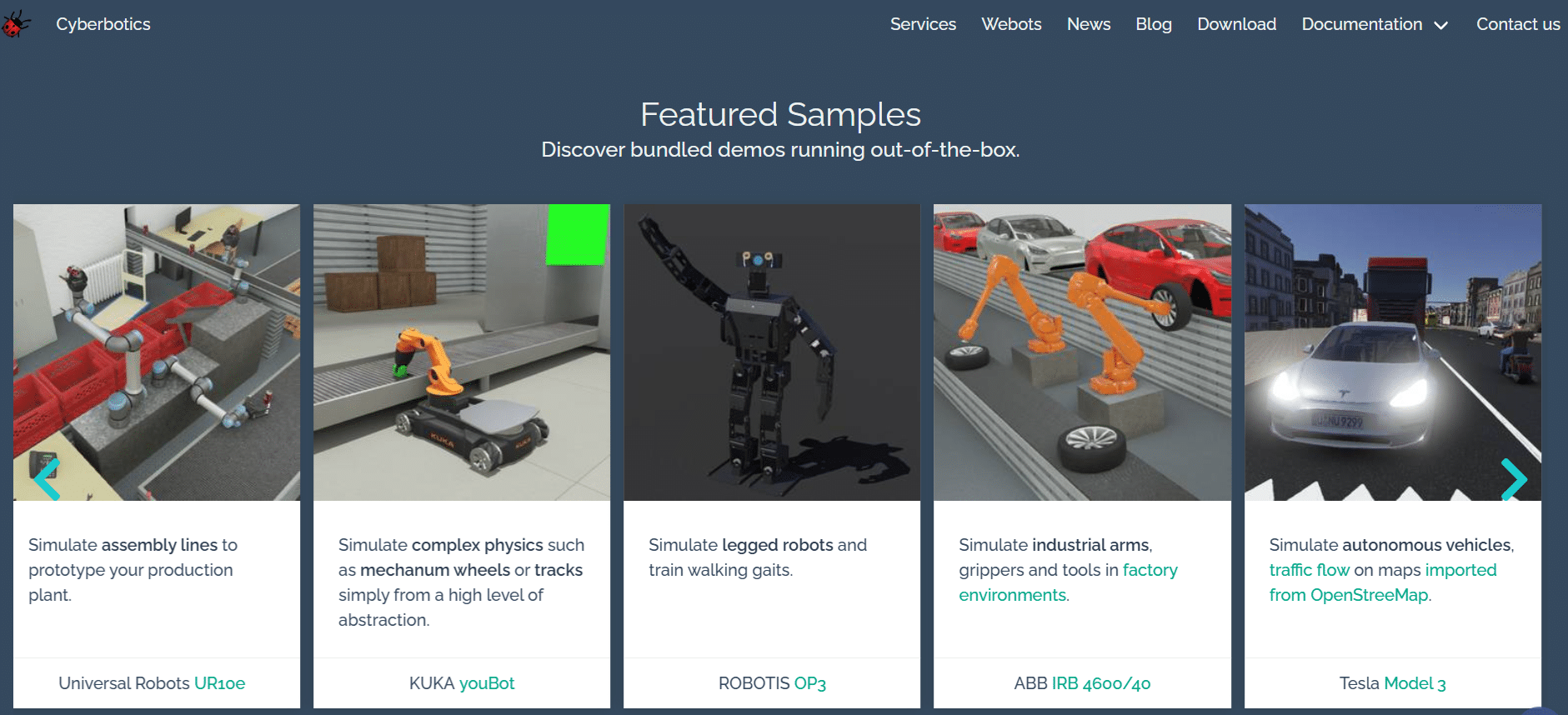
Webots can be installed on multiple platforms for real-world industrial applications. Detailed documentation, user guide and the reference manual are available on its official portal.
In the era of generative AI and Industry 5.0 we need effective and high-performance platforms. Research and development activities become quite easy and effective by using free and open source tools that integrate AI and Industry 5.0 modules.