






















































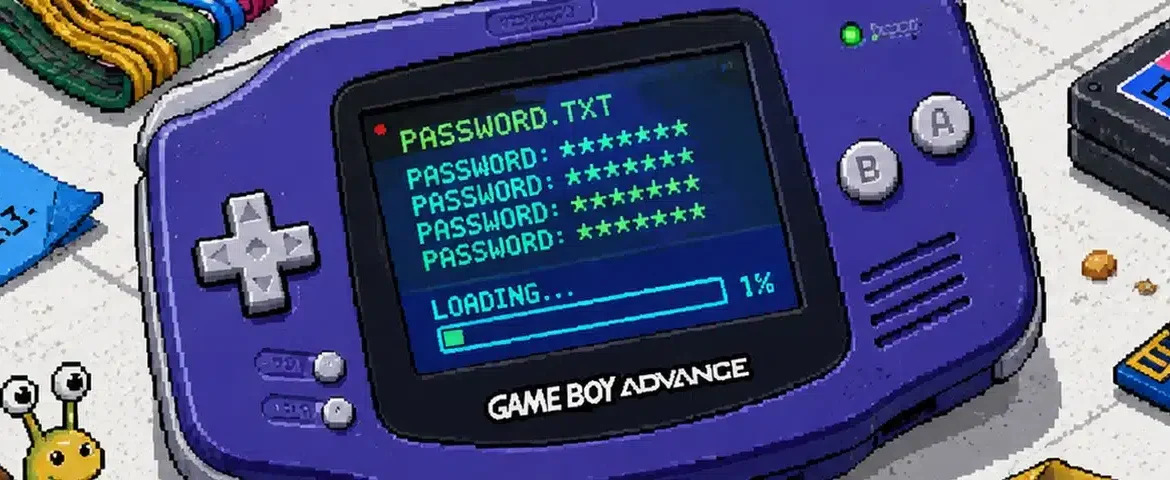

An open-source project repurposes the Game Boy Advance into a SHA-256 password-testing device, demonstrating how legacy gaming hardware can perform modern cryptographic tasks.
The developer named solst-ice has developed an open-source project known as GBA-Hashcat, which turns the Nintendo Game Boy Advance (GBA) into a password-cracking tool. This project shows the SHA-256 hash generation on the handheld device using its original hardware.
Unlike Hashcat, which supports numerous hashing algorithms and attack modes, the project under discussion is limited to SHA-256 only. GBA-Hashcat uses the ignis-1M wordlist, which consists of around one million passwords and compares generated hashes with the predefined target hash value saved inside the program.
The computing system used here is the ARM7TDMI microprocessor running at 16.78MHz frequency and possessing 288KB of random access memory (RAM). As a result, the system generates approximately 727 passwords per second, which is significantly lower than modern personal computers using graphical processing unit (GPU) processors.
The project is built using the open-source C++ gaming framework Butano, which involves taking software initially developed for game development purposes and repurposing it for cryptographic operations. The developer claims that it takes approximately twenty minutes to process the entire list of passwords containing a million entries.
Apart from demonstrating that password hashing is possible on legacy hardware, the project illustrates how open source software development can enhance the capabilities of obsolete technology through software development. In addition, the implementation provides a great opportunity for embedded systems developers who want to learn about cryptography, optimisation, and resource-constrained computing.
The complete source code has been released as an open source project for developers to study and build upon.