


















































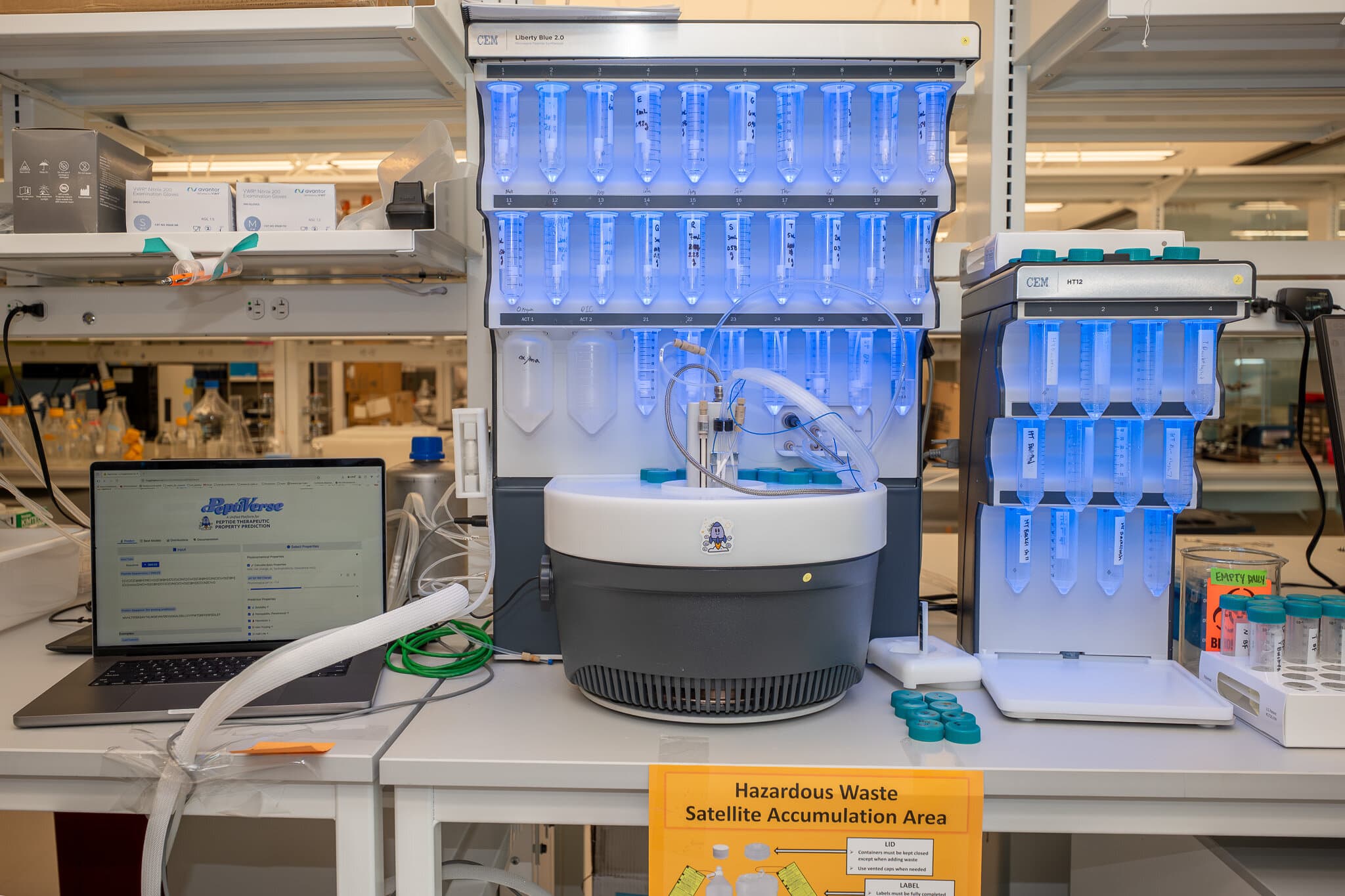

An open-source AI platform predicts multiple chemical and biological properties of peptides, helping researchers identify promising drug candidates before laboratory testing.
PeptiVerse is an open-source AI platform developed by Penn engineers to predict important chemical and biological properties of peptides, helping accelerate early-stage drug discovery. Rather than depending entirely on the experiments performed in the lab, the software can estimate properties such as solubility, cell penetration, toxicity, stability, and protein binding before peptide synthesis. This research has been published in Nature Communications.
Unlike software tools that consider only specific peptide properties, PeptiVerse is based on various predictive models. The researchers collected data from various experimental studies, standardised the datasets, and then selected the most suitable machine learning model for every prediction.
The platform is designed as a continuously evolving toolkit rather than a one-time predictor. It can be applied for analysis of both natural and synthetic peptides and offers a web interface for researchers to submit sequences of peptides, select the required properties, and make predictions using a dashboard. It is also possible to examine the datasets on which the model was trained, improving confidence in the predictions.
In addition to using PeptiVerse for analysing current peptides, the platform may also be used to design new peptides using AI. In particular, it is possible to combine property predictors and generative AI algorithms in order to prioritise the most suitable molecules with respect to the desired properties, like better binding, solubility, permeability, and less toxicity.
The platform was designed to evolve continuously in case new experimental data become available. Thus, researchers may add new datasets, update prediction models and create more property predictors. As the platform is open-source, allowing academic labs and biotechnology companies to deploy it using their own datasets.