




























































Wave Photonics has made its entire PDK platform compatible with Synopsys OptoCompiler to automate the design of next-generation quantum and classical photonic chips.
On 1 July, 2026, Wave Photonics successfully achieved compatibility with Synopsys OptoCompiler, a prominent automated Electronic Design Automation (EDA) software environment for Photonic Integrated Circuits (PICs). Fusing dedicated photonic simulation with schematic-driven layouts and circuit verification, this integration aims to automate the layout, routing, and simulation of open-source quantum and classical photonic chips, significantly reducing the time it takes to move from a conceptual design to physical fabrication.
The system is highly tailored for integrated quantum photonics, which uses light (photons) rather than electricity to route, compute, and process quantum information on silicon chips, as well as datacomms and advanced sensing. CORNERSTONE, a rapid-prototyping silicon photonics foundry based at the University of Southampton in the UK, is the primary manufacturing platform utilizing this update. CORNERSTONE has deployed its open-source Process Design Kits (PDKs) onto Wave Photonics’ cloud infrastructure.
These open-source component libraries enable academic researchers and quantum hardware startups to design hardware across multiple material stacks and wide-spectrum wavelengths (from blue to telecom bands) using a standardized, publicly accessible set of component blueprints without being tied down by expensive, proprietary foundry software agreements.
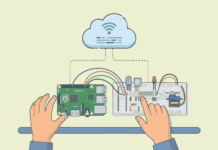
Hardware engineers design quantum components using Wave Photonics’ platform, where designs are mapped directly into the open-source CORNERSTONE PDK templates featuring pre-calculated S-parameters out of the box. Because of the new compatibility bridge, these layouts can be pulled straight into Synopsys OptoCompiler and simulated alongside companion software OptSim for automated waveguide routing, optical alignment, and physical verification to ensure high fabrication yields. Furthermore, the cloud framework simplifies secure product distribution for foundries by automating version control, non-disclosure agreement (NDA) tracking, and intellectual property (IP) cloaking.
“Combining open-source hardware access with industrial-grade automation lowers the entry barrier for quantum hardware developers globally,” noted James Lee, CEO of Wave Photonics. Historically, open-source PDKs from smaller or academic research foundries did not interface smoothly with elite, commercial enterprise EDA tools. This announcement bridges that gap—allowing quantum teams to combine the flexibility of open-source blueprints with the scale and automation of industry-standard enterprise simulation software.