






















































Workato Labs introduces an MIT-licensed developer toolkit that lets AI coding assistants and engineers build enterprise workflows entirely from the terminal.
On 1 July, 2026, Workato announced the general availability of Workato Labs, a brand-new, open-source innovation hub. It is a developer-focussed repository specifically tailored for software developers and AI builders who use AI coding assistants—such as Claude Code, Cursor, Windsurf, Codex, and GitHub Copilot—to create enterprise automation and orchestration workflows.
The project is led by Adam Seligman, Chief Technology Officer and General Manager of AI Incubation at Workato. Unlike Workato’s core enterprise platform, everything under the Workato Labs initiative is fully open-source, hosted under the workato-devs organisation on GitHub under the MIT licence, designed to encourage community contributions and public experimentation.
The initial release introduces a code-first toolkit consisting of four primary tools designed to move projects from “prompt to production” outside the traditional web UI:
-
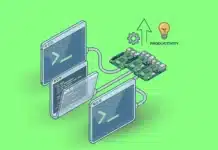
wkCLI: A Go-based command-line interface deployed as a single binary that enables developers and AI agents to manage Workato assets and workspaces directly from the terminal. -
Recipe Skills: A collection of connector-specific knowledge injected into AI coding assistants to help LLMs understand precise data-pill syntax, field mappings, and schema designs.
-
Recipe Lint: A local validation plugin for the
wkCLI that performs deterministic syntax and structure checks on recipes before they are pushed to production. -
Recipe Visualizer: An interactive IDE extension for VS Code, Cursor, and Windsurf that renders complex recipe JSON into clickable, navigable visual workflow graphs.
“We’re building these tools in public because the best developer tools evolve with the people using them,” said Adam. “We are looking forward to great community feedback and contributions. Workato Labs is where we’ll continue experimenting, learning, and sharing what we build.”
Navigation and mapping company onXmaps was named as an early adopter of the toolkit. Its engineering teams integrated the wk CLI to manage internal IT operations workflows directly from their command-line terminals. “The CLI felt immediately familiar to our team. As a developer, I live in the terminal,” said Todd Hayes, IT Operations Engineer at onXmaps.