
























































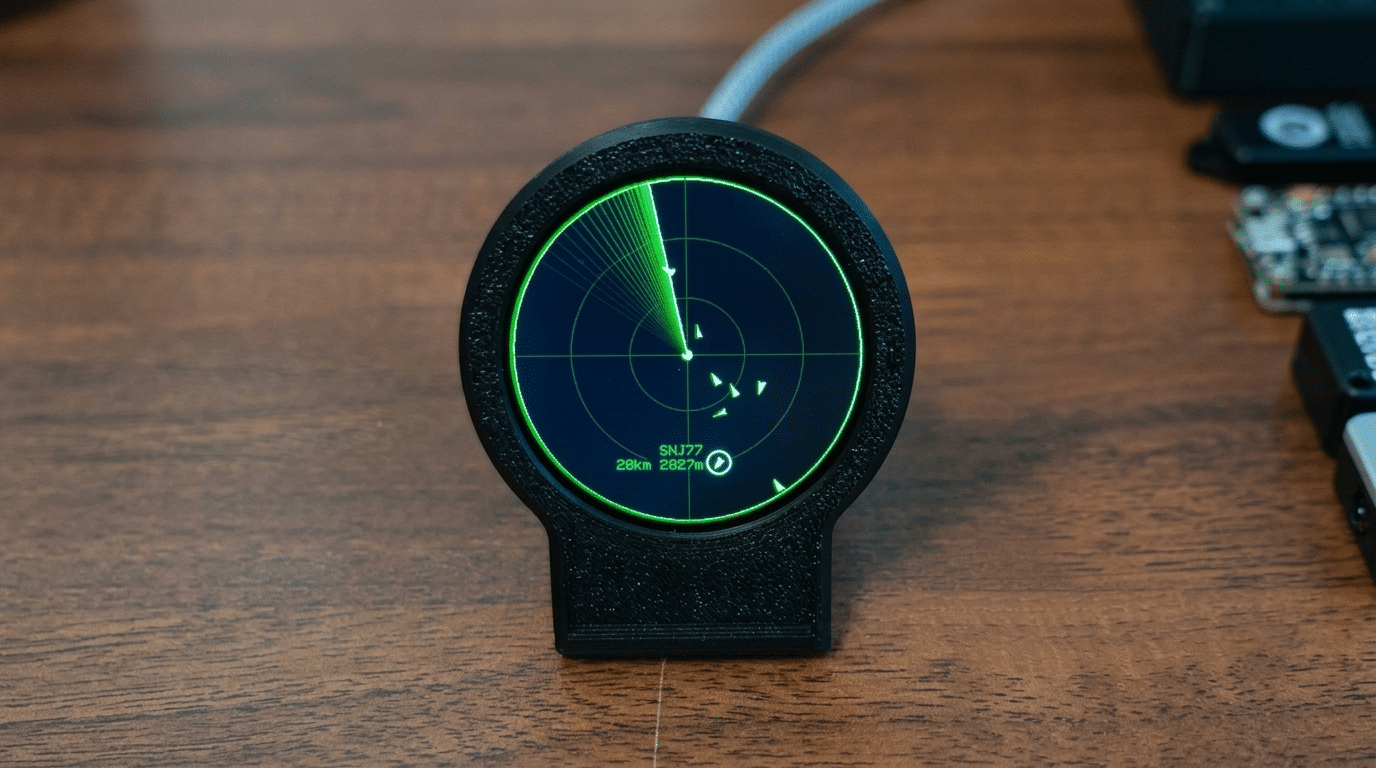

USB-C DeskRadar is an open-source ESP32-C3-based flight tracker that displays live aircraft positions on a 1.28-inch round colour screen using a sonar-style radar interface.
USB-C DeskRadar is a compact aviation-themed flight tracker built around an ESP32-C3 Super Mini. The device connects to the internet over Wi-Fi and displays live aircraft positions around a configured location. Its 1.28-inch round thin film transistor (TFT) display provides a real-time radar-style view, while a 3D-printed enclosure is designed for desktop use. The project appears to have been adapted into an inexpensive desk gadget by vendors, although the exact firmware used by those versions has not been confirmed.
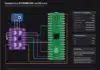
The hardware uses an ESP32-C3FH4 single-core 32-bit RISC-V microcontroller running at up to 160MHz, with 400 KB of SRAM and 4 MB of flash. The 1.28-inch GC9A01 display has a 240×240-pixel resolution and communicates over SPI. A USB Type-C port provides 5V power and is also used for programming, while a single button can change radar-range presets or reset stored Wi-Fi and location credentials. The project also provides STL files for the custom 3D-printed enclosure.
Once connected to the internet, the software retrieves live ADS-B flight information from services such as adsb.fi and the OpenSky Network. The display can show aircraft heading, speed, callsign, altitude and aircraft type, along with range rings, compass directions and speed vectors. Aircraft outside the selected radar range are represented as directional indicators around the edge of the display. The firmware uses Arduino/PlatformIO with libraries including LovyanGFX and ArduinoJson.
The open source aspect allows users to build the flight tracker themselves rather than relying on the commercially assembled versions. Two GitHub projects, deskradar and ESP32-Plane-Radar, appear to match the hardware and functionality, although the source notes that it could not confirm which firmware is used by the commercially sold device. A DIY version can be built using an ESP32-C3 Super Mini and 1.28-inch GC9A01 display, while the 3D-printable enclosure files are available for free.
The project can therefore serve as a relatively inexpensive way to experiment with ESP32-based flight tracking and open-source hardware. Users can assemble the required components, install the available firmware directly from a browser and customise the display or hardware. The commercially available version was listed at $26.93, while the source estimates that a do it yourself (DIY) build can cost less than $10 depending on the components selected.