



















































A new open-source security framework enhances the safety of autonomous AI agents by detecting behavioural threats before execution, enabling secure deployment across robotics, industrial automation, enterprise software and intelligent embedded systems.
As autonomous AI agents gain the ability to independently execute tasks, access software tools and interact with connected systems, securing their decision-making process has become increasingly important. Addressing this challenge, Ant Group has introduced SingGuard-NSFA, an open-source security framework developed specifically to safeguard agentic AI applications from operational threats before actions are executed.
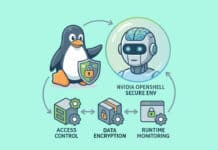
Unlike conventional AI safety systems that mainly moderate generated content, SingGuard-NSFA focuses on securing an AI agent’s behaviour during execution. The framework analyses requests and validates responses before allowing autonomous actions, helping prevent attacks that exploit an agent’s reasoning process. This approach enables organisations to deploy AI agents more safely in environments where they can interact with enterprise software, cloud services, databases and physical systems.
The key features are:
- Supports integration with open-source agent frameworks
- Open-source release on GitHub and Hugging Face
- Designed for production-scale AI deployments
- Optimised for multilingual AI security validation
- Built to complement multimodal AI safety frameworks
The framework is designed to defend against emerging security risks associated with autonomous AI, including prompt injection, goal hijacking, tool misuse, malicious code execution, permission escalation, and identity or privilege abuse. These threats have become increasingly significant as AI systems transition from conversational assistants to autonomous digital workers capable of making operational decisions.
SingGuard-NSFA employs a structured defence architecture that categorises AI-agent vulnerabilities into 185 operational threat scenarios distributed across seven security categories. To evaluate its effectiveness, Ant Group developed a multilingual benchmark comprising nearly 100,000 security test samples across 133 languages, enabling developers to validate AI-agent security under diverse deployment conditions.
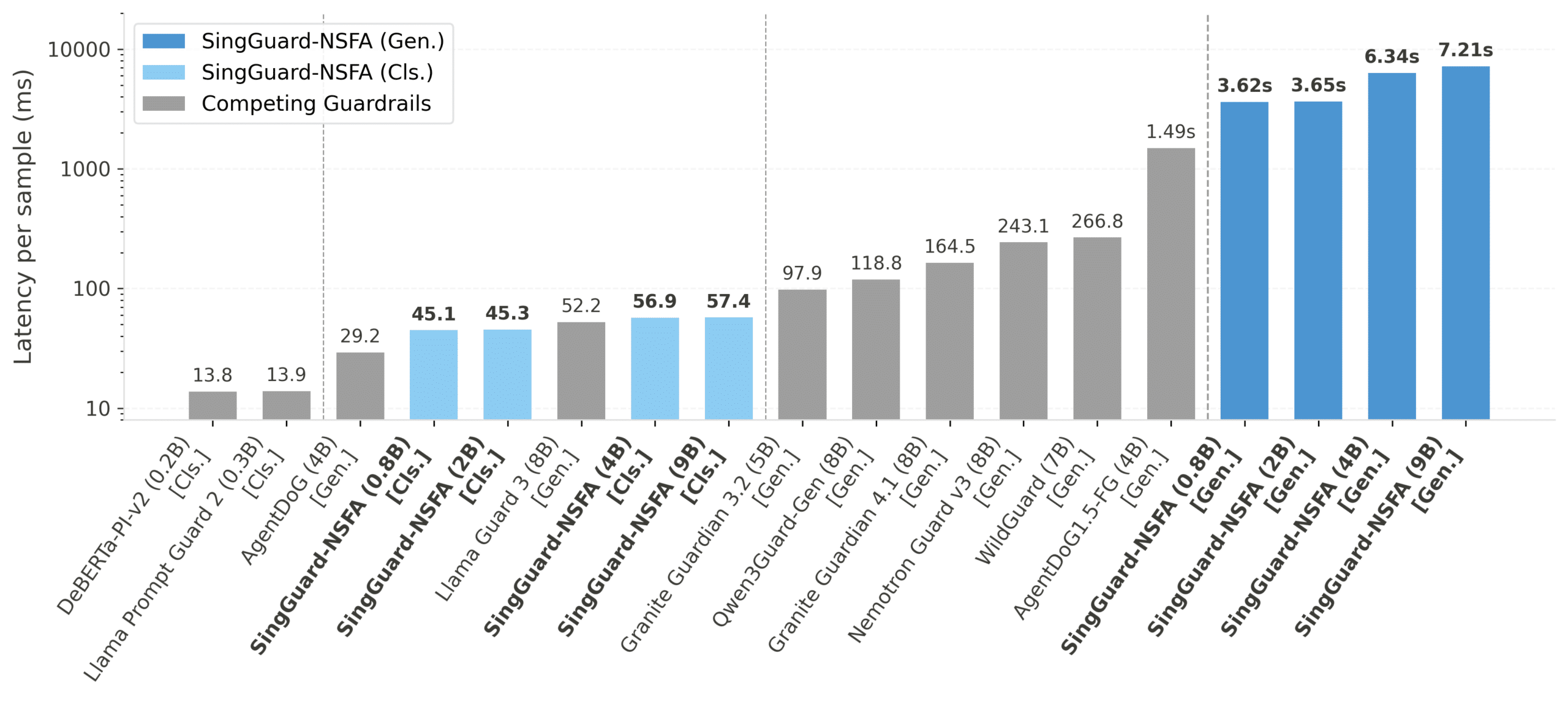
The framework is available in multiple model configurations to meet varying deployment requirements. According to Ant Group, the compact 0.8B version delivers security performance comparable to much larger AI guardrail models, while the 9B model performs real-time threat detection with approximately 50 ms latency, making it suitable for production environments requiring both speed and accuracy.
SingGuard-NSFA builds upon Ant Group’s wider AI security ecosystem, which includes previous work on protecting autonomous AI frameworks and multimodal generative AI. The company has also released SingGuard, a policy-adaptive multimodal guardrail model family that protects text and image generation by safeguarding privacy, intellectual property and preventing harmful content generation.
The framework is intended for developers building autonomous AI solutions for robotics, industrial automation, smart electronics, digital payments, healthcare platforms, enterprise assistants and other mission-critical applications where secure AI decision-making is essential. By providing an open-source behavioural security layer, SingGuard-NSFA enables organisations to strengthen AI safety while accelerating the adoption of autonomous intelligent systems.