






















































SignalSweep provides open-source firmware for detecting wireless trackers, surveillance devices and drones using an affordable microcontroller.
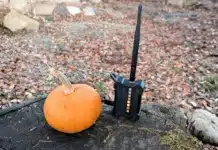
SignalSweep is an open-source wireless scanning project that turns the Seeed Studio XIAO ESP32-C5 into a portable detector for Bluetooth trackers, surveillance equipment and drones. Published on GitHub under the GNU General Public License v3.0 or later (GPL-3.0-or-later), the project gives developers access to firmware and configuration tools that can be adapted to different monitoring requirements. It is designed to identify devices through their wireless transmissions rather than using cameras or dedicated radio-detection equipment.
The firmware supports the ESP32-C5, which can scan Bluetooth Low Energy (BLE) and both 2.4GHz and 5GHz Wi-Fi signals. An alternative build supports the ESP32-S3, although it is limited to 2.4GHz Wi-Fi. The repository makes the implementation available for developers to examine and modify, while the project uses a signature list to identify supported devices without requiring firmware recompilation whenever that list changes.
SignalSweep’s detection software recognises wireless trackers associated with Apple, Google, Samsung and Tile. It can also identify supported drone Remote ID broadcasts, using ASTM F3411-compatible data received over Bluetooth or Wi-Fi to report information such as drone identity, altitude, speed, heading and pilot location. Surveillance-device signatures can include identifiers such as organisationally assigned MAC address prefixes (OUIs), Bluetooth service UUIDs and Wi-Fi network names (SSIDs). These capabilities depend on devices transmitting recognisable wireless signals.
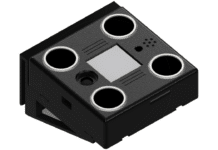
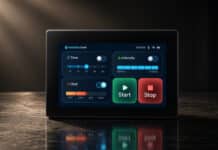
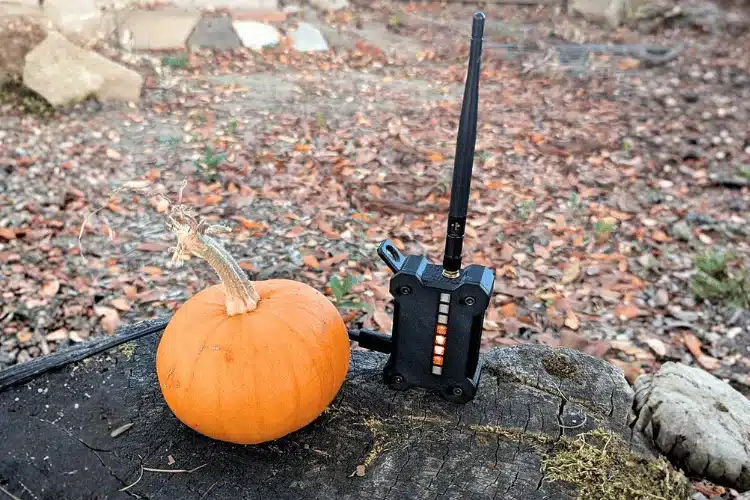
The project combines the microcontroller with a buzzer and LED indicators, giving different device categories distinct alert patterns. A hunt mode increases the alert rate as the user approaches a selected target. Configuration is available through a browser-based application for Chrome or Edge and an Android application, communicating over Bluetooth or USB. The software also includes optional detection of wireless attack activity, such as Bluetooth spam and Wi-Fi deauthentication bursts.
For developers, the key contribution is a modifiable, locally operated detection system rather than a closed commercial scanner. SignalSweep does not require cloud processing or send telemetry, according to its documentation, and logging is disabled by default. However, it is not entirely passive in every configuration: it may send scan requests, advertise over Bluetooth or issue a supported alert command to certain trackers. It cannot reliably detect wired or radio-silent cameras, or drones that do not transmit compatible Remote ID broadcasts. The project’s reported capabilities have not been independently verified.