




























































An open AI-driven alloy database that mines thousands of research papers, helping engineers identify high-performance, lower-impact materials for electric vehicles, energy and advanced infrastructure applications worldwide.
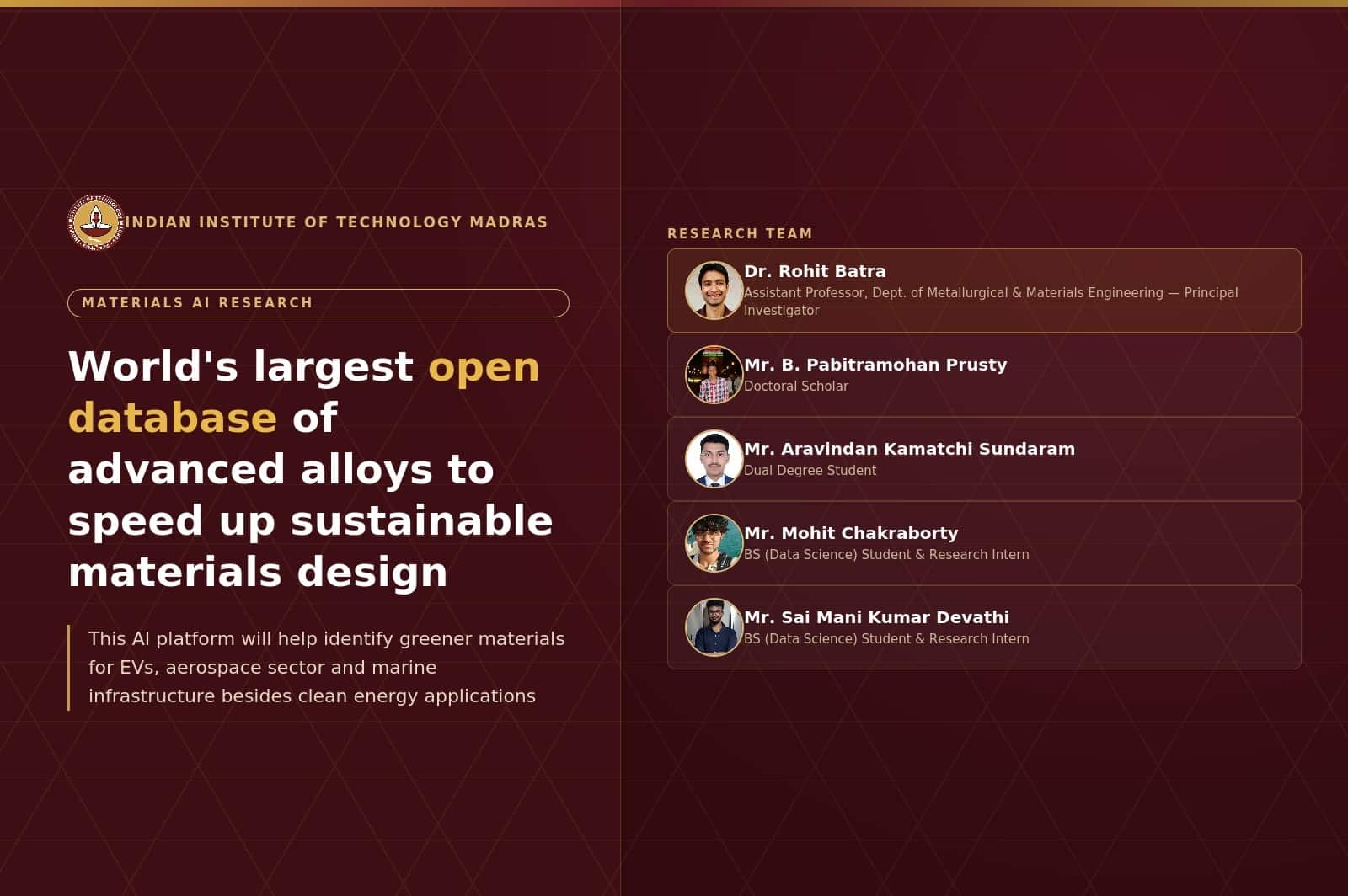
Artificial intelligence is moving deeper into materials engineering, with researchers at IIT Madras developing an open platform designed to dramatically accelerate the search for sustainable, high-performance metallic alloys. The system uses large language models (LLMs) to extract and organise decades of scientific data scattered across more than 10,000 research papers, creating one of the world’s largest publicly available databases of advanced multicomponent alloys.
For electronics, electrification and energy-system designers, the significance lies in the platform’s ability to connect material performance with sustainability indicators. The AI-assisted framework can help identify candidate alloys for electric motors, transformers, next-generation electric vehicles, aerospace structures and energy infrastructure while considering environmental, economic and social parameters.
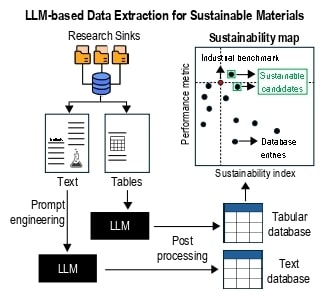
The platform has generated two databases containing more than 185,000 structured records. Unlike earlier AI-driven materials databases that typically captured fewer than 25 properties, the IIT Madras system records more than 350 material properties alongside the processing and testing conditions under which measurements were obtained. This additional context could improve how engineers compare materials and train AI systems for materials design.
At the core of the technology is an automated literature-mining pipeline capable of extracting information on alloy compositions, manufacturing processes, testing conditions and material properties with limited human intervention. The system also incorporates Retrieval-Augmented Generation (RAG), enabling the AI to retrieve relevant examples during extraction and improve accuracy when processing scientific text and tables.
The researchers demonstrated the database by identifying promising high-entropy alloy compositions across three major application areas. These include lightweight structural materials that could reduce fuel consumption and emissions in automotive and aerospace systems, soft magnetic materials for electric motors and transformers, and corrosion-resistant alloys for marine, offshore, chemical-processing and energy applications.
The project addresses a major bottleneck in engineering research: valuable experimental data often remains locked inside journal articles, tables and figures, making systematic comparison slow and expensive. By converting this fragmented information into machine-readable datasets, the platform could reduce duplicated experiments and shorten materials development cycles.
The databases and supporting software are freely available through the Alloy Tattvasar platform and GitHub, extending access to researchers, startups and industrial developers. Next, the team plans to expand the AI system to analyse figures and microstructural images, incorporate life-cycle assessment methods and extend the framework beyond alloys to polymers, ceramics and composite materials.The source material describes the AI platform, its 185,000+ records, 350+ properties and applications in EVs, motors, transformers and sustainable engineering materials.